EXPLORE THIS STORY
MOROCCO PERSPECTIVE
MIDDLE EAST WAR: ENERGY TENSIONS AND GLOBAL CRISES
AI-generated content — Analyses are produced by artificial intelligence from press articles. They may contain errors or biases. Learn more
DOMINANT ANGLE
Geostrategic analysis prioritising global economic impacts over military dimensions of conflict
Dominant angle identified — does not reflect unanimity of this country’s media
ANALYSIS
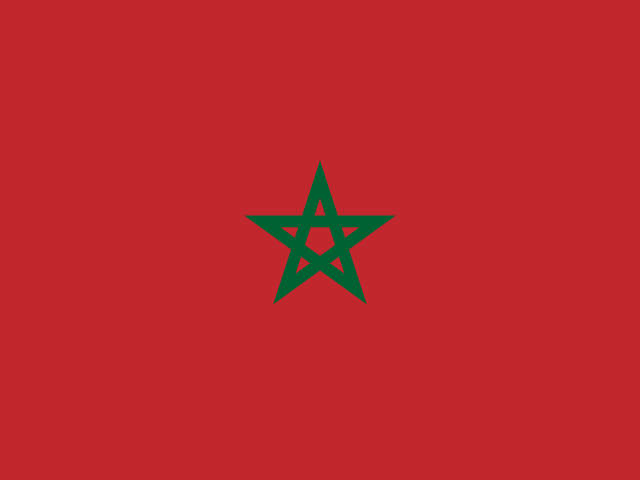
Moroccan media coverage reveals a sophisticated geostrategic approach that prioritises analysis of global economic repercussions rather than the military dimensions of the conflict. Moroccan outlets adopt a predominantly cautious tone (–0.6 to –0.8 on sentiment scale) whilst maintaining remarkable analytical distance, carefully avoiding taking sides among the belligerents. This posture reflects Morocco's traditional balancing diplomacy in the Middle East, where Rabat maintains relations with all regional actors.
Particular emphasis on energy infrastructure vulnerabilities betrays the kingdom's deep concerns about its own energy security. By highlighting attacks on the South Pars gas field and Qatar's Ras Laffan facilities, Moroccan media implicitly underscores the risks escalation would pose to global energy supplies—on which Morocco depends substantially. This economic lens allows Morocco to legitimise calls for de-escalation without appearing partial to any camp.
The narrative framing reveals subtle hierarchies among international actors. Trump and Macron are presented as the true decision-makers, their statements consistently foregrounded, whilst Iranian or Israeli positions are reported at greater remove. This reflects Morocco's Atlanticist orientation and its prioritisation of relations with Western powers. Emphasis on French diplomatic initiatives (Barrot's Lebanon visit, Macron's calls) equally underscores privileged Franco-Moroccan ties.
Silences prove as revealing as emphases. The notable absence of references to Gulf states' positions—despite being Moroccan allies—or Arab League reactions suggests reluctance to activate pan-Arab solidarities that might compromise Moroccan neutrality. Similarly, sectarian dimensions of the conflict (Shia/Sunni) are entirely absent, favouring classical geopolitical framing that sidesteps religious divides capable of resonating with Morocco's domestic stakes.
This coverage ultimately reflects the structural constraints of Moroccan diplomacy: maintaining balance between Western partnerships (United States, France), relations with Gulf monarchies, and desire to preserve dialogue channels with Iran. The cautious tone justifies calls for restraint without diplomatic risk, whilst emphasis on global economic consequences positions Morocco as a responsible actor concerned with international stability rather than regional disputes.
KEY POINTS
- Cautious tone combined with strict diplomatic neutrality between belligerents
- Emphasis on global energy vulnerabilities and their economic repercussions
- Hierarchy of actors favouring Western powers (Trump, Macron)
- Absence of sectarian dimensions and pan-Arab solidarities from coverage
- Morocco positioned as responsible actor calling for de-escalation
COGNITIVE BIASES IDENTIFIED
Atlanticist lens prioritising American and French positions
Economic framing that minimises regional geopolitical stakes
Avoidance of religious divides to preserve domestic diplomatic balance
SOURCES (2)
Morocco World News
MEDIUM
Does this analysis seem accurate?