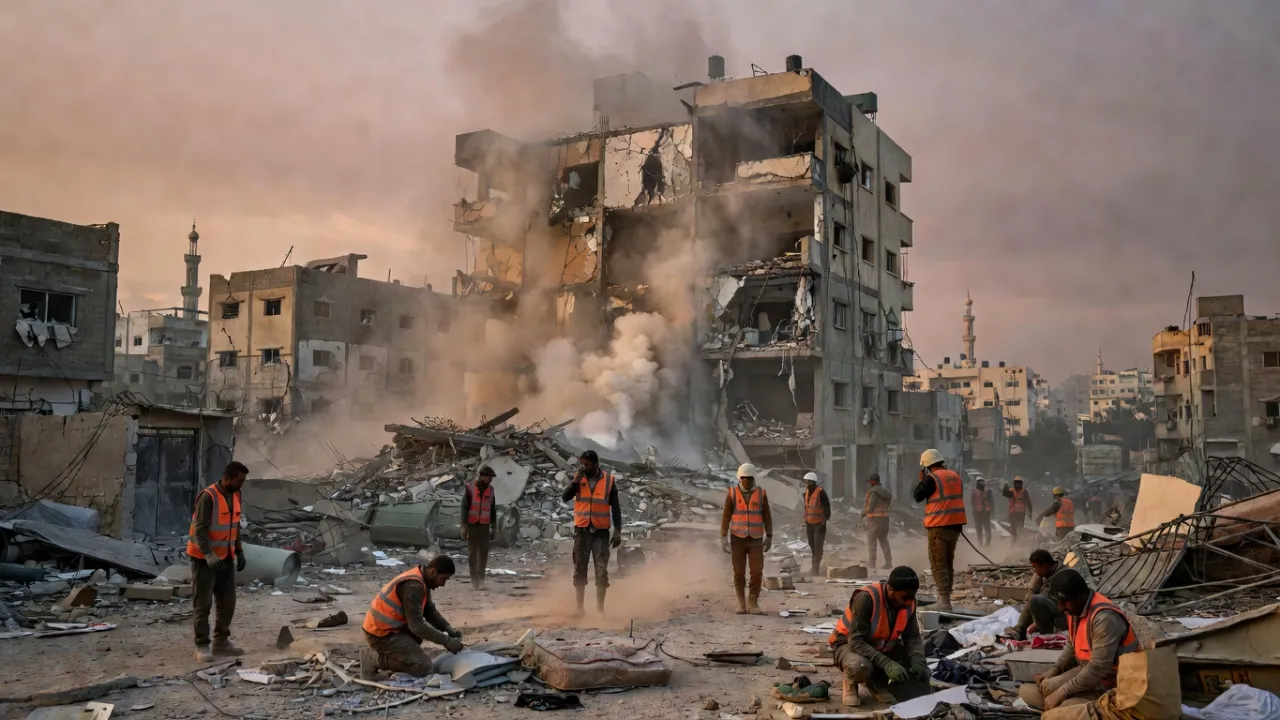
On 16 May 2026, an Israeli airstrike hit a residential building in the Rimal district of Gaza City, killing Ezzedine Al-Haddad, the head of Hamas's military wing (the Al-Qassam Brigades) in Gaza. His death was confirmed by the Israeli military, the Shin Bet and Hamas officials. Al-Haddad had taken command of the armed wing after the death of Mohammad Sinwar in May 2025; he was described as one of the last senior commanders directly tied to the planning of the 7 October 2023 attacks.
According to Gaza medical authorities, the strike also killed at least seven Palestinians — including Al-Haddad's wife and daughter — and wounded several dozen people. The operation came while a ceasefire had been in force since October 2025, under American mediation, whose fragility is widely emphasised.
The event fits into an Israeli strategy of removing the movement's leaders: Al-Haddad is the third head of the armed wing eliminated since 7 October 2023, after Mohammed Deif and Mohammad Sinwar. Since the truce, Israel has maintained targeted strikes against Hamas figures while indirectly negotiating a post-war peace plan backed by the Trump administration. Hamas, which has not carried out the disarmament foreseen in the second phase of the deal, and Israel accuse each other of repeated violations.
Several points remain disputed. Some actors, including Hamas, frame the strike as an explicit breach of the ceasefire, while others place it within a context of a fragile truce without ruling on its legal classification. The weight given to the immediate civilian toll, to the cumulative figure of more than 72,700 deaths cited by Gaza health authorities, and to the deadlock in post-war negotiations varies markedly from one account to another.