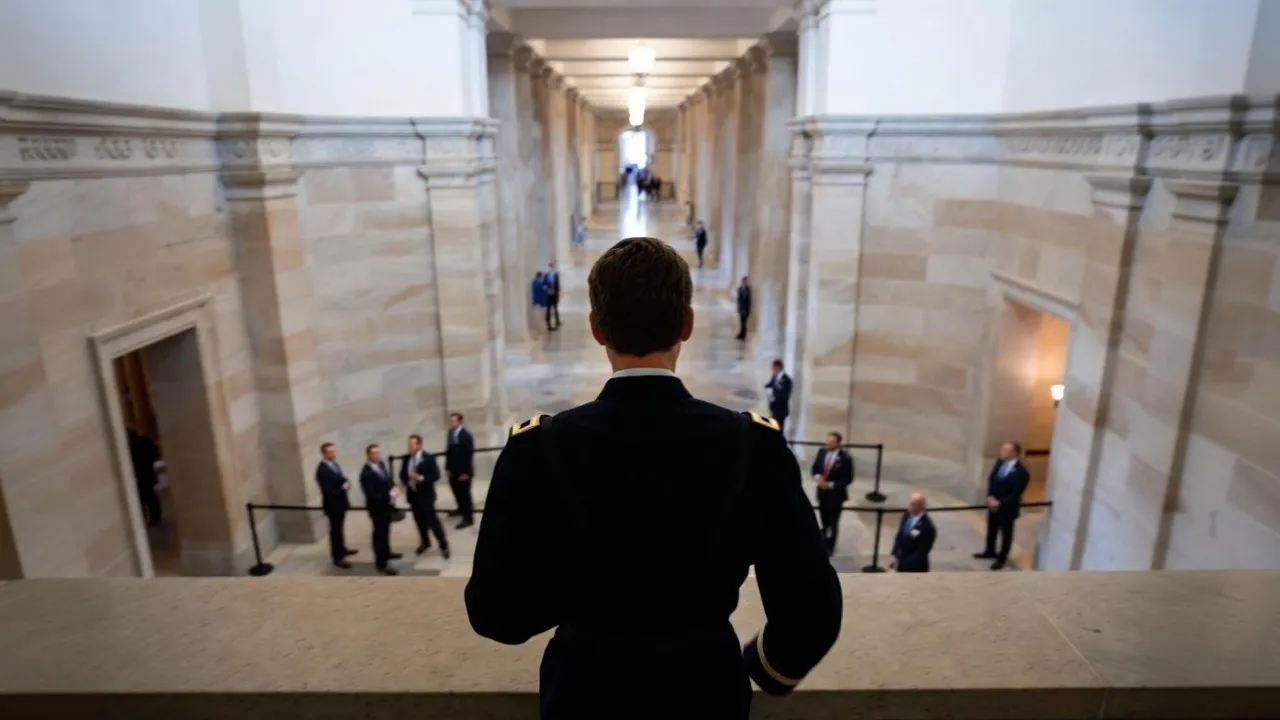
On 29 April 2026, the Secretary of Defense appeared in public before Congress for the first time regarding the war in Iran. The hearing produced the first official accounting of the conflict: a cost of 25 billion dollars, now confirmed and made public. It also laid bare a point shared by all observers: the conflict has neither an end date nor a clear definition of victory.
The session was marked by a confrontation of exceptional intensity with the Democratic opposition, which challenged the Secretary's statements and multiplied institutional obstacles. Beyond the budget, the weightiest element of the hearing was the reference to North Korea, presented as the "lesson" the operation in Iran was meant to demonstrate.
This moment matters because it turns a military operation into a strategic signal. By making the cost and the absence of an exit strategy public, the hearing gives allies and rivals alike concrete data on the durability of American commitment. The mention of North Korea links the war in Iran to a doctrine of strikes against adversaries' nuclear facilities, a message received in Beijing, Moscow and Pyongyang.
The reading of these facts remains contested. Some interpret the North Korea reference as deterrence reassurance, others as escalation logic. The Secretary's political weakening is seen by some as a legitimate democratic oversight mechanism, by others as proof of weakness. Largely unaddressed are the human toll on the Iranian side and Pyongyang's possible response.