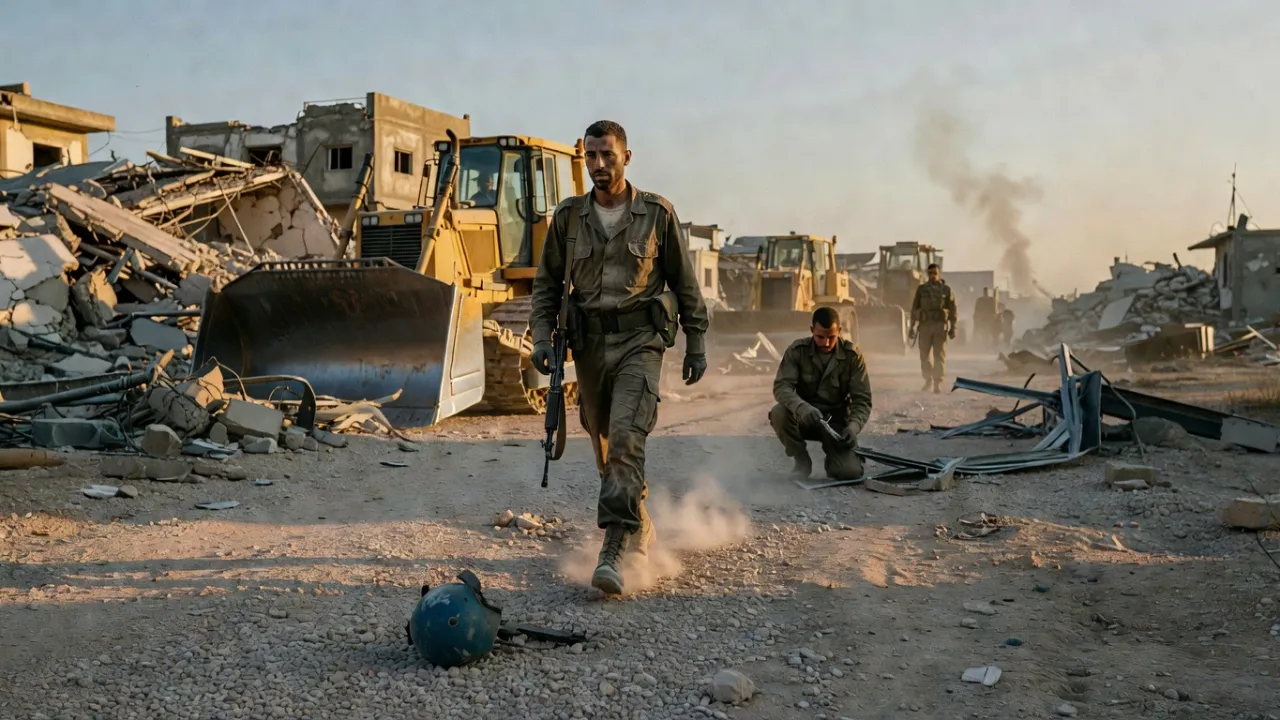
Within forty-eight hours, the truce reached in Washington six weeks earlier between Israel and Hezbollah came undone. Hezbollah's leader, Naim Qassem, publicly called the agreement a "capitulation" and rejected the ceasefire. On the ground, Israeli captain Eitan Shmuel Lemberg was killed by an anti-tank missile in southern Lebanon on 4 June, while a Serbian UNIFIL peacekeeper died under mortar fire, with several other soldiers wounded.
The context underscores the deal's fragility. Reached six weeks earlier, it rested on an effective disarmament that the Lebanese movement says it cannot accept without giving up its political role. Qassem's rejection coincided with Israel launching so-called "pilot zone" operations in southern Lebanon and with evacuation orders in central Gaza, a simultaneity of fronts that weighs on the sequence. The peacekeeper's death also reopens the question of UNIFIL's mandate, to which France contributes 700 troops. Regionally, Iran's IRGC warned that "consequences will be severe" if the strikes continue, and an amendment seeking to constrain the White House on Lebanon was rejected in the U.S. House.
Around these facts, interpretations diverge. For some actors, Hezbollah's rejection is the main obstacle to peace; for others, it is the continued Israeli strikes that derailed diplomacy. The deaths themselves are ranked differently from one capital to another, some emphasizing the Israeli soldier, others the peacekeeper or Lebanese civilians.
A deeper, equally disputed question remains: the future credibility of American mediation. Tehran and Moscow see confirmation that Washington can no longer arbitrate the region; other capitals read instead an opening to propose an alternative mediation format. The full human toll and the diplomatic outcome remain uncertain.