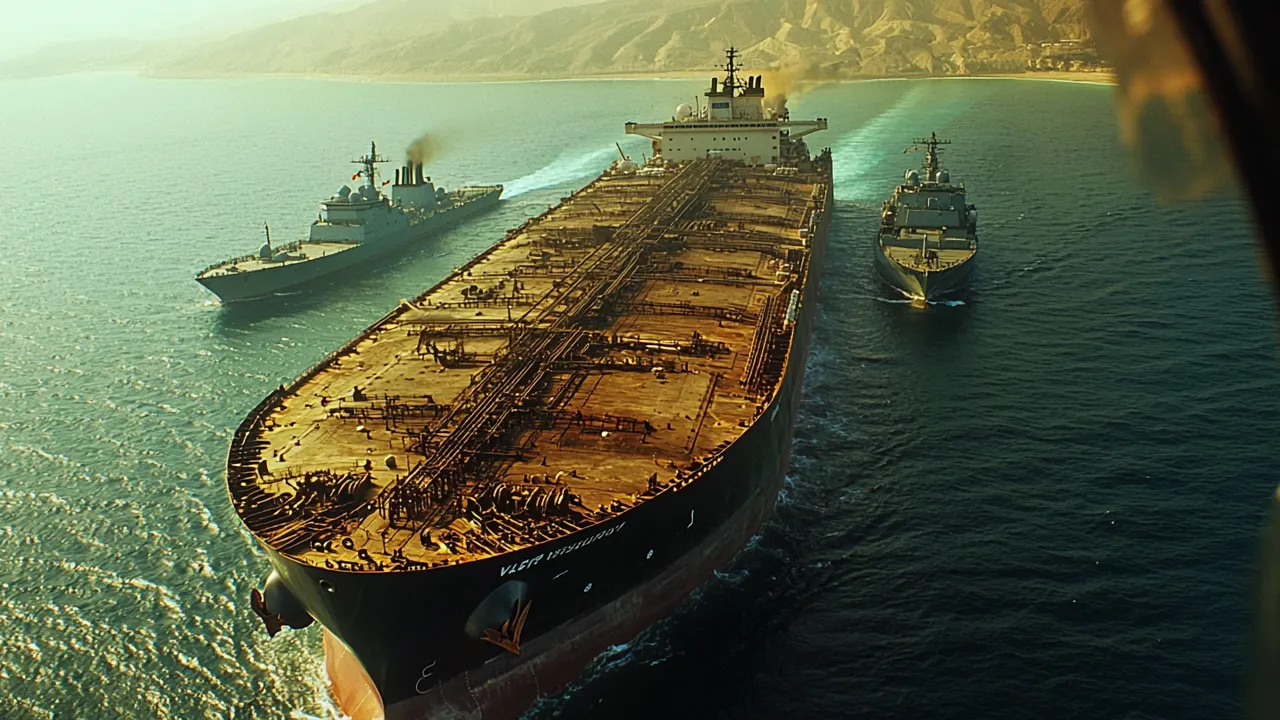
The Strait of Hormuz, through which roughly one fifth of the world's crude oil passes, remains the central chokepoint despite the US-Iran ceasefire reached on 7 April 2026. Of the some 800 ships left stranded, barely 10 have made it through since the truce, and maritime traffic stays largely paralyzed. Iran retains de facto control over the strait.
The first direct talks are being held in Islamabad, with a US delegation led by the vice president. They are seen as a pivotal moment, yet the positions remain far apart: Washington demands a full reopening, while Tehran ties any unblocking to the lifting of sanctions and reaffirms its sovereign claim over the passage. The outcome of the discussions is judged highly uncertain.
Several facts deepen the uncertainty. Mines laid during the conflict have not all been located, complicating efforts to secure the route. At the same time, Chinese supertankers have forced their way through, Japan has drawn on its strategic reserves, and several Asian importing countries have turned to other suppliers to secure their supply.
The actors disagree over responsibility. Some blame Iran for failing to honor the ceasefire, while others point to the lack of a multilateral framework and what they see as a unilateral approach, calling for shared management of the strait. Consumer countries, for their part, focus mainly on supply security rather than on the political dimension of the standoff.
Explore every perspective on this subject across 24 countries.
Compare viewpoints and see where they diverge.
published on
countries
sources
articles
gap