International Tensions: Iran at the Center of Strategic and Diplomatic Stakes
published on
countries
sources
articles
Measured with the previous method (distance between texts), on a different scale.
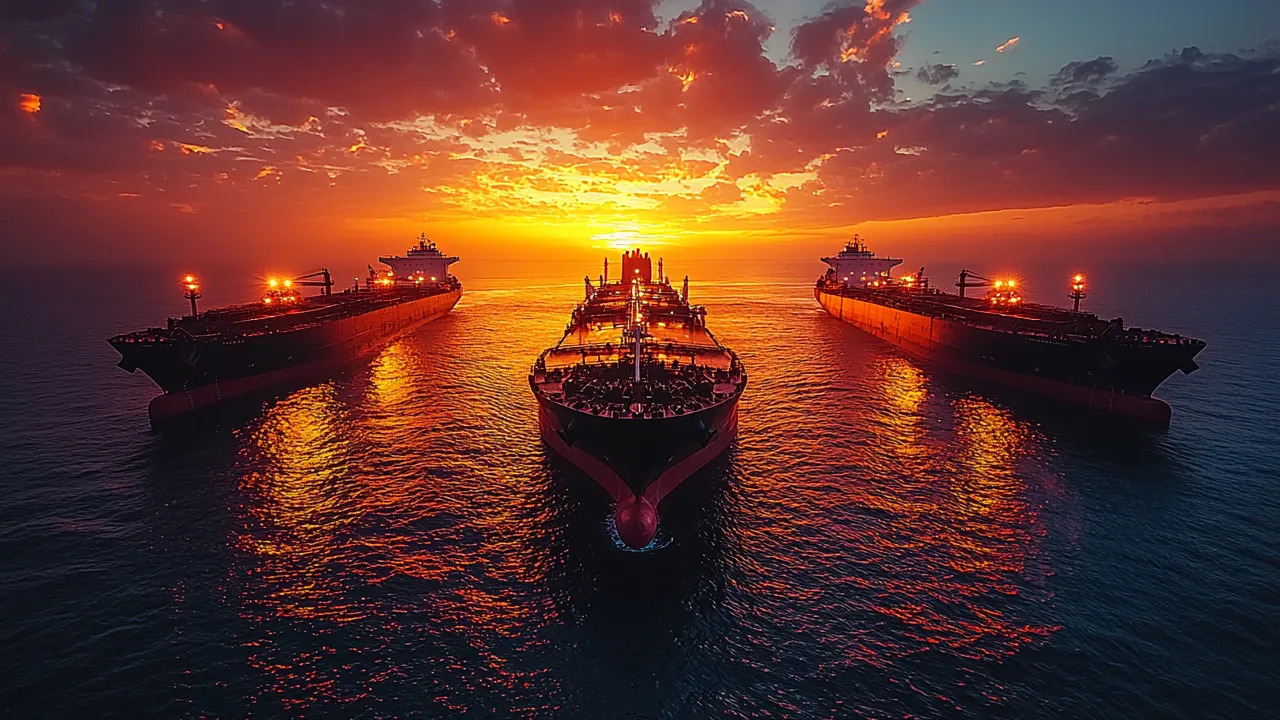
Iran finds itself at the center of a sequence of tensions combining military strikes, economic pressure and attempts at negotiation. Beyond individual incidents, one point draws agreement among all actors: the Strait of Hormuz remains a vital strategic passage for the global economy and energy supplies, which gives any escalation in the region a reach far wider than the Middle East alone.
The economic repercussions are the other widely shared fact. A worsening of the crisis weighs on oil prices and fuels inflationary pressures well beyond the borders directly involved. It is largely for this reason that the search for diplomatic solutions, rather than military escalation, is presented as a priority by a broad range of actors, including those who fundamentally disagree on substance.
The disagreements, however, run deep. Several states consider preventive strikes and a maximum-pressure strategy to be legitimate, while others challenge them head-on and denounce what they see as a hegemonic logic. The question of who bears responsibility for the escalation is also the subject of diverging attributions, with no agreement on a shared account. Several powers are moreover seeking to position themselves as credible mediators, adding a layer of diplomatic competition to the crisis.
These divisions are rooted in older fault lines: a structural opposition between a US-led order and a contesting axis, competing regional ambitions, and national economic constraints that push certain middle powers toward pragmatic positions. What is unfolding around Iran thus reflects a broader reshaping of the international order.
What the comparison reveals
Common ground and differences in coverage across the media analysed.
What the media report in common
The geostrategic importance of the Strait of Hormuz for global commerce and energy supplies
Trump's unpredictability and policy reversals as a factor in diplomatic instability
Global economic repercussions of the conflict, notably on oil prices and inflation
Where media coverage diverges
Legitimacy of military action against Iran
Fundamental opposition over the justification for preventive strikes and maximum pressure strategy against Iran
Role of diplomatic mediator
Competition among different actors to position themselves as credible mediators in the crisis
Responsibility for escalation
Divergent attribution of responsibility in the worsening of regional tensions

This grouping describes the publications analysed, not the position of these countries’ populations or of their governments.
Blind spots
What the coverage of each country leaves aside, while others put it forward.
 United States
- Humanitarian costs of sanctions
- Legitimacy of Iranian nuclear program
- Destabilizing role of Israel
 China
China- Iranian violations of international law
- Internal repression in Iran
- Iranian terrorist threats
 Germany
- Regional geostrategic stakes
- Humanitarian aspects
- European responsibilities
How each country reads it
Preview: 3 of 28 media perspectives. Syntheses of the media analysed — not direct quotations. Method & limitations
 France
Geopolitical expertise and economic vigilance amid regional instability
6 sources · View sources
 Spain
SpainCritique of US interventionism with focus on economic consequences for Spain
1 source · View sources
 Sweden
Domestic security and economic impact of a distant geopolitical conflict
2 sources · View sources
The full text, country by country
France
DOMINANT ANGLE
Geopolitical expertise and economic vigilance amid regional instability
ANALYSIS
French media coverage reveals a sophisticated geopolitical approach, characterised by a measured but watchful tone in response to Middle Eastern escalation.
Spain
DOMINANT ANGLE
Critique of US interventionism with focus on economic consequences for Spain
ANALYSIS
Spanish media coverage of tensions with Iran reveals a complex geopolitical perspective, oscillating between criticism of American interventionism and pragmatic national concerns.
Sweden
DOMINANT ANGLE
Domestic security and economic impact of a distant geopolitical conflict
ANALYSIS
Swedish media coverage reveals a perspective deeply centred on the domestic repercussions of Middle Eastern tensions, transforming a distant geopolitical conflict into an immediate threat to national security and economy.
 Greece
DOMINANT ANGLE
Pragmatic approach centred on energy concerns and regional stability
ANALYSIS
Greek media coverage of this Iranian crisis reveals a pragmatic and measured approach, characteristic of Greece's particular geostrategic position as a NATO member yet also a Mediterranean actor with complex relations across the Eastern region.
United States
DOMINANT ANGLE
Crisis management between military firmness and diplomatic pragmatism
ANALYSIS
American media coverage of the Iran conflict reveals a complex strategic approach that blends geopolitical anxiety with diplomatic pragmatism.
 Brazil
DOMINANT ANGLE
Global economic impact of a geopolitical crisis viewed through financial markets
ANALYSIS
Brazilian media coverage reveals a distinctly financial and regional approach to the Iranian crisis, characterised by intense focus on global economic repercussions rather than traditional geopolitical dimensions.
China
DOMINANT ANGLE
China as diplomatic mediator amid US-Israeli tensions
ANALYSIS
Chinese media coverage of the Iran-US crisis reveals a sophisticated geopolitical positioning that extends beyond simple neutrality.
 South Korea
DOMINANT ANGLE
Economic and financial perspective with cautious diplomatic neutrality
ANALYSIS
South Korean media coverage reveals a distinctly economic and pragmatic outlook on the US-Iran conflict, reflecting immediate national concerns rather than deeper geopolitical analysis.
 India
India
DOMINANT ANGLE
Strategic non-alignment with focus on economic and diplomatic implications for India
ANALYSIS
Indian media coverage of Iran-Israel tensions reveals a strategically non-aligned but deeply pragmatic approach, centred on the economic and geopolitical implications for India.
 Pakistan
DOMINANT ANGLE
Pakistan as central diplomatic mediator and stable alternative to Western unpredictability
ANALYSIS
Pakistani media coverage reveals a sophisticated narrative strategy positioning Pakistan as a central and responsible diplomatic actor in the Iran crisis.
 Taiwan
DOMINANT ANGLE
Pragmatic perspective focused on global economic and diplomatic stability
ANALYSIS
Taiwan's media coverage of Iran-US tensions reveals a distinct geopolitical perspective, shaped by the island's experience navigating relationships with major powers.
 Philippines
DOMINANT ANGLE
Economic-pragmatic perspective prioritising market stability and commercial flows
ANALYSIS
Philippine media coverage of the Iran-US crisis reveals a particular geostrategic perspective, shaped by the Philippines' geographic position and its complex relationship with Washington.
 Malaysia
DOMINANT ANGLE
Prioritising economic and financial impacts over geopolitical considerations
ANALYSIS
Malaysian media coverage of Iran-US tensions reveals a distinctly economics-focused approach that reflects the country's national priorities.
 Qatar
Qatar
DOMINANT ANGLE
Neutral economic mediator prioritising multilateral diplomatic solutions
ANALYSIS
Qatari media coverage reveals a notably nuanced approach to the Iran-US conflict, adopting a factual and analytical tone that contrasts with more partisan framings elsewhere.
 Israel
DOMINANT ANGLE
Israel positioned with negotiating strength following military successes
ANALYSIS
Israeli media coverage reveals a complex geopolitical perspective oscillating between a posture of strength and strategic pragmatism.
 Turkey
DOMINANT ANGLE
Turkey as an indispensable diplomatic mediator amid military escalation
ANALYSIS
Turkish media coverage reveals a nuanced geopolitical perspective reflecting Ankara's complex strategic position between East and West.
 Australia
DOMINANT ANGLE
Australian anxiety about economic and geostrategic consequences of the conflict
ANALYSIS
Australian media adopts a distinctive perspective marked by geostrategic anxiety and national introspection regarding Iran-US tensions.
 Morocco
DOMINANT ANGLE
Global economic impact of geopolitical tensions on energy markets
ANALYSIS
Moroccan media coverage of Iran-US tensions reveals a perspective deeply shaped by economic concerns and regional stability.
 United Kingdom
DOMINANT ANGLE
Security-focused pragmatism with humanisation of victims and critical distance from the United States
ANALYSIS
British media coverage of the Iran-United States conflict reveals a distinctly pragmatic and self-centred approach, with particular attention to direct implications for the United Kingdom.
Germany
DOMINANT ANGLE
Domestic economic impact and Trump-era volatility as threats to stability
ANALYSIS
German media coverage of the Iran crisis reveals a perspective deeply rooted in national economic concerns and Berlin's traditional geopolitical caution.
 Ukraine
DOMINANT ANGLE
Impact of Iranian conflict on Western support for Ukraine and the Russian-Iranian alliance
ANALYSIS
Ukrainian media coverage of the Iranian conflict reveals a perspective deeply shaped by wartime imperatives and geopolitical rivalry with Russia.
 Italy
Italy
DOMINANT ANGLE
Security pragmatism: from diplomacy to borders
ANALYSIS
Italian media coverage reveals a dichotomous approach to the Iran crisis, oscillating between diplomatic opportunism and security anxiety.
 Argentina
DOMINANT ANGLE
Milei positions Iran as a strategic adversary to justify Argentina's geopolitical realignment
ANALYSIS
Argentine media coverage of Iran-related tensions reveals a deeply polarised approach, structured around a Milei-Trump-Israel axis versus Iran-Hezbollah framework.
 Singapore
DOMINANT ANGLE
Pragmatic geo-economic vision centred on financial and commercial impacts
ANALYSIS
Singapore's media coverage reveals a pragmatic, financially-oriented perspective on Iran-related tensions, where geo-economic analysis takes precedence over traditional geopolitical considerations.
 Thailand
DOMINANT ANGLE
Economic impact on Thailand's automotive industry
ANALYSIS
Thai media coverage of Iranian tensions reveals a pragmatically economics-focused approach, where geopolitical stakes are systematically filtered through the lens of impacts on the national automotive sector.
 Egypt
Egypt
DOMINANT ANGLE
Diplomatic mediation and regional stability with Egypt as a central actor
ANALYSIS
Egyptian media coverage reveals a strategically balanced approach that reflects Cairo's complex geopolitical position between regional powers.
 Iran
Iran
DOMINANT ANGLE
Progressive destabilisation and imminent collapse of the Iranian regime
ANALYSIS
Iran International's media coverage reveals a distinctly oppositional perspective towards the Iranian regime, characterised by a framework that systematically legitimises external pressures whilst amplifying internal resistance voices.
 Russia
DOMINANT ANGLE
Moscow as legitimate mediator against Western aggression towards Iran
ANALYSIS
Russian media coverage of Iran-US tensions reveals a strategically calibrated approach organised around several coherent narrative axes.
Explore every perspective on this subject across 28 countries.
Compare viewpoints and see where they diverge.