Common ground and differences in coverage across the media analysed.
US and Saudi forces conducted joint strikes against logistical and weapons sites belonging to pro-Iranian militias in eastern Iraq, resulting in at least eight to ten deaths according to the sources cited.
The IRGC claimed to have fired ballistic missiles against a US base and a CENTCOM facility in Jordan, all intercepted according to US military command.
CENTCOM justified these strikes as a response to more than thirty drone attacks attributed to the Revolutionary Guards over 72 hours, several of which targeted Saudi oil facilities.

Washington, Riyadh, London, and Canberra present the strikes as a proportionate and legitimate response to Iranian aggression, while Tehran and Moscow emphasize the contradiction between Washington's diplomatic rhetoric and the continuation of military actions.
Coverage aligned with this reading
Riyadh claims a right to self-defense under Article 51 of the UN Charter to justify its direct military engagement in Iraq, while Iran and its Yemeni allies characterize this intervention as aggression and promise retaliation against the kingdom.
Coverage aligned with this reading
Coverage that diverges
Washington claims to be conducting 'very friendly' or even advanced discussions with Tehran, while Iran denies any direct negotiations and acknowledges only messages transmitted through mediators, a divergence that Russian media interprets as proof of American duplicity.
Coverage aligned with this reading
This grouping describes the publications analysed, not the position of these countries’ populations or of their governments.
What the coverage of each country leaves aside, while others put it forward.
Iran
Saudi Arabia
Israel
Preview: 3 of 10 media perspectives. Syntheses of the media analysed — not direct quotations. Method & limitations
Canberra reads the collapse of the U.S.-Iranian ceasefire after just 21 days of calm, weighing the consequences of Saudi Arabia's direct military involvement alongside Washington and the implications for regional stability.
2 sources · View sources
France reads Iraq's transformation into a direct confrontation zone between Washington, Riyadh, and Tehran, as U.S.-Saudi strikes target Iran-aligned paramilitaries with escalating risks to Jordan and the Gulf.
3 sources · View sources
Jerusalem tightens vigilance over the Iraqi-Jordanian axis amid repeated drone interceptions and Defense Minister Katz's confirmation that American fighter jets departed Israeli bases to strike Iran.
3 sources · View sources
DOMINANT ANGLE
Canberra reads the collapse of the U.S.-Iranian ceasefire after just 21 days of calm, weighing the consequences of Saudi Arabia's direct military involvement alongside Washington and the implications for regional stability.
ANALYSIS
Canberra, July 29, 2026.
DOMINANT ANGLE
France reads Iraq's transformation into a direct confrontation zone between Washington, Riyadh, and Tehran, as U.S.-Saudi strikes target Iran-aligned paramilitaries with escalating risks to Jordan and the Gulf.
ANALYSIS
Paris, July 29, 2026.
DOMINANT ANGLE
Jerusalem tightens vigilance over the Iraqi-Jordanian axis amid repeated drone interceptions and Defense Minister Katz's confirmation that American fighter jets departed Israeli bases to strike Iran.
ANALYSIS
Jerusalem, July 29, 2026.
DOMINANT ANGLE
New Delhi reads the Middle East escalation through its energy security lens, assessing risks to oil flows through the Strait of Hormuz and the welfare of its diaspora in the Gulf.
ANALYSIS
New Delhi, July 29, 2026.
DOMINANT ANGLE
Tehran weighs the risks of an all-front response: conservative press divided over a European or Ukrainian target, while allied Yemen promises relentless strikes on Saudi Arabia and Amman and the UN call to preserve the ceasefire with Washington.
ANALYSIS
Tehran, July 29, 2026.
DOMINANT ANGLE
Islamabad assesses mounting escalation risks in the Gulf, where millions of Pakistani nationals work and live, following cross-strikes between Washington, Riyadh, and Tehran in Iraq.
ANALYSIS
Islamabad, July 29, 2026.
DOMINANT ANGLE
Moscow views the US-Saudi-Iranian escalation as evidence of Washington's dual approach—striking with one hand while negotiating with the other
ANALYSIS
Moscow, July 29, 2026.
DOMINANT ANGLE
Riyadh asserts its right to self-defense, framing joint strikes with Washington in Iraq as a legitimate response to repeated drone attacks targeting its oil facilities, attributed to Iran-backed militias.
ANALYSIS
Riyadh, July 29, 2026.
DOMINANT ANGLE
London reads the abrupt end of the Iran-US truce with alarm, fearing uncontrolled regional escalation in the Gulf.
ANALYSIS
London, July 29, 2026.
DOMINANT ANGLE
Washington weighs the fragility of the pause shattered by Tehran, caught between immediate military retaliation alongside Riyadh and a rapidly closing diplomatic window.
ANALYSIS
Washington, July 29, 2026.
Explore every perspective on this subject across 10 countries.
Compare viewpoints and see where they diverge.
published on
countries
sources
articles
gap
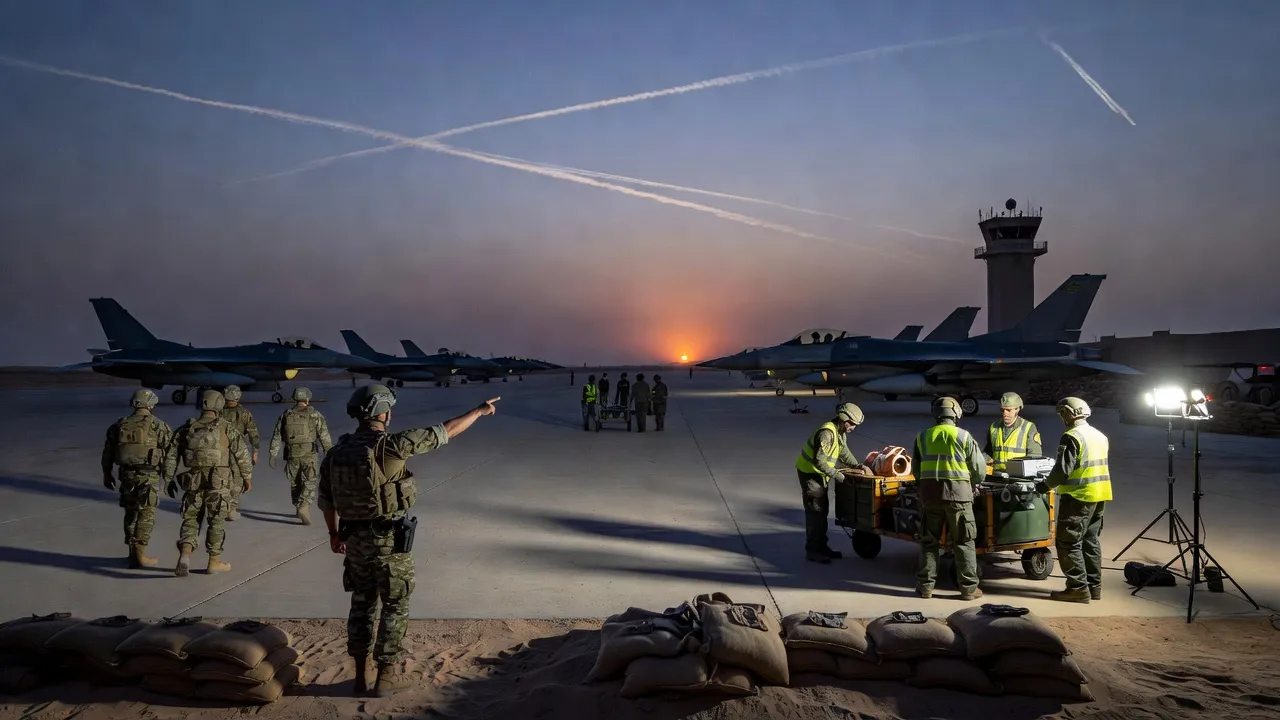
On Tuesday, July 28, 2026, Iran fired several ballistic missiles at a U.S. base in Jordan, an attack that CENTCOM called an 'attempted surprise attack' and said it fully intercepted, breaking a four-day pause in hostilities. In retaliation, the United States and Saudi Arabia struck pro-Iranian militia sites in eastern Iraq on Wednesday, in response to more than thirty drone attacks attributed to the Revolutionary Guards over 72 hours. The strikes notably targeted Nineveh province, where fighters of the Popular Mobilization Forces (PMF) were killed. Saudi Arabia says it intercepted drones targeting its oil facilities, while the Jordanian army says it intercepted Iranian missiles.
Measured with the previous method (distance between texts), on a different scale.