On Saturday, August 8, Mohammad Bagher Zolghadr, secretary of Iran's Supreme National Security Council, made public six conditions for reopening the Strait of Hormuz: an end to the war and aggression, lifting of the US naval blockade, withdrawal of US forces, full compensation, lifting of sanctions, and release of frozen assets.
On Sunday, August 9, the Revolutionary Guards toughened their stance, describing the strait as a 'war zone' and demanding acceptance of all Iranian conditions before any reopening.
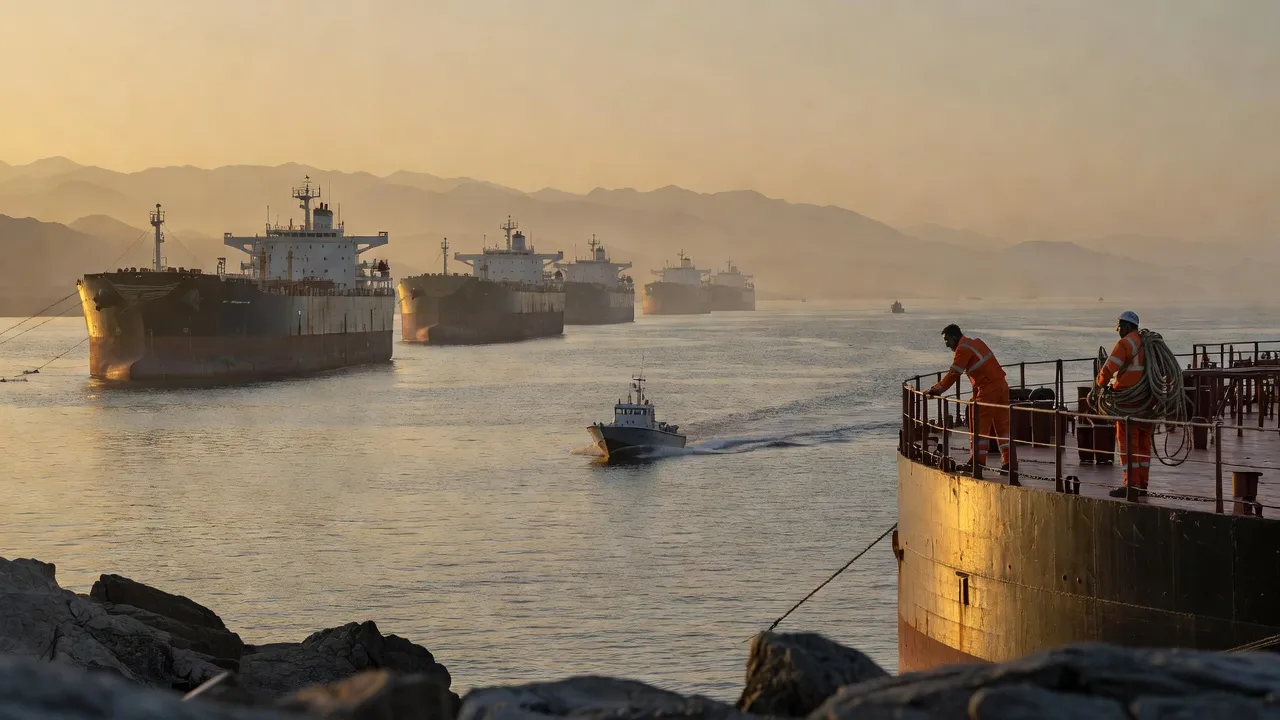
Before the war, around a fifth of the world's oil and gas passed through the Strait of Hormuz, which has been effectively closed since February 2026.

Where it breaks apart
— Nature of the Hormuz dossier — Perspectives differ on the main framing of the crisis: a military security issue for some, an energy and logistical shock for others, and a regional arbitration position for Gulf countries.
— Link between Oman agreement and reopening — The CGRI emphasizes that the reopening of the strait is totally independent of the Iran-Oman talks, while several Western and Asian perspectives present the Oman-Iran agreement as a step towards a resolution.
— Responsibility for the ADNOC attack — Saudi Arabia and Qatar strongly condemn the ADNOC tanker attack as a violation of international law that must be stopped immediately, while the Iranian perspective frames the six conditions as legitimate demands without revisiting this specific incident.
Explore every perspective on this subject across 23 countries.
Compare viewpoints and see where they diverge.
Conflits & Securite
Iran Sets Six Conditions for Reopening Hormuz as the Revolutionary Guards Call the Strait a 'Theatre of War'
On Saturday 8 August 2026 the secretary of Iran's Supreme National Security Council, Mohammad Bagher Zolghadr, published a list of six conditions for reopening the Strait of Hormuz: an end to the war and to attacks on Iran, the lifting of the US naval blockade and of sanctions, compensation for war damage and the release of frozen assets. On Sunday 9 August the Revolutionary Guards hardened the line, calling the strait a "theatre of war" and demanding that Washington accept every condition. The strait, through which roughly a fifth of the world's oil and gas passed before the war, has been closed since US and Israeli strikes on Iran began on 28 February 2026. Oman is separately negotiating a temporary shipping corridor with Tehran.
Understand the context
FEB 28, 2026
US and Israeli strikes on Iran; the Strait of Hormuz is effectively closed
AUG 8, 2026
Iran's Supreme National Security Council publishes six conditions for reopening the strait
Key figures
20%
Share of the world's oil and gas that transited the Strait of Hormuz before the conflict