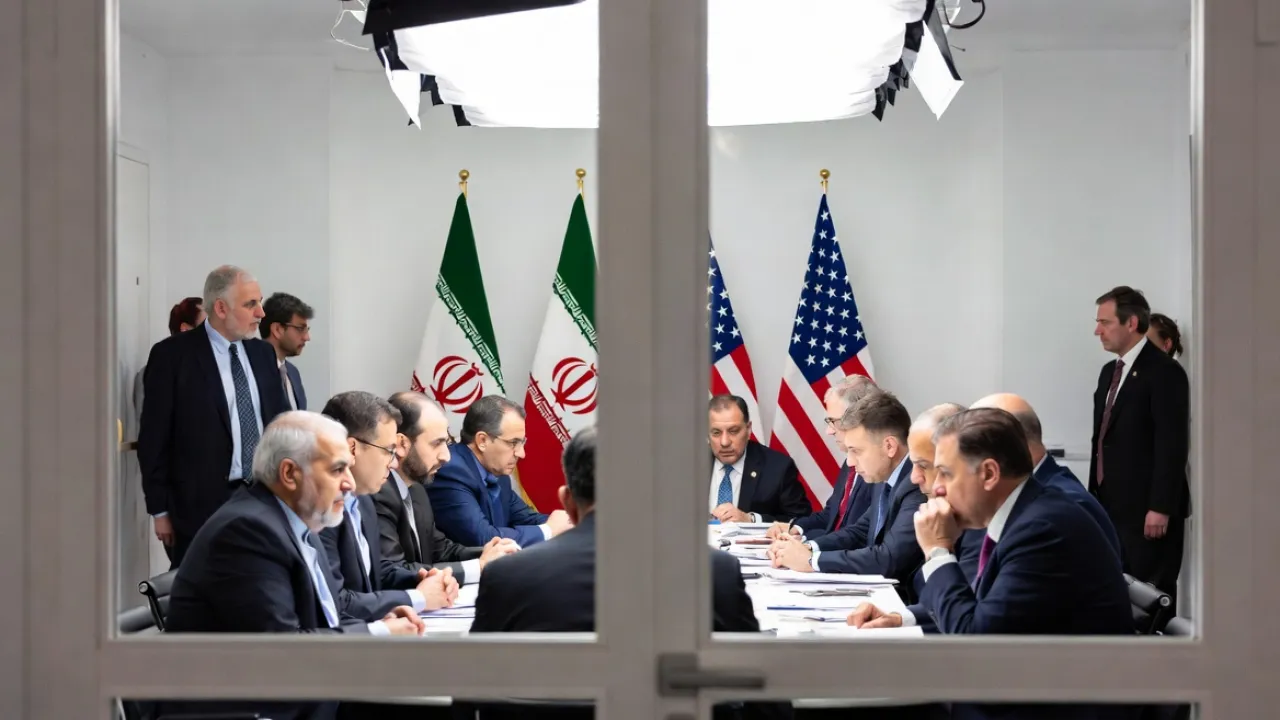
Within 48 hours, the Strait of Hormuz was reopened and then closed again. Iran justified the closure as a reaction to the continued American blockade, which it considers inconsistent with the terms it expected. At the same time, direct negotiations between Tehran and Washington made progress, yet without reaching a final agreement, which remains distant.
The central sticking point remains Iran's nuclear program. This issue crystallizes positions that are hard to reconcile: a demand for complete dismantlement on one side, a refusal to give up nuclear sovereignty on the other, and a search for compromise based on enrichment subject to verification. As long as this equation goes unsolved, diplomatic progress remains fragile.
This context clarifies what is at stake with the strait. A strategic maritime route for energy transit, Hormuz is used here as a lever of pressure, while maintaining the blockade is presented as an instrument of reciprocal pressure. Neither actor appears able to give way without seeming weakened, which sets up a structural deadlock in which every move invites a counter-move.
Several points remain disputed or uncertain. Responsibility for the failed reopening is assigned differently depending on the actor: some point to the non-fulfillment of commitments to lift the blockade, others highlight the provocative nature of the closure. The claim that a deal is "close" is likewise contested by a large share of analysts, who point to incompatible red lines.
The main risk lies in the chain of pressure moves. A single incident — a vessel struck, an aircraft targeted — could tip a still-diplomatic dynamic into escalation, turning a negotiation sequence into open confrontation.