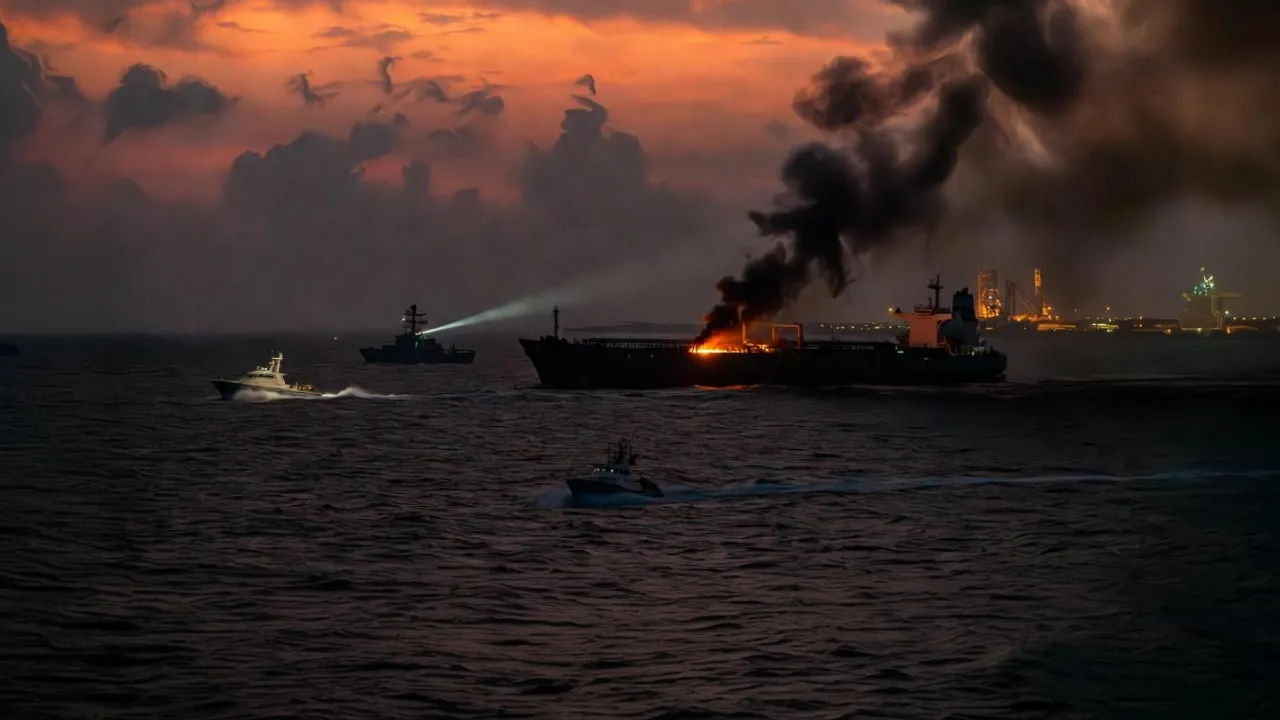
On 5 May 2026, drones and missiles struck oil facilities in Fujairah, in the United Arab Emirates, as well as ships in the Strait of Hormuz. Three Indian nationals were wounded at the Fujairah oil industrial complex. The U.S. military command said it had destroyed six small boats and intercepted several missiles and drones. It was the first direct attack on Emirati soil since the U.S.-Iran ceasefire took effect on 8 April.
The attack came on the very day that "Project Freedom" was launched, the U.S. operation escorting civilian ships through the Strait of Hormuz. It marks the first formal rupture of the ceasefire and stands, within the sequence that opened in early 2026, as a new episode in the battle for Hormuz, following the closure of the strait, the naval blockade, the 8 April truce, and the rejection of a fourteen-point peace plan.
This episode differs from earlier ones in its target: a third country, the Emirates, rather than ships in transit or U.S. forces directly. Several observers see it as reflecting a doctrine aimed at increasing regional pressure without crossing the threshold of a head-on confrontation between Washington and Tehran.
The underlying cause remains disputed. Tehran presents the attack as a response to "American military adventurism" and to the launch of Project Freedom, while Washington calls it an unprovoked aggression. An Iranian claim that a U.S. frigate was hit and forced to withdraw is categorically denied by the U.S. command and is confirmed by no independent source.