Common ground and differences in coverage across the media analysed.
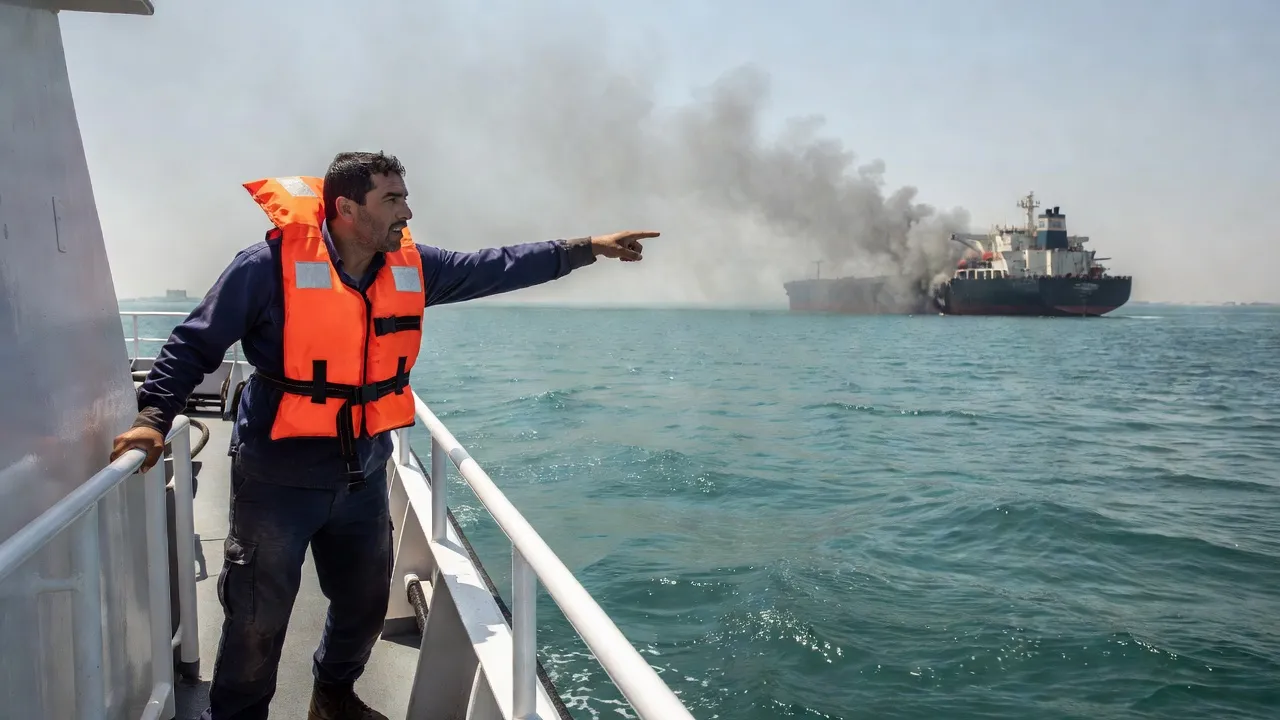
A new attack at sea targeted one or more oil tankers in the Strait of Hormuz in early September 2026, following the US-Iranian war that began in late February.
Maritime traffic in the Strait of Hormuz is collapsing and oil prices are soaring (Brent above $94-95, the highest in several weeks), with global economic repercussions, from European gas to Nigerian and Pakistani gas pumps.
No neutral party has determined responsibility for the attack: Riyadh and its Gulf allies attribute it to Iran, while Tehran disputes this and cites mines that hit ships it frames as linked to the United States.
Riyadh, the CCG, and Qatar attribute the attack on the supertanker SIDR to Iran as a matter of fact; Iranian media denies this and mentions mines that hit tankers presented as being 'controlled by the United States'.
Coverage aligned with this reading
Coverage that diverges
Iran updates a list of 'offending vessels' it claims to be monitoring in the strait, while Qatar and Saudi Arabia condemn an illegal closure used as a means of pressure and a violation of international law.
Coverage aligned with this reading
Coverage that diverges
Greek and Russian media, via Axios, document direct US strikes against Iranian tankers in a reciprocal tanker war logic, while Saudi Arabia and Qatar frame the SIDR attack as unilateral aggression against civilian navigation.
Coverage that diverges
This grouping describes the publications analysed, not the position of these countries’ populations or of their governments.
What the coverage of each country leaves aside, while others put it forward.
Australia
Greece
United States
Preview: 3 of 10 media perspectives. Syntheses of the media analysed — not direct quotations. Method & limitations
Riyadhh denounces a direct Iranian aggression against its national vessel and rallies the Gulf, Qatar, and Jordan in a joint condemnation of the attack on the supertanker SIDR.
2 sources · View sources
Tehran is firing back with a counteraccusation: according to conservative media outlets, it was not a Saudi ship that Iran targeted, but rather the US striking Iranian tankers, while Beijing positions itself as a mediator in the strait.
2 sources · View sources
The United States government is downplaying the attack on the Saudi oil tanker SIDR by burying it in its own record oil statistics, while Americans are watching as President Trump jokingly suggests renaming the Strait of Hormuz amid escalating military tensions.
2 sources · View sources
DOMINANT ANGLE
Riyadhh denounces a direct Iranian aggression against its national vessel and rallies the Gulf, Qatar, and Jordan in a joint condemnation of the attack on the supertanker SIDR.
ANALYSIS
Riyadh, Thursday, September 3, 2026.
DOMINANT ANGLE
Tehran is firing back with a counteraccusation: according to conservative media outlets, it was not a Saudi ship that Iran targeted, but rather the US striking Iranian tankers, while Beijing positions itself as a mediator in the strait.
ANALYSIS
Tehran, September 3, 2026.
DOMINANT ANGLE
The United States government is downplaying the attack on the Saudi oil tanker SIDR by burying it in its own record oil statistics, while Americans are watching as President Trump jokingly suggests renaming the Strait of Hormuz amid escalating military tensions.
ANALYSIS
The United States government is downplaying the significance of an attack on a Saudi oil tanker in the Strait of Hormuz, which killed two crew members on Tuesday, according to the UKMTO.
DOMINANT ANGLE
Doha condemns the attack on the SIDR supertanker as a violation of international law, demands the unconditional reopening of the Strait of Hormuz, and categorically rules out using it as a means of pressure.
ANALYSIS
Doha, September 3, 2026.
DOMINANT ANGLE
Islamabad is gauging the impact of the "Trump Strait" as oil prices surge and the Gulf War shows no signs of easing.
ANALYSIS
Islamabad, September 3, 2026.
DOMINANT ANGLE
Nigeria is already tallying the cost of the Strait of Hormuz: the surge in Brent to $95 has a direct impact on the country's oil deposits and gas pumps, well before Lagos takes a stance on who struck the Saudi supertanker SIDR.
ANALYSIS
Abuja, Thursday, September 3, 2026.
DOMINANT ANGLE
Moscow is calculating the oil bill before naming a culprit in the attack on Sidr
ANALYSIS
Moscow, Thursday, September 3, 2026.
DOMINANT ANGLE
London is first assessing the financial impact of the Sidr attack — Brent, bonds, and stock markets — before determining whether Iran or mines were responsible for targeting the Saudi oil tanker.
ANALYSIS
London, September 3, 2026.
DOMINANT ANGLE
Canberra is playing down the attack on the SIDR oil tanker, overshadowed by the narrative surrounding the Trump Strait and the global energy bill.
ANALYSIS
Canberra, September 3, 2026.
DOMINANT ANGLE
Athens is calculating the escalation in dollars per barrel and euros per megawatt hour, with the Greek merchant navy on the front line of increased freight and insurance costs.
ANALYSIS
Athens, September 3, 2026.
Explore every perspective on this subject across 10 countries.
Compare viewpoints and see where they diverge.
published on
countries
sources
articles
gap
The Saudi supertanker SIDR, owned by Bahri, was hit around 11:40 pm local time on Monday, August 31, 2026, in the Strait of Hormuz, about 20 nautical miles northeast of Khasab, Oman, killing two Filipino crew members, with Riyadh framing the incident as an Iranian attack.
The strait remains virtually impassable, with six ships crossing on Tuesday, compared to a pre-war daily average of 138, and no independent confirmation of responsibility has been made.
Tehran attributes the incident to mines that hit two oil tankers, without confirming a direct attack on the SIDR.
The Iranian entity managing the strait updates its list of "offending ships" at Hormuz.
Trump suggests renaming the Strait of Hormuz to "Trump Strait", then says he "just threw out the idea" with a laugh.
More divergent than 30% of recent comparable stories (reference: 91 recent stories measured with the same method).