Washington bombs Iran's water reservoirs and threatens bridges and power plants as the deal collapses
June 11, 2026·9 COUNTRIES
9countries·27sources·27articles
Middle East (3)
Asia (3)
Americas (2)
Russia & CIS (1)
Middle East
Asia
Americas
Russia & CIS
conflitsgeopolitiqueeconomie
EXPLORE THIS STORY
Context
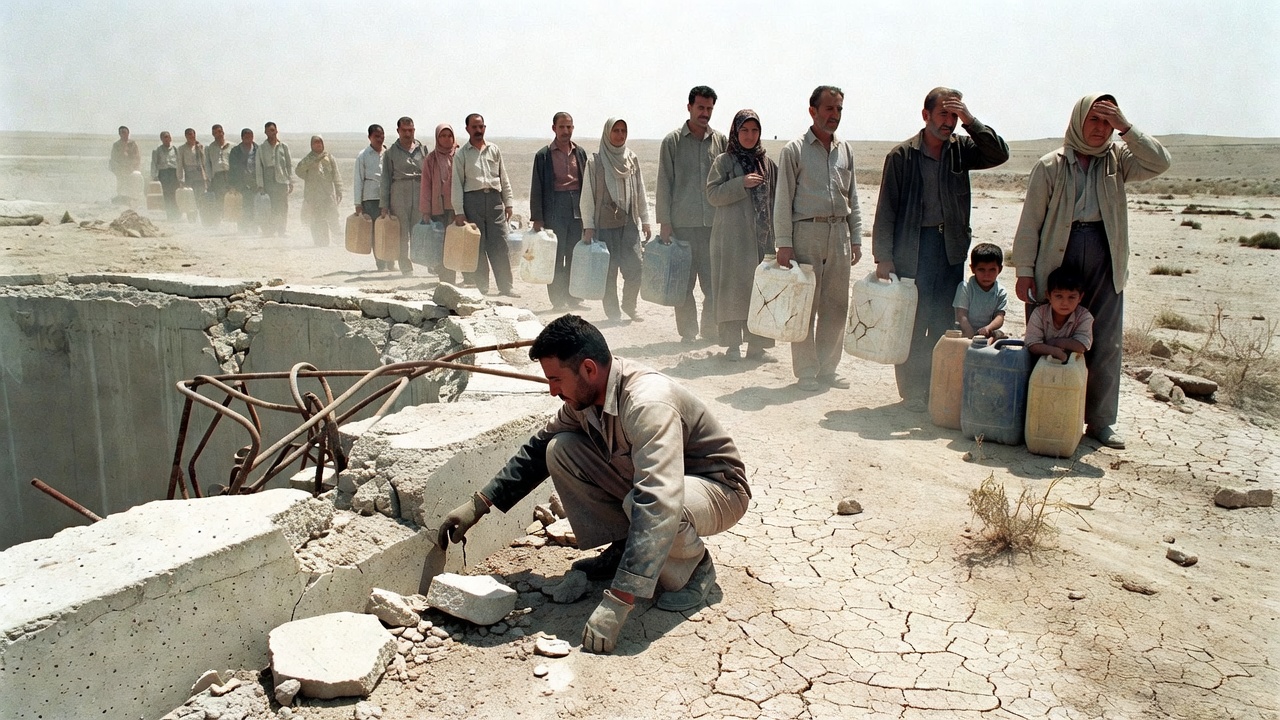
A second wave of US strikes hit Iran on 10 June, followed by Iranian retaliation against US bases in Kuwait, Bahrain and Jordan. The episode came after an Apache helicopter went down near the Strait of Hormuz, which had already strained the truce reached in April under Pakistani mediation. Among the targets were water reservoirs in Hormozgan province, whose destruction left more than 20,000 residents without water during intense heat.
This sequence fits within an unstable ceasefire punctuated by escalations since 8 April. In parallel, the IAEA adopted a resolution by 21 votes demanding access to Iranian nuclear sites, and Washington launched a new round of sanctions dubbed "Economic Fury."
The Strait of Hormuz, through which oil, LNG and fertilizer flow, remains the crux of the crisis. Its partial blockage doubled containerized maritime freight, pushed up oil prices and drove US inflation to a three-year high (4.2% in May), with gasoline above four dollars. Twenty-four South Korean ships remain trapped in the strait and sixteen tankers have been spotted off Oman with their transponders switched off.
The nature of the strikes remains disputed: some actors see a deliberate attack on civilian infrastructure, while Washington describes a targeted operation against radars and air defenses. Responsibility for the breakdown of the truce is likewise the subject of crossed accusations, with each side blaming the other for the escalation.