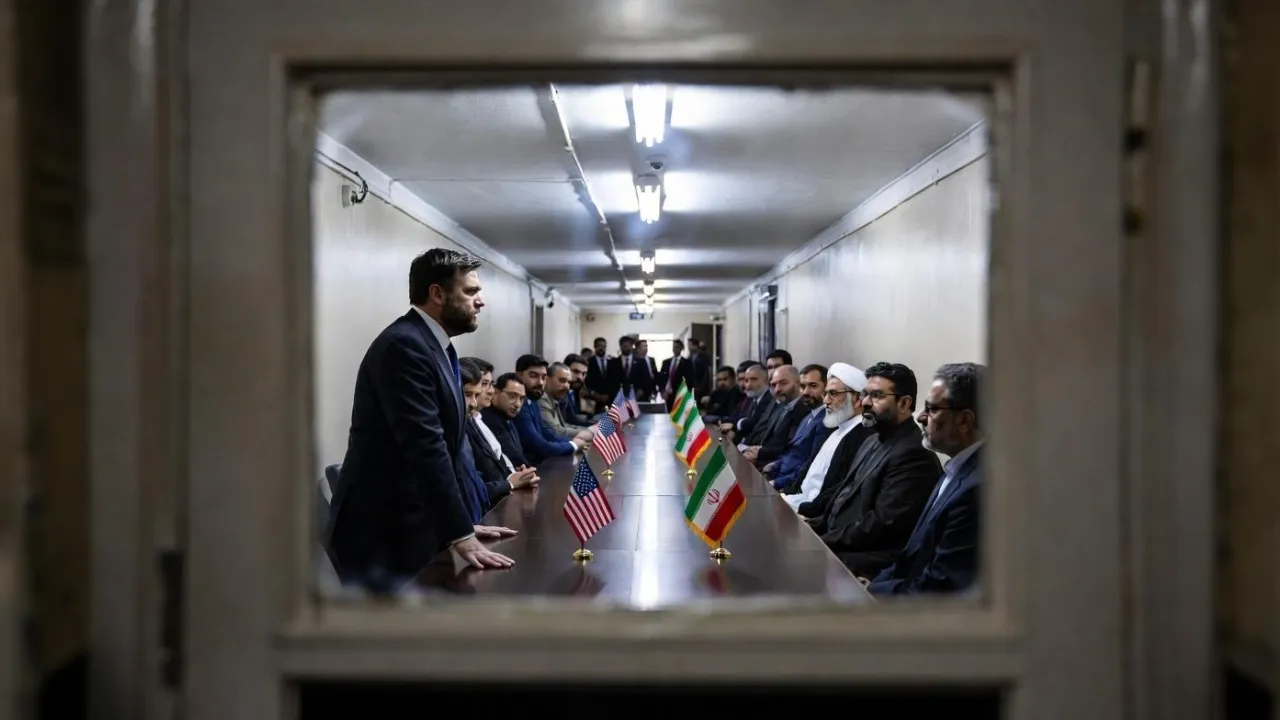
Direct talks between the United States and Iran open in Islamabad, a meeting widely framed as a tipping point that could seal an agreement or accelerate escalation. Choosing the Pakistani capital rather than Geneva or Doha shifts the diplomatic center of gravity toward Asia and redraws the list of mediators both sides consider acceptable.
Several facts are agreed upon across coverage. The most concrete and immediate threat remains a blockade of the Strait of Hormuz, a major artery for the world's oil. The absence of an American fallback plan should talks fail is identified by many countries as a vulnerability. On the Iranian side, the conditions set in advance, notably a truce in Lebanon and the release of frozen assets, are seen as obstacles to a quick settlement.
The backdrop is a world order being reshaped. Washington negotiates without a clear mandate from Congress, Tehran advances demands for reparations while presenting itself as a power rather than a defeated party, and Europe is realizing that its limited fuel reserves would not hold if diplomacy were to collapse.
Competing readings clash. Some actors describe the ceasefire as a negotiated diplomatic exit, others as an admission of weakness. The Iranian conditions are cast in turn as legitimate demands or as blackmail. China's role in arming Iran and helping it bypass sanctions is highlighted by some and left unmentioned by others. Finally, there remains the disputed question of which side is truly negotiating from a position of strength.
Explore every perspective on this subject across 26 countries.
Compare viewpoints and see where they diverge.
published on
countries
sources
articles
gap