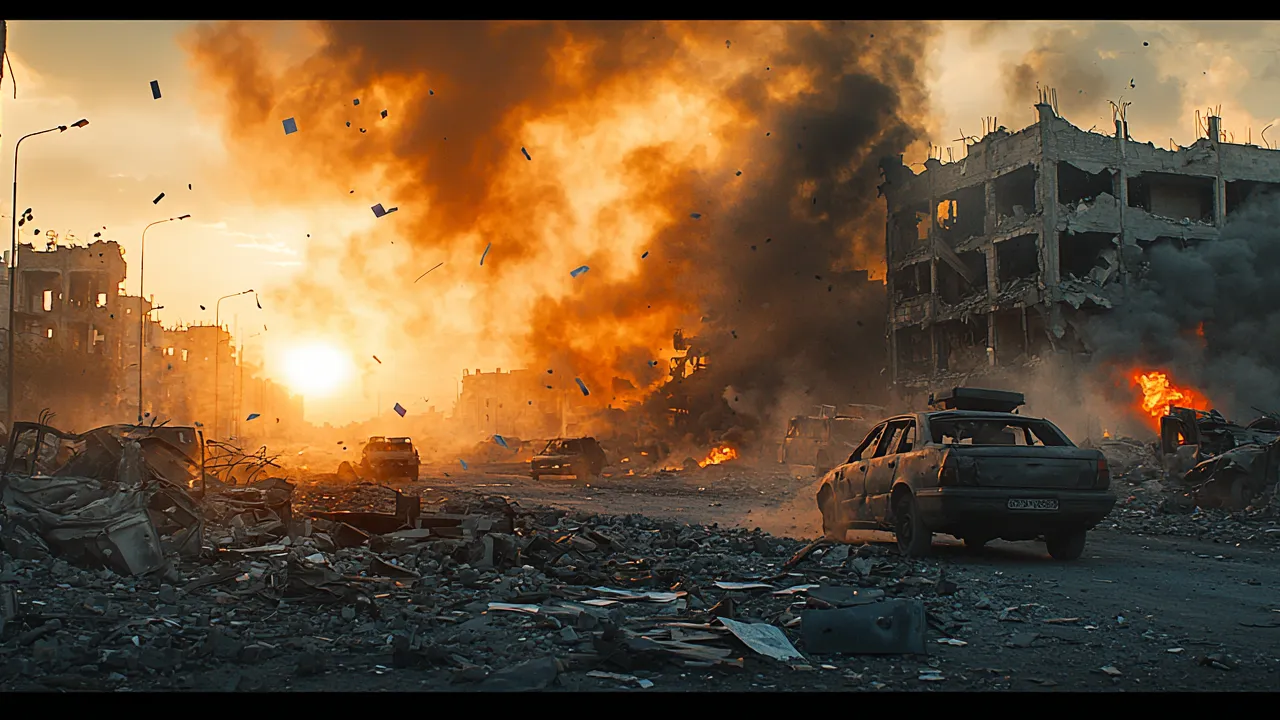
On the twenty-fifth day of the conflict, the military situation remains tense on several fronts. Strikes continue and the Strait of Hormuz crisis has emerged as a global economic threat, a point on which all the actors and countries observed converge without exception. Initially presented as a surgical, limited operation, the conflict is now described as a stalemate, with no clear prospect of resolution despite a growing number of diplomatic initiatives.
The Strait of Hormuz sits at the heart of the stakes: a vital passage for the world's energy supply, its disruption weighs both on countries that depend on it directly for their supplies and on international financial markets. This shared dependence explains why the crisis affects economies far removed from the theatre of operations. A fault line thus separates the countries most exposed to a closure of the waterway from those able to benefit from rising energy prices.
One point remains deeply disputed: whether negotiations are actually under way. On one side, the existence of talks is asserted; on the other, these statements are denied and described as baseless. These contradictory accounts cannot be independently verified, sustaining a zone of diplomatic uncertainty. It is within this space that several regional powers are trying to position themselves as mediators and revive dialogue.
In the absence of any overarching framework, partial and localised arrangements are emerging at the margins of the deadlock, for instance around the passage of certain vessels. The disagreements also concern the origin of the escalation and the legitimacy of the military operations, with some actors presenting them as the neutralisation of a threat and others as an act of aggression.
Finally, the impact on civilian populations on both sides remains, according to several assessments, largely under-documented relative to the scale of the fighting, with each side tending to highlight the other's losses while playing down its own.