
Common ground and differences in coverage across the media analysed.
Israeli strikes on Lebanon during Islamabad peace negotiations are perceived as peace sabotage by a majority of countries
The US is unable to control its Israeli ally — a cross-cutting assessment from Singapore to Russia
The Gaza ceasefire has not ended violence — 738 deaths in six months
Mass killing (Australia), ethnic cleansing (Qatar), right to security (Israel) — vocabulary is a battlefield
Coverage that diverges
Israel sabotages negotiations (Singapore, Russia) versus Iran refuses to reopen Hormuz (USA, Israel)
Absent from critical analysis (Qatar, Turkey, Russia) versus provocative actor (USA, Israel)
Coverage that diverges
This grouping describes the publications analysed, not the position of these countries’ populations or of their governments.
What the coverage of each country leaves aside, while others put it forward.
Israel
United States
Qatar
Preview: 3 of 18 media perspectives. Syntheses of the media analysed — not direct quotations. Method & limitations
Canberra names Israeli 'mass killings' and observes Trump forced to reconsider Lebanon
1 source · View sources
Paris experiences Lebanon as national trauma and links Israeli strikes to French historical responsibility
2 sources · View sources
London counts bodies — a Palestinian shot by settlers, 738 dead since the ceasefire — where others discuss geopolitics
2 sources · View sources
DOMINANT ANGLE
Canberra names Israeli 'mass killings' and observes Trump forced to reconsider Lebanon
ANALYSIS
Canberra points to what few Western allies dare name with such clarity: Israeli mass killings have forced Trump to think about Lebanon.
DOMINANT ANGLE
Paris experiences Lebanon as national trauma and links Israeli strikes to French historical responsibility
ANALYSIS
Paris narrates Lebanon as ongoing trauma, not as a geopolitical file like any other.
DOMINANT ANGLE
London counts bodies — a Palestinian shot by settlers, 738 dead since the ceasefire — where others discuss geopolitics
ANALYSIS
London documents daily life under bombs with the factual rigor that is the hallmark of British journalism.
DOMINANT ANGLE
Doha accuses Israel of transforming religious holidays into celebration of ethnic cleansing in Palestine
ANALYSIS
Doha deploys the most acerbic and unapologetic coverage of Israel in the entire pool, without any pretense of neutrality.
DOMINANT ANGLE
Singapore identifies Lebanese strikes as the major flaw in Trump's Iran deal
ANALYSIS
Singapore connects Israeli strikes on Lebanon to the future of Iran negotiations with surgical clarity that most Western coverage lacks.
DOMINANT ANGLE
Washington is split: the right watches Iranian propaganda, the left watches DNC dysfunction — and no one watches Lebanon
ANALYSIS
Washington approaches Lebanon through two angles that reveal internal American fracture.
DOMINANT ANGLE
Berlin documents continued West Bank settlement expansion during war, a courageous editorial choice for Germany
ANALYSIS
Berlin chooses an angle that speaks volumes about its fraught relationship with Israel: Tagesschau documents continued Israeli settlement expansion in the West Bank during wartime.
DOMINANT ANGLE
New Delhi discovers the lost mines of Hormuz and links Lebanese strikes to its own energy bill
ANALYSIS
New Delhi covers Lebanon through the question everyone asks but no one solves: why doesn't Iran reopen the Strait of Hormuz?
DOMINANT ANGLE
Madrid finds itself accused of 'diplomatic warfare' by Netanyahu for recognizing Palestine and closing airspace
ANALYSIS
Madrid finds itself directly in Netanyahu's sights.
DOMINANT ANGLE
Jakarta reminds that its peacekeepers pay the price for Israeli bombs Lebanon that great powers cannot stop
ANALYSIS
Jakarta brings an angle no one else covers: the cost in Indonesian blue helmets in Lebanon and the paradox of peacekeeping.
DOMINANT ANGLE
Ottawa analyzes a US-Israel alliance reaching unprecedented heights while revealing fatal contradictions
ANALYSIS
Ottawa analyzes the US-Israel relationship as an alliance simultaneously reaching new peaks and exposing its limits.
DOMINANT ANGLE
Beijing documents South Korea-Israel fracture to show that the pro-Washington coalition fractures from within
ANALYSIS
Beijing approaches the Israel-Lebanon conflict through an unexpected angle: the diplomatic crisis between South Korea and Israel over a 'disturbing' video.
DOMINANT ANGLE
Islamabad discovers that hosting negotiations is also being a hostage to Israeli violence
ANALYSIS
Islamabad experiences Lebanese strikes as a direct threat to the negotiations it hosts.
DOMINANT ANGLE
Abuja relays Netanyahu's accusations against Spain without taking position, calculated prudence
ANALYSIS
Abuja relays Netanyahu's accusation against Spain — an editorial choice reflecting Nigerian fascination with great power confrontations.
DOMINANT ANGLE
Brasília documents the diplomatic mirror game Lebanon-Israel with the calculated distance of a UN Security Council aspirant
ANALYSIS
Brasília covers the diplomatic component of conflict: Lebanon confirming a meeting with Israel that Israel denies concerns Hezbollah truce.
DOMINANT ANGLE
Moscow transforms its surviving journalist from an Israeli strike into proof of deliberate Israeli violence on Lebanon
ANALYSIS
Moscow transforms Israeli strikes on Lebanon into irrefutable proof of Western duplicity and American complicity.
DOMINANT ANGLE
Ankara denounces lack of Palestinian safety despite truce and positions itself as champion of the Muslim cause
ANALYSIS
Ankara defends Palestinians with the vehemence of a country claiming to be the Muslim world's champion.
DOMINANT ANGLE
Jerusalem diverts attention from Lebanese strikes to technological innovation, the pool's most revealing blind spot
ANALYSIS
Jerusalem diverts attention from Lebanese strikes toward innovation — a new Israeli application tracking disaster victims in real time and accelerating emergency response.
Explore every perspective on this subject across 18 countries.
Compare viewpoints and see where they diverge.
published on
countries
sources
articles
gap
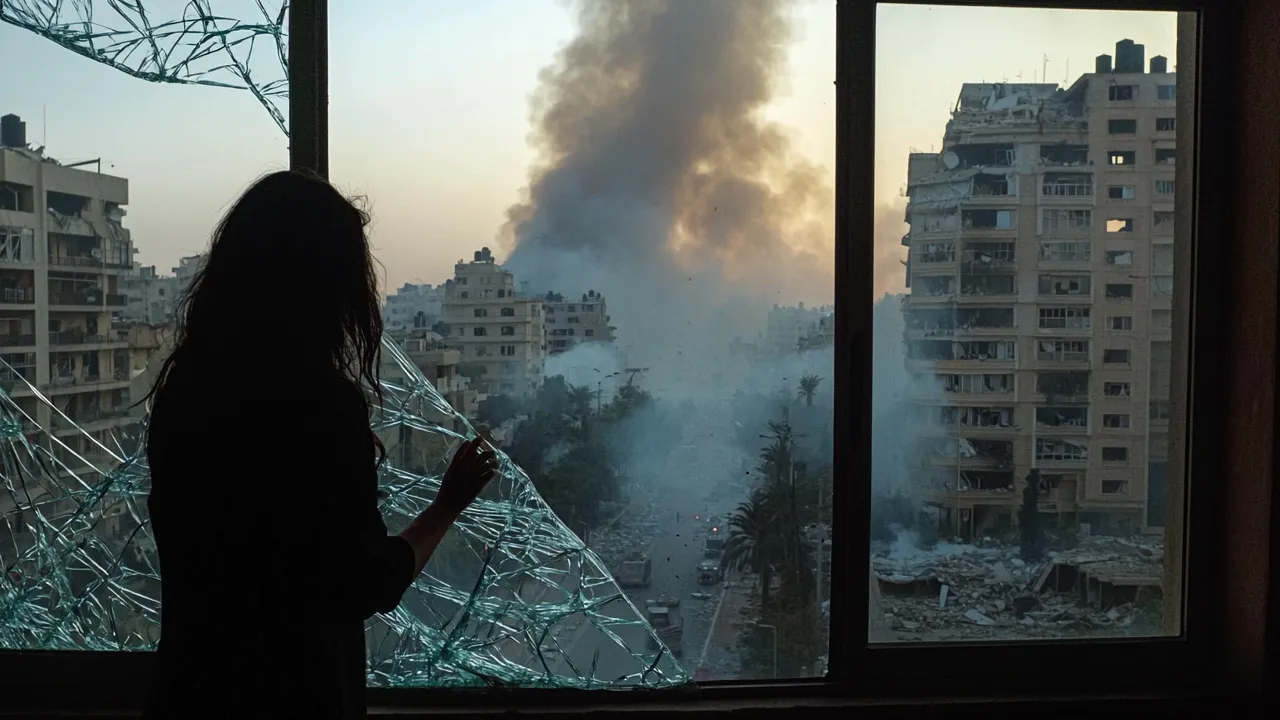
While peace talks were under way in Islamabad, Israeli strikes hit Lebanon, killing thirteen Lebanese security officers among the victims. At the same time, the World Food Programme warned of a food crisis in the country. Washington publicly asked its Israeli ally to pause, without managing to bring the operations to a halt.
This gap between diplomacy and the ground became the heart of the matter. For many actors, carrying out bombings in the middle of negotiations amounts to undermining the process under way. The observation that the United States is unable to alter its ally's behaviour is shared very widely, from states in Southeast Asia to Russia.
The context sheds light on this tension. American diplomacy in the Middle East is negotiating a ceasefire with Iran while failing to prevent Israel from striking a third country, a structural contradiction that threatens to collapse the talks before any result. The earlier ceasefire in Gaza did not end the violence, with 738 deaths recorded over six months, and settlement expansion continued alongside the conflict.
Several points remain sharply disputed. Actors disagree both on the words used to describe the violence and on who bears responsibility for the deadlock: some point to the Israeli strikes, others to Iran's refusal to reopen the Strait of Hormuz. The role of Hezbollah, central for some and absent for others, shows how far the reading of the facts diverges from one capital to another.
Measured with the previous method (distance between texts), on a different scale.