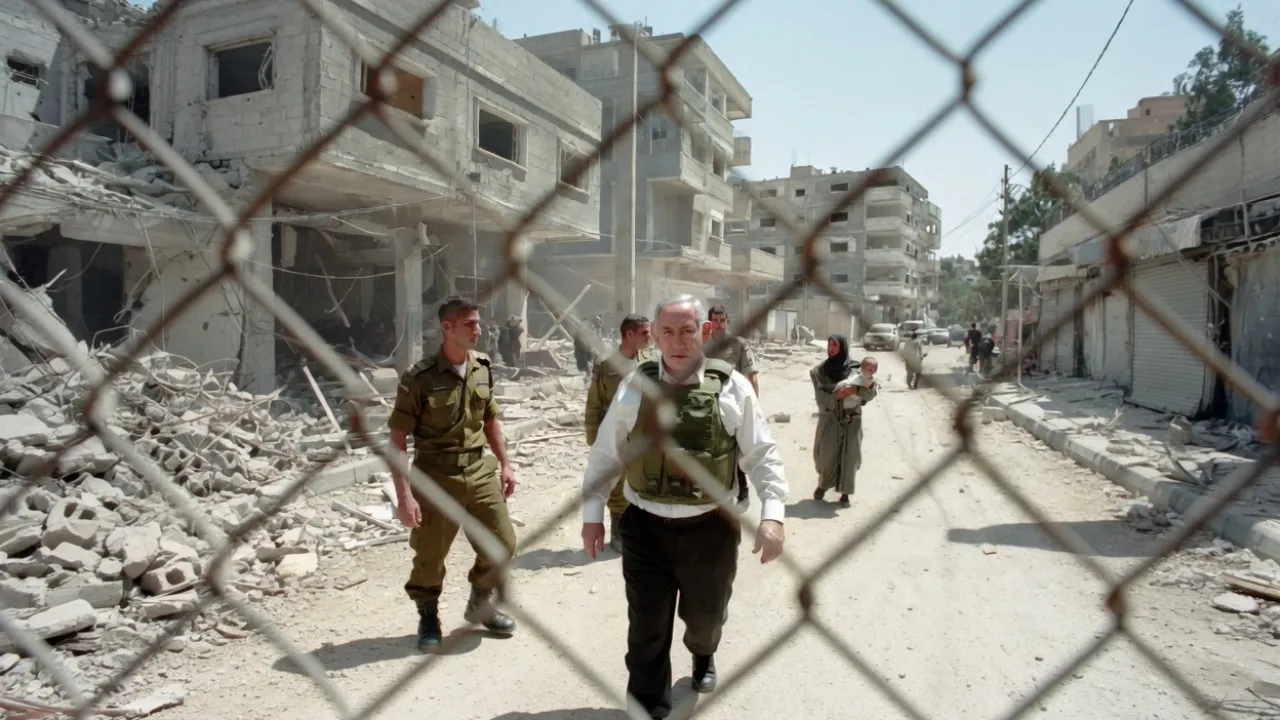
Four days before talks scheduled in Washington, Israeli strikes on Lebanon continue and intensify. Several events in this sequence have drawn international attention: the death of an infant under the strikes during the funeral of the child's father, vehicles of the UN force (UNIFIL) struck by a tank, and a visit by Israeli Prime Minister Netanyahu to the south of the country.
This context creates a strategic paradox for the coming negotiations. On one hand, military operations are unfolding at the very moment a diplomatic process is meant to open. On the other, the Israeli leader's visit to territory belonging to the state with which he is to negotiate is read by some actors as a show of force rather than a gesture of openness. The incidents involving peacekeepers, including European soldiers, add an international dimension by testing the UN presence on the ground.
How these facts should be read remains deeply disputed. Israel and its main ally present the operations as a necessary defensive response to Hezbollah, accused of using civilian infrastructure; they contextualize or omit civilian losses. Conversely, several countries in the Arab world, in Europe and beyond describe the same strikes as attacks affecting civilians and health facilities.
The disagreement also concerns the meaning of the timing. Some actors see a deliberate sabotage of the talks, others a form of military pressure applied ahead of the negotiating table, while Israel denies any link between its operations and the diplomatic process. What remains uncertain, then, is less the facts themselves than their interpretation and their consequences for the announced dialogue.