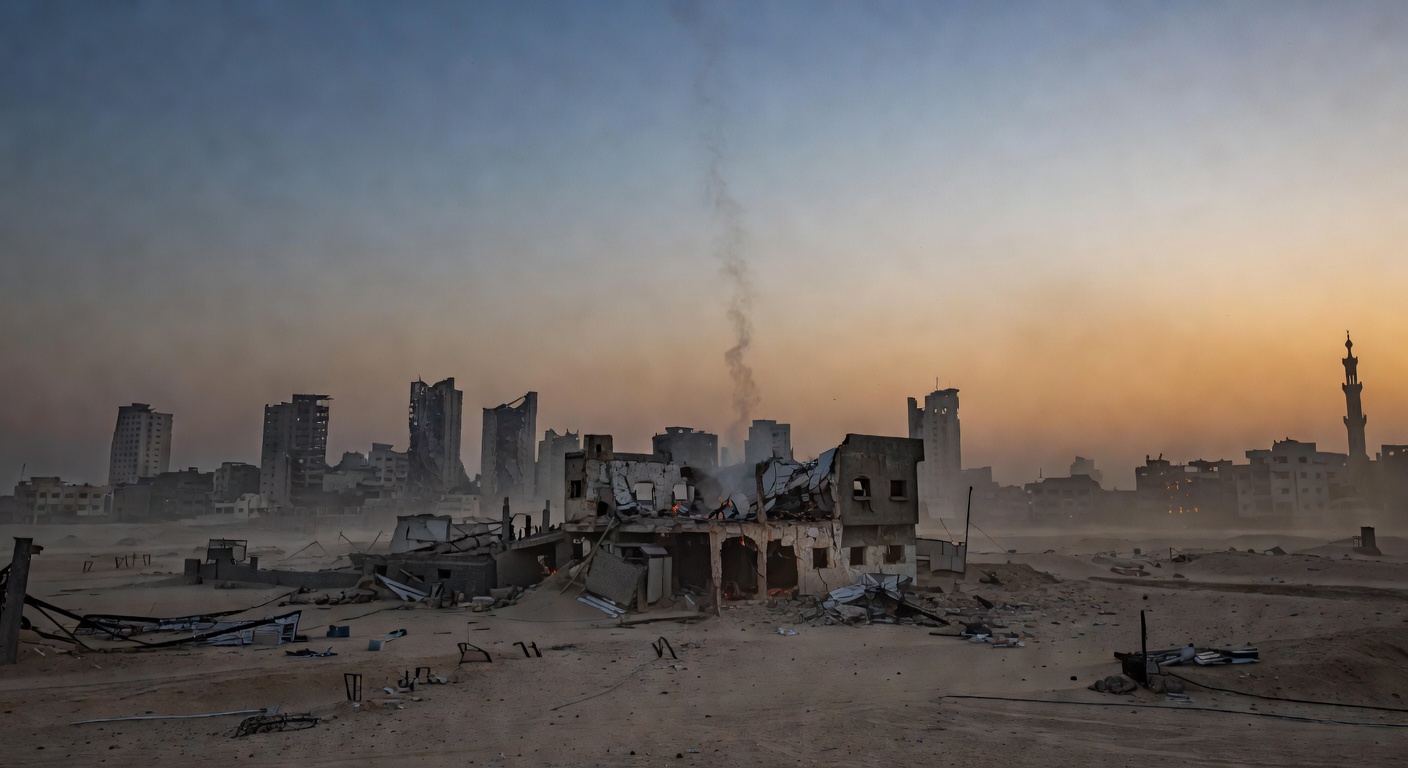
On 28 May 2026, Israel announced that an airstrike in Gaza on 26 and 27 May had killed Mohammed Odeh, described as a commander of Hamas's armed wing, the Al-Qassam Brigades. He is the second military leader of the movement to be killed in eleven days, his predecessor having been killed earlier in the month under comparable circumstances.
The operation comes while a ceasefire has been formally in force since April 2026. Israeli strikes nonetheless continue to test it, against the backdrop of a broader regional escalation: U.S. strikes are targeting Iranian sites and tensions are rising around the Strait of Hormuz on 27 and 28 May, while the Lebanese front sees a marked intensification.
This sequence layers several intertwined levels of confrontation — Gaza, Lebanon and the Iran-U.S. standoff — that weigh on the room for manoeuvre of regional mediators as potential interlocutors disappear.
How to read these killings is the subject of deep disagreement. Some actors frame them as self-defence and counterterrorism, describing Hamas as a terrorist organisation and the strike as a tactical success. Others call them extrajudicial executions contrary to international law and describe the movement as a resistance force. The long-term effectiveness of these successive decapitations is itself disputed, with some pointing to Hamas's capacity for resilience despite the rapid loss of two of its military leaders.
No short-term diplomatic outcome is anticipated, with all actors noting the absence of a credible political horizon despite the repetition of targeted operations. Several of them foreground the humanitarian consequences for civilians in Gaza and Lebanon, while others structure their reading around security, strategic or energy stakes.