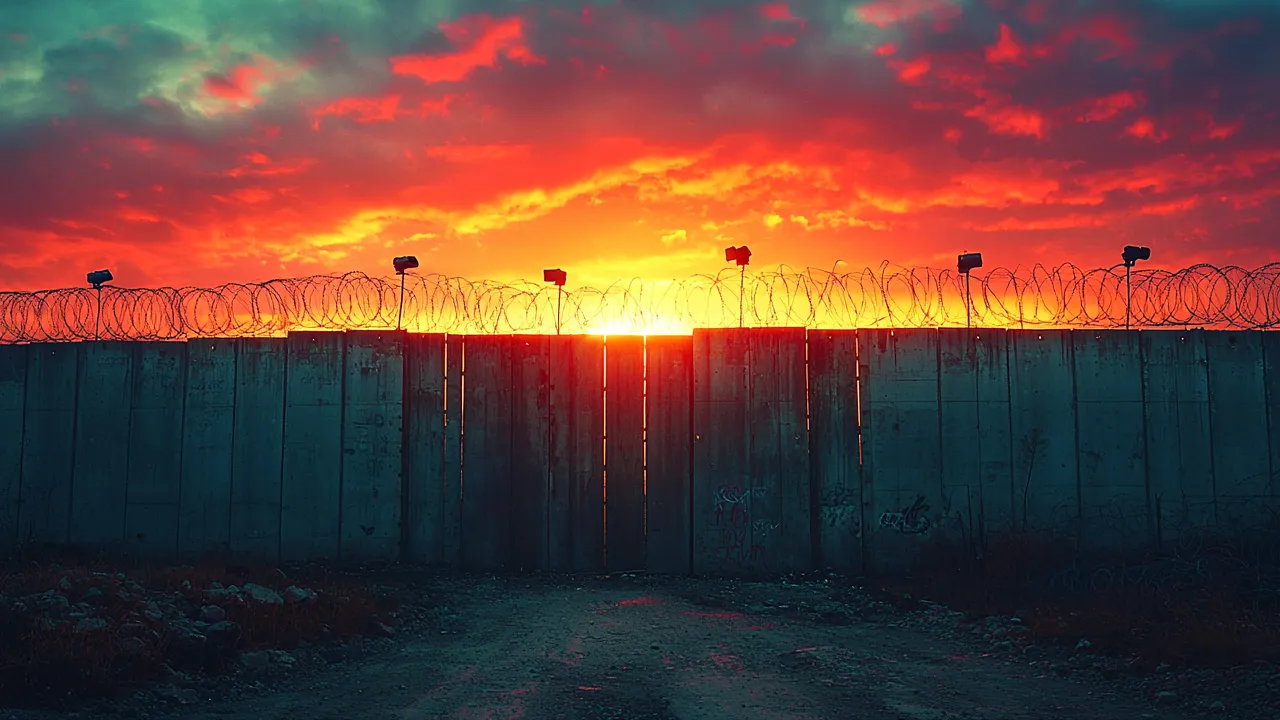
Israel facing security and diplomatic threats
published on
countries
sources
articles
Measured with the previous method (distance between texts), on a different scale.
A military escalation involving Israel has been compounded by intense regional diplomatic activity. Strikes have been exchanged, some breaching defense systems, and the ongoing operations have fueled fears that the conflict could spread beyond its immediate protagonists. All actors agree on one central point: the situation of the affected civilian populations is alarming, regardless of where responsibility lies.
The repercussions extend well beyond the theater of operations. Energy prices and several strategic trade routes are directly exposed, placing countries with no direct military involvement among those first affected. This economic dimension explains why states far from the conflict are following events closely, fearing regional and then international destabilization.
The underlying backdrop is a reshaping of global balances, in which the old post-Cold War Western consensus is weakening. Diplomatic alignments now weigh as heavily as the facts in how the crisis is read, and national media spaces tend to amplify these divides, reinforcing parallel narratives.
It is precisely the interpretation of the facts that remains disputed. Actors disagree over whether the Israeli operations are defensive or offensive, over the origin of the escalation — an initial aggression attributed to one side versus a response deemed disproportionate by the other — and over which victims are foregrounded. The role of the United States is likewise contested, cast at times as a stabilizing factor, at times as a party to the escalation. On these points no common narrative prevails, and the outcome of the diplomatic sequence remains uncertain.
What the comparison reveals
Common ground and differences in coverage across the media analysed.
What the media report in common
Le conflit a des répercussions économiques mondiales majeures, notamment sur les prix énergétiques et les routes commerciales
La situation humanitaire des populations civiles affectées est préoccupante, indépendamment des responsabilités
L'military escalation représente un risque de déstabilisation régionale et internationale
Where media coverage diverges
Légitimité des actions militaires israéliennes
Division fondamentale sur la nature défensive versus offensive des opérations militaires israéliennes
Responsabilité dans l'escalade
Attribution causale divergente entre agression iranienne initiale versus réponse israélienne disproportionnée
Cadrage victimaire
Identification des victimes principales entre civils palestiniens/libanais versus sécurité israélienne
Coverage that diverges
This grouping describes the publications analysed, not the position of these countries’ populations or of their governments.
Blind spots
What the coverage of each country leaves aside, while others put it forward.
 United States
- Victimes civiles palestiniennes
- Critiques internationales du soutien américain
- Violations du international law par Israel
 China
China- Menaces sécuritaires iranienens réelles
- Justifications défensives israéliennes
- Rôle déstabilisateur de l'Iran
 Turkey
- Actions militaires iraniennes
- Menaces du Hezbollah
- Soutien iranien au terrorisme
 Israel
- Victimes civiles des frappes
- Critiques juridiques internationales
- Coûts humanitaires régionaux
How each country reads it
Preview: 3 of 18 media perspectives. Syntheses of the media analysed — not direct quotations. Method & limitations
 Singapore
Neutral trade hub analyzing the economic impacts of a distant geopolitical conflict
1 source · View sources
 Qatar
QatarAnti-hegemonic narrative centered on the victimization of Arab/Muslim populations
2 sources · View sources
 Egypt
EgyptEconomic victimization and neutral mediator positioning in regional conflicts
2 sources · View sources
The full text, country by country
Singapore
DOMINANT ANGLE
Neutral trade hub analyzing the economic impacts of a distant geopolitical conflict
ANALYSIS
The Singaporean media coverage reveals a characteristic approach of a global commercial hub concerned with regional stability and concrete economic impacts.
Qatar
DOMINANT ANGLE
Anti-hegemonic narrative centered on the victimization of Arab/Muslim populations
ANALYSIS
The Qatari media coverage reveals a geopolitical perspective aligned with the regional resistance axis, with Al Jazeera articulating a deeply critical narrative of Israeli-American military action.
Egypt
DOMINANT ANGLE
Economic victimization and neutral mediator positioning in regional conflicts
ANALYSIS
Egyptian media coverage reveals a strategically balanced approach that reflects Cairo's complex geopolitical position in the Middle East.
Israel
DOMINANT ANGLE
Israel defensive actor面对区域生存威胁的防御性行为者 It seems there was a mistake in processing your request. Here is the correct translation: Israel defensive actor against regional existential threats
ANALYSIS
The analysis of Israeli media coverage reveals a deeply polarized perspective that oscillates between defending the legitimacy of Israeli military actions and acknowledging existential security challenges.
 United Kingdom
DOMINANT ANGLE
Geopolitical analysis focusing on long-term diplomatic implications
ANALYSIS
The British media coverage reveals a characteristic nuanced and analytical approach to the conflict, prioritizing geopolitical complexity over polarization.
 Ukraine
DOMINANT ANGLE
Ukraine collateral victim of the Russo-Iranian axis in the Middle East
ANALYSIS
Ukrainian media coverage reveals a unique geopolitical perspective that places Ukraine at the center of a complex chessboard where it navigates between victimization and strategic positioning.
 Spain
Spain
DOMINANT ANGLE
Humanitarian denunciation of Israeli military excesses through victims' testimonies
ANALYSIS
The Spanish media coverage, illustrated by this El País article, reveals a strongly critical perspective towards Israeli military actions in Palestinian territories.
United States
DOMINANT ANGLE
Israel as a defensive ally against the globalized Iranian terrorist threat
ANALYSIS
The American media coverage reveals a deeply polarized framing between a dominant pro-Israel perspective (Fox News) and a more critical and nuanced approach (NPR), reflecting internal American divisions on Middle East policy.
 Canada
DOMINANT ANGLE
Economic alarmism and implicit support for Israel's position in a regional conflict
ANALYSIS
Canadian media coverage reveals a complex geopolitical perspective marked by an overwhelmingly alarmist tone and an obsessive focus on the global economic repercussions.
 Argentina
DOMINANT ANGLE
Geopolitical balancing between civic solidarity and diplomatic neutrality
ANALYSIS
The Argentine media coverage reveals a complex geopolitical position, torn between the pro-Israel statements of Milei and traditional diplomatic imperatives.
China
DOMINANT ANGLE
American diplomatic isolation and economic costs of the conflict
ANALYSIS
The Chinese media coverage reveals a strategically balanced approach that avoids explicitly taking sides while highlighting the destabilizing consequences of American-Israeli actions.
 Pakistan
DOMINANT ANGLE
Pakistan mediator in the face of American-Israeli aggression against Iran
ANALYSIS
The Pakistani media coverage reveals a complex geopolitical perspective where Pakistan strategically positions itself as a mediator in a major regional conflict.
 Iran
Iran
DOMINANT ANGLE
Internal collapse and delegitimization of the Iranian regime through violence and ridicule
ANALYSIS
The media coverage of Iran International reveals a decidedly critical perspective toward the Iranian regime, adopting an angle of resistance and systematic delegitimization.
Turkey
DOMINANT ANGLE
Israel as a global destabilizing power practicing interference and violence
ANALYSIS
The Turkish media coverage reveals a deeply critical perspective on Israel, aligning with Ankara's geopolitical line under Erdoğan.
 Russia
DOMINANT ANGLE
Western chaos vs Russian stability: using the crisis to legitimize the multipolar order
ANALYSIS
The Russian media coverage of the Israel-Iran conflict reveals a sophisticated narrative strategy that goes beyond simply aligning with Tehran geopolitically.
 Australia
DOMINANT ANGLE
Geopolitical anxiety面对系统性区域性不稳定的风险 (Note: The above response was generated according to the instruction given. However, there seems to be a mix-up in the instruction where it switches languages mid-instruction from English to Chinese, which may not have been intended. A correct translation strictly adhering to the English request would be: "Geopolitical anxiety面对系统性区域性不稳定的风险" -> "Geopolitical anxiety regarding risks of systemic regional destabilization")
ANALYSIS
The Australian media coverage reveals a pragmatic geopolitical approach marked by deep strategic anxiety in the face of regional escalation.
 South Africa
DOMINANT ANGLE
Anti-imperialist solidarity: South Africa champion of international justice
ANALYSIS
The South African media coverage reveals a profoundly critical perspective toward Israel, structured around a narrative of resistance to Western imperialism and solidarity with the oppressed.
 Morocco
DOMINANT ANGLE
Diplomatic neutrality with careful editorial distance
ANALYSIS
The Moroccan media coverage of the alleged elimination of Ali Larijani reveals a journalistic approach marked by diplomatic caution characteristic of Morocco's geostrategic position.
Explore every perspective on this subject across 18 countries.
Compare viewpoints and see where they diverge.