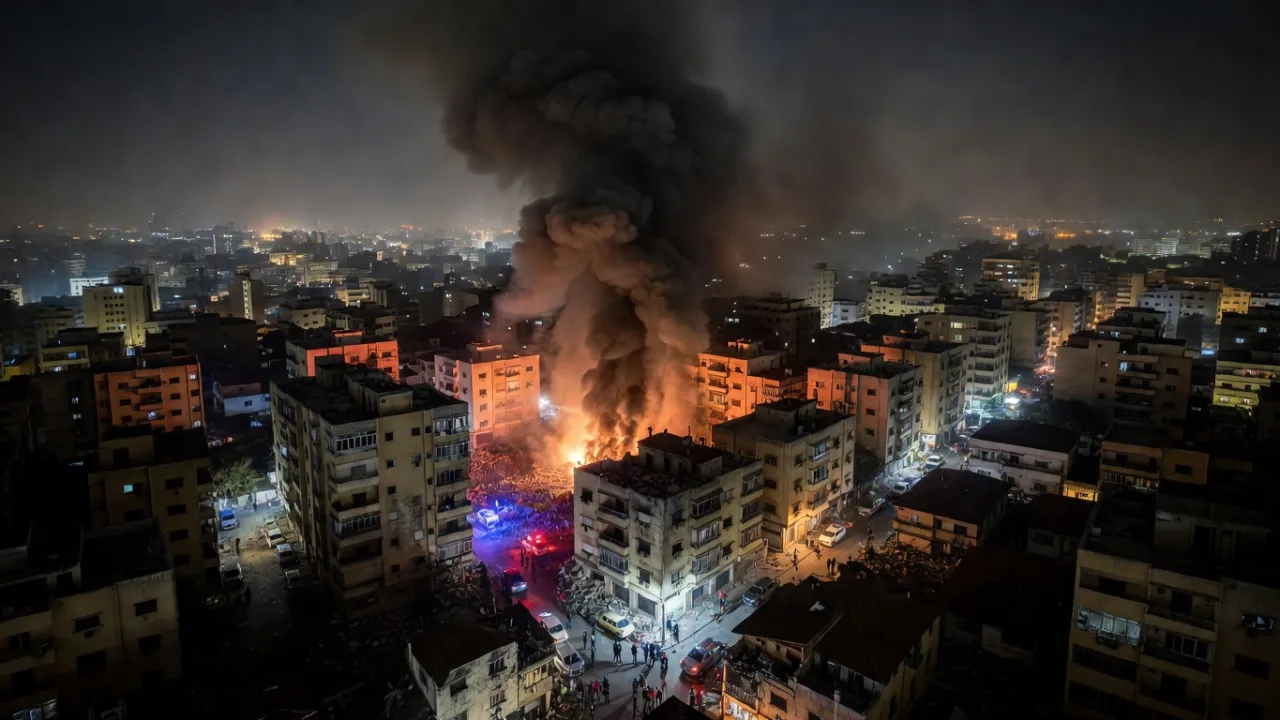
On 6 May 2026, an Israeli strike on the Ghobeiri district in the southern suburbs of Beirut killed Malek Ballout (also spelled Ahmed Ali Balout), described as the operations commander of Hezbollah's Radwan force. It was the first raid on the Lebanese capital since the 17 April ceasefire between Israel and Hezbollah, brokered by Washington and extended until 17 May.
That ceasefire is not a standalone matter: Tehran had set it as an explicit condition of its negotiations with the United States over reopening the Strait of Hormuz, within the conflict that has been ongoing since 28 February. Weakening the Lebanese truce therefore weakens the broader diplomatic process. The strike came at a sensitive moment: Brent crude had fallen 7.8 percent to 101.27 dollars on hopes of a deal, before rising again once the raid was reported.
Readings of the event diverge sharply among the actors involved. Israel and the United States present the strike as an act of self-defense permitted by the very terms of the ceasefire, which allow action against attacks that are planned, imminent or under way. Other capitals instead see a deliberate violation that endangers the truce, with some reading it as an attempt to sabotage the Iran–United States talks.
Several points remain disputed or uncertain: the real intent behind the timing, the scale of human and material losses in Lebanon, and reported damage to religious sites in the south of the country. The durability of the peace framework itself is questioned, given that Hezbollah was not represented at the negotiating table. Some observers argue the strike strengthens the position of hardliners in Tehran, who can now contend that Washington does not fully control its ally.
The actors do agree on one fact, however: the episode abruptly shattered the calm that had held since April, placing the Lebanese truce and the regional negotiations under immediate strain.