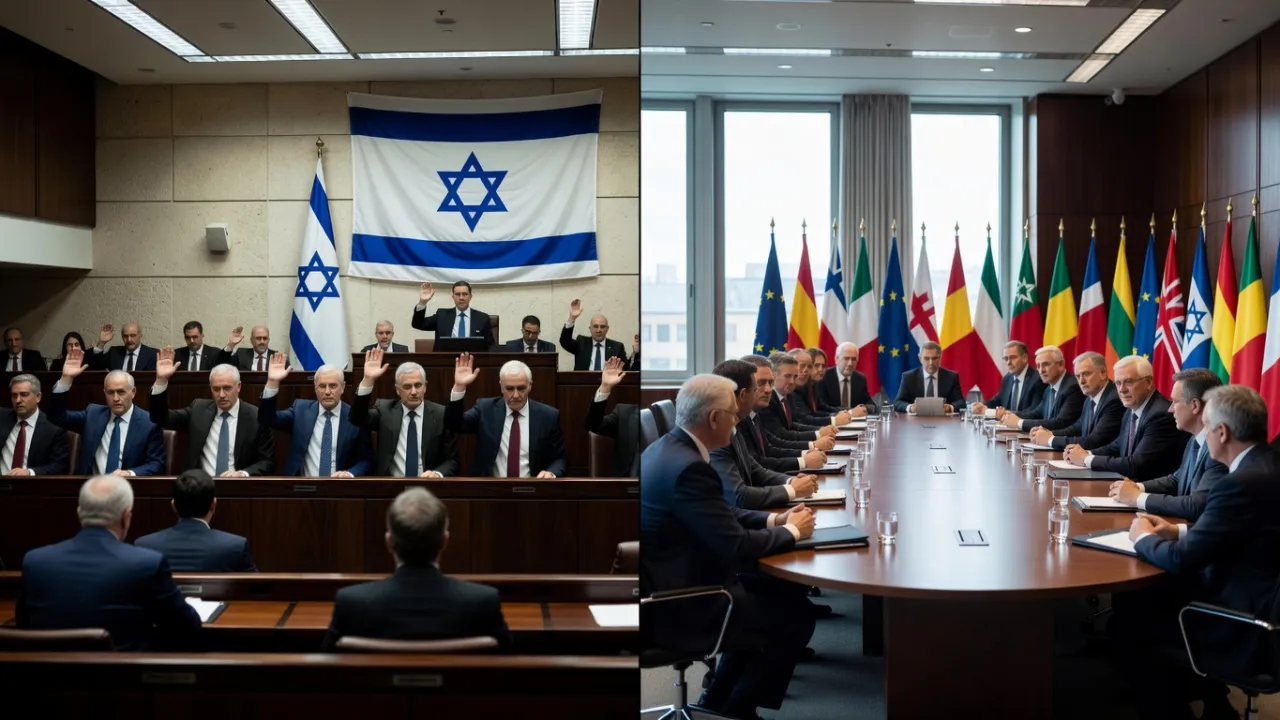
Two decisions were taken almost simultaneously. On one side, the Knesset passed a law creating a special military tribunal empowered to hand down the death penalty against the perpetrators of the 7 October 2023 attacks. The vote was close, 63 in favour and 52 against, marking a decision that was adopted but far from unanimous within the parliament. On the other side, the European Union reached an agreement to sanction extremist Israeli settlers involved in violence in the West Bank, after months of deadlock tied to a Hungarian veto.
These measures come more than eighteen months after the attacks, during a phase in which international positions have hardened and crystallised. The EU, long paralysed on this matter, is asserting a line of targeted pressure on those behind the violence while avoiding a diplomatic break with Israel. Israel, for its part, is internalising the judicial handling of the 7 October events by creating a national mechanism rather than working within a multilateral framework.
The two decisions nonetheless address distinct grounds: the EU acts on the West Bank, Israel on Gaza and 7 October, which highlights the absence of a common diplomatic platform to address the crisis as a whole.
Several points remain disputed. The creation of the tribunal is presented by its proponents as an exercise of sovereignty and justice for the victims, while its critics see in it a possible circumvention of international norms. The use of the death penalty divides opinion in the same way, with several states recalling their opposition in principle. The scope of the European sanctions is also debated: welcomed as a step by some, judged insufficient by others, and rejected as interference by those they target.