Common ground and differences in coverage across the media analysed.
Israeli National Security Minister Itamar Ben-Gvir published a video showing flotilla activists kneeling with hands bound behind their backs at the port of Ashdod, captioned 'Welcome to Israel'
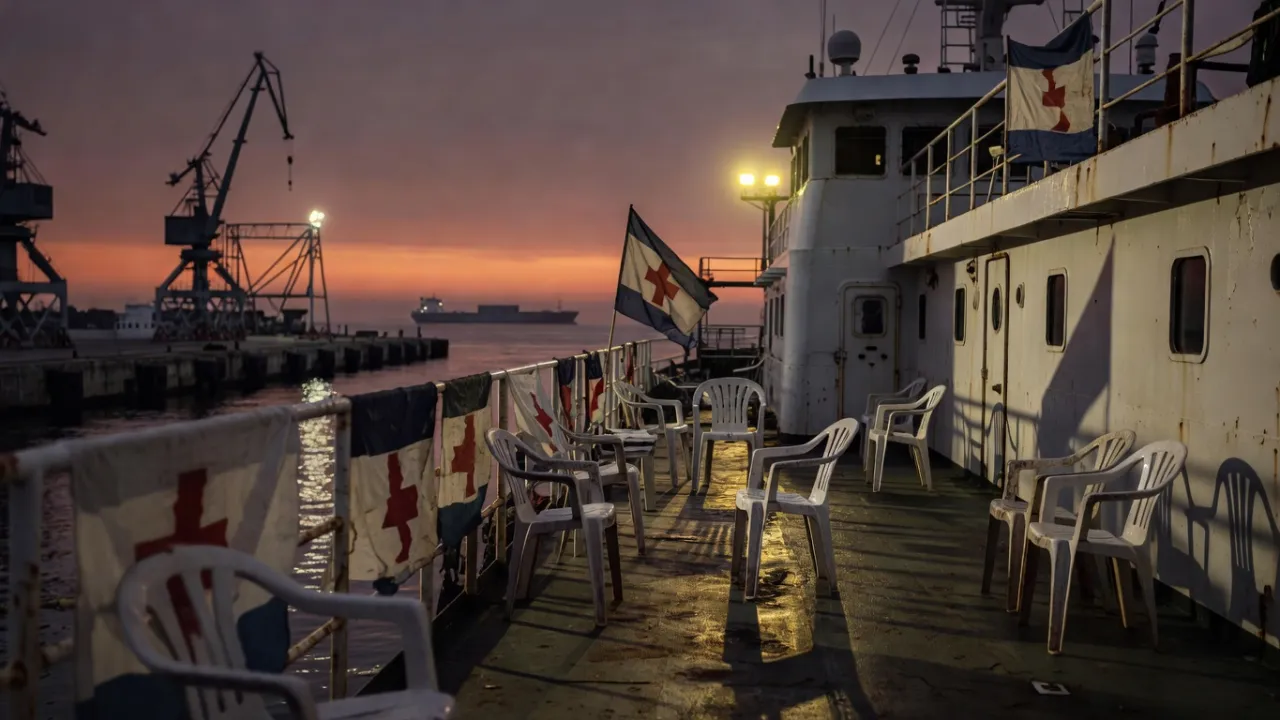
Approximately 430 activists representing more than 40 nationalities were intercepted at sea and transferred to the Israeli port of Ashdod following the boarding of the Global Sumud flotilla departing from Turkey
Prime Minister Benjamin Netanyahu and Foreign Minister Gideon Saar both publicly distanced themselves from Ben-Gvir's conduct, characterizing it as contrary to Israeli values
Some countries characterize the boarding in international waters as an illegal act or piracy, while others do not contest its legal legitimacy and concentrate criticism exclusively on Ben-Gvir's video release.
Qatari coverage highlights US sanctions imposed simultaneously against four activists linked to flotillas, presented without public evidence—an angle nearly absent from Western and Israeli media.
Western perspectives isolate the video as a personal ministerial fault, divorced from official Israeli policy. Global South and Arab perspectives read it as evidence of broader institutional logic.
Coverage aligned with this reading
Coverage that diverges
This grouping describes the publications analysed, not the position of these countries’ populations or of their governments.
What the coverage of each country leaves aside, while others put it forward.
Israel
Qatar
France
Preview: 3 of 15 media perspectives. Syntheses of the media analysed — not direct quotations. Method & limitations
Canberra ramps up pressure on Israel after detention of 11 of its citizens, citing existing sanctions against Ben-Gvir and demanding their immediate release.
2 sources · View sources
Ottawa views the Ben-Gvir affair as a diplomatic crisis that reveals growing tensions between Israel and its Western allies, far beyond a simple communication incident.
2 sources · View sources
Beijing condemns treatment of Palestinian activists on flotilla, highlighting Israeli minister Ben-Gvir's actions as a symbol of impunity that the international community struggles to contain.
1 source · View sources
DOMINANT ANGLE
Canberra ramps up pressure on Israel after detention of 11 of its citizens, citing existing sanctions against Ben-Gvir and demanding their immediate release.
ANALYSIS
Canberra, May 21, 2026.
DOMINANT ANGLE
Ottawa views the Ben-Gvir affair as a diplomatic crisis that reveals growing tensions between Israel and its Western allies, far beyond a simple communication incident.
ANALYSIS
Ottawa, May 20, 2026.
DOMINANT ANGLE
Beijing condemns treatment of Palestinian activists on flotilla, highlighting Israeli minister Ben-Gvir's actions as a symbol of impunity that the international community struggles to contain.
ANALYSIS
Beijing, May 21, 2026.
DOMINANT ANGLE
Berlin unequivocally condemns the behavior of Minister Ben-Gvir, qualifying the video as incompatible with the fundamental values common to Germany and Israel, while carefully distinguishing the criticism of the minister from the legitimacy claimed by Israel to intercept the flotilla.
ANALYSIS
Berlin, May 20, 2026.
DOMINANT ANGLE
Paris places the Ben Gvir incident under the prism of fundamental rights: the Israeli ambassador's summons translates a firm diplomatic condemnation of the detention conditions of the 430 flotilla militants, deemed incompatible with elementary human dignity standards.
ANALYSIS
Paris, May 20, 2026.
DOMINANT ANGLE
Athens places the protection of its citizens at the heart of its response to the interception of the flotilla, demanding respect for international law and the rapid repatriation of Greek activists detained by Israel.
ANALYSIS
Athens, May 20, 2026.
DOMINANT ANGLE
Tel Aviv. Jerusalem views the video of Ben-Gvir as primarily a domestic diplomatic blunder: Netanyahu and Sa'ar publicly condemn their own minister, emphasizing that his behavior does not reflect the values of the state, while maintaining that the interception of the flotilla was fully legitimate.
ANALYSIS
Tel Aviv, May 20, 2026.
DOMINANT ANGLE
Rome Strongly Condemns Israel's Treatment of Flotilla Activists, Demands Immediate Release of Italian Nationals and Official Apologies from Tel Aviv.
ANALYSIS
Rome, May 20, 2026.
DOMINANT ANGLE
Islamabad views the incident as a blatant violation of international law and a humiliation inflicted on peaceful civilians, as it co-signs a joint declaration with ten countries and highlights the detention of Saad Edhi, a national philanthropic figure's son.
ANALYSIS
Islamabad, May 20, 2026.
DOMINANT ANGLE
Doha presents Ben Gvir's video and US sanctions as two facets of a strategy aimed at stifling any attempt to break the Gaza blockade.
ANALYSIS
Doha, May 20, 2026.
DOMINANT ANGLE
Moscow sees the flotilla incident as a reflection of Israel's internal contradictions, highlighting European reactions and the gap between Netanyahu's government and his own minister.
ANALYSIS
Moscow, May 20, 2026.
DOMINANT ANGLE
Singapore places this crisis at the crossroads of two readings: a near-unanimous international condemnation of the treatment of activists, and an unprecedented fracture within the Israeli government, with dissenting voices coming from Netanyahu and his foreign minister.
ANALYSIS
Singapore, May 20, 2026.
DOMINANT ANGLE
Ankara frames the interception of the flotilla as an illegal act of piracy in international waters, coupled with a deliberate humiliation of the activists — a posture that reinforces the Turkish discourse on the 'genocide' in Gaza and Israeli impunity.
ANALYSIS
Ankara, May 20, 2026.
DOMINANT ANGLE
London reacts with strong indignation to the publication by Itamar Ben-Gvir of a video showing activists from the flotilla kneeling, hands tied behind their backs, at the port of Ashdod — the UK's top diplomat describing the scenes as 'totally shameful' and summoning the Israeli ambassador.
ANALYSIS
London, May 20, 2026.
DOMINANT ANGLE
Pretoria places its detained citizens at the center of the issue, emphasizing the symbolic link between the anti-apartheid struggle and the Palestinian cause.
ANALYSIS
Pretoria, May 20, 2026.
Explore every perspective on this subject across 15 countries.
Compare viewpoints and see where they diverge.
published on
countries
sources
articles
gap
A video posted by Israeli National Security Minister Itamar Ben-Gvir set off a wave of international reactions. It shows humanitarian flotilla activists kneeling with their hands tied behind their backs at the port of Ashdod, captioned "Welcome to Israel." The scene followed the interception at sea of the Global Sumud flotilla, which had departed from Turkey.
Around 430 activists representing more than 40 nationalities were intercepted and then transferred to the port of Ashdod. Several states, including France, Spain, Italy, the United Kingdom and Australia, summoned the Israeli ambassador or chargé d'affaires to protest the treatment of those detained. Within the Israeli government itself, Prime Minister Benjamin Netanyahu and Foreign Minister Gideon Saar publicly distanced themselves from Ben-Gvir's move, calling it contrary to the country's values.
The episode unfolds amid growing diplomatic pressure on Israel since the start of the Gaza conflict in October 2023. The broad transatlantic response, including from traditional allies, marks a shift in the usual dynamics of support. At the same time, U.S. sanctions targeting flotilla organizers were announced, reflecting diverging approaches among capitals over what pressure to apply.
Several points remain disputed. Some actors describe the interception in international waters as an illegal act, while others do not contest its legality and focus their criticism on the video alone. Ben-Gvir's gesture is read by some as a personal misstep separate from official policy, and by others as a symptom of a broader pattern. The weight given to the humanitarian context in Gaza also varies sharply among the actors involved.
Measured with the previous method (distance between texts), on a different scale.