
DOMINANT ANGLE
Warsaw is sticking to the security dispatch: shooters on the run, changing toll and operation of Jordanian forces, without a political or regional reading of the Karak attack.
Dominant angle identified — does not reflect unanimity of this country’s media
KEY POINTS
- 01
RMF24: six dead and 28 injured according to the Public Security Directorate, as cited by Reuters.
- 02
Gazeta Prawna: at least seven dead and ten injured according to Jordanian state television, via Reuters; the shooters fled and are being searched for.
- 03
A witness cited by Al-Mamlaka mentions an AK-47 rifle and 150 to 200 people present in the church.
ANALYSIS
Warsaw, October 24, 2026. The Polish press is treating the Karak attack as an ongoing security matter: shooters on the run, a law enforcement operation, and a still unstable toll. Gazeta Prawna and RMF24 published brief texts on Friday, October 23, based on second-hand sources.
The toll varies from one title to another. RMF24 cites the Jordanian Public Security Directorate, relayed by Reuters: six dead and 28 injured "by unidentified assailants" during a funeral in the Karak governorate. Gazeta Prawna, citing state television and Reuters, reports at least seven dead and ten injured, while also reporting, according to Middle East Eye, that some of the injured are in critical condition.
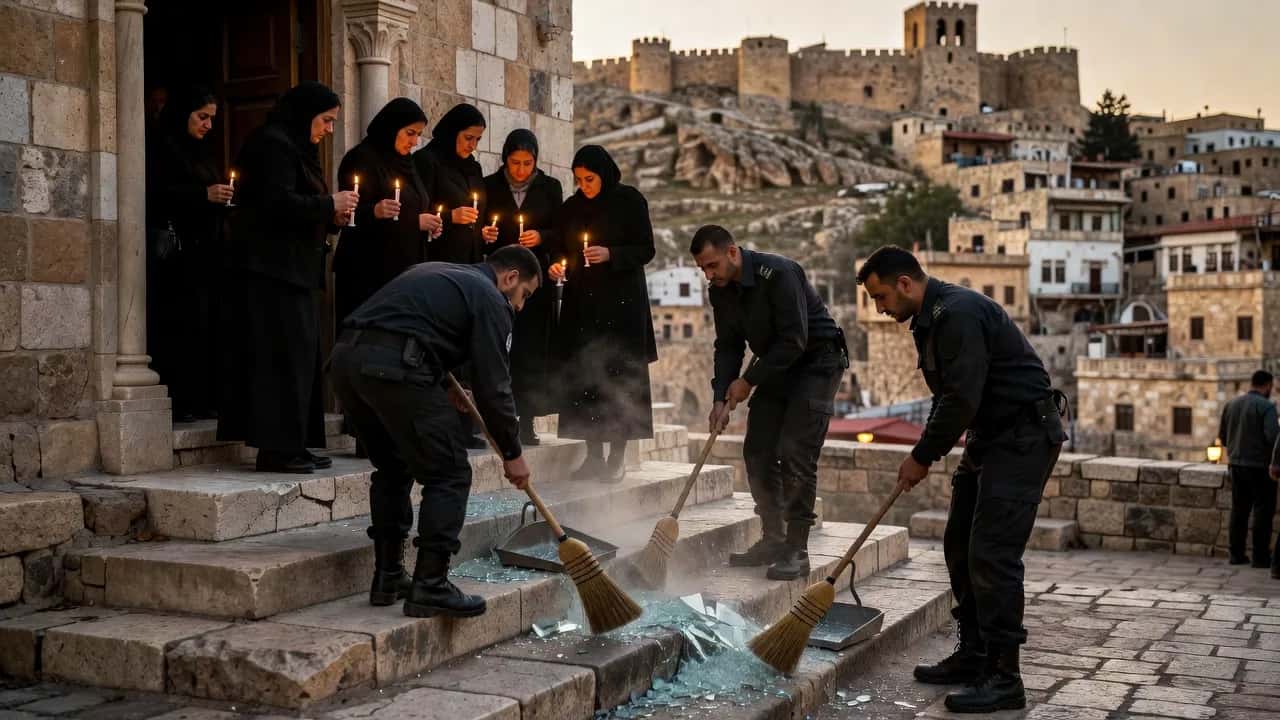
Both media outlets are repeating the version of Al-Mamlaka. Two assailants allegedly burst into the place of worship during the ceremony, or fired on the funeral procession leaving the Hamoud church, after getting out of a vehicle. A witness cited by state television mentions an AK-47 assault rifle; he estimates the crowd at 150-200 people. According to Gazeta Prawna, another witness claims that the shooters arrived by car and fired for several minutes, then fled: they are being sought by the security services.
The Jordanian government spokesman, Mohammad Hussein al-Momani, announced that official statements would only be published after verification, and called for relying only on official sources. Gazeta Prawna reports this without commentary.
The only contextual insight comes from Gazeta Prawna, which specifies that the governorate is home to, among others, followers of the Melkite Church, a Catholic church of the Byzantine Oriental rite that recognizes the authority of the Pope and whose liturgical language is Arabic. Neither of the two articles mentions a claim of responsibility, presumed authors, international reactions, or a previous attack in the region. Polish coverage therefore remains factual and focused on the immediate events: location, time, weapons, flight of the shooters, ongoing operation, without political interpretation or regional analysis.


