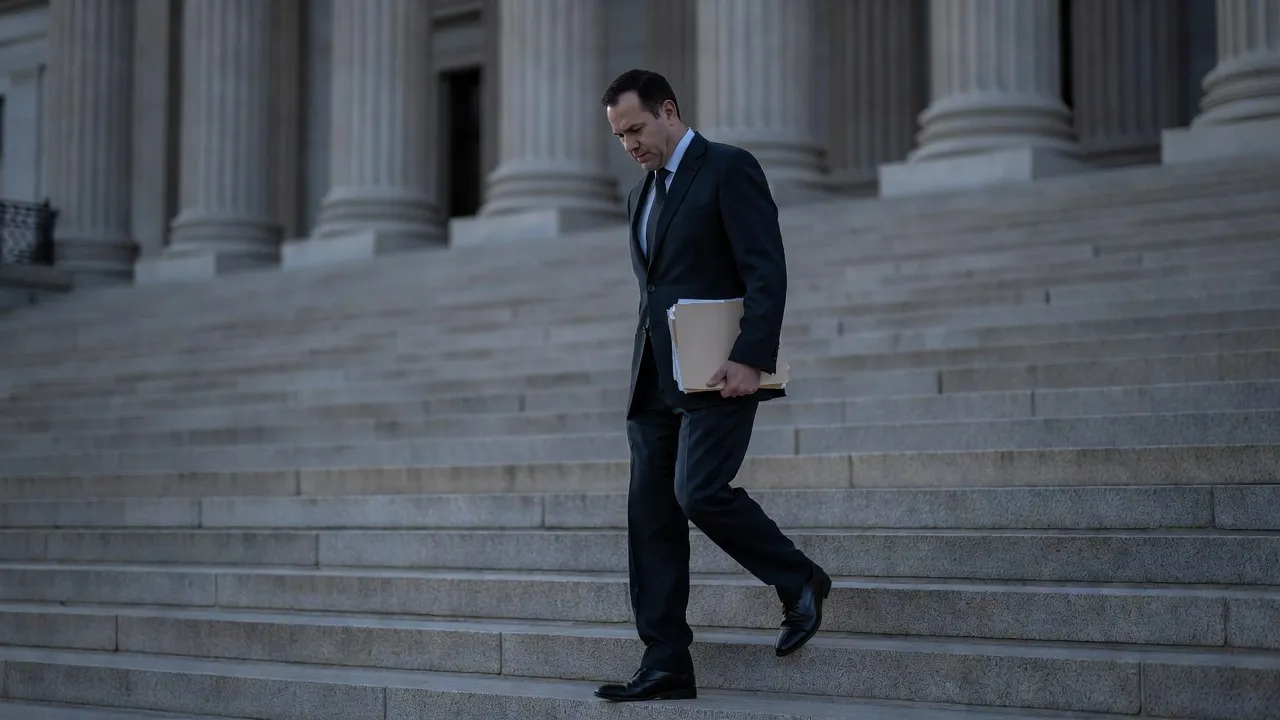
A judge orders the White House to restore access for CNN, MS NOW and Politico, yet their reporters are still kept out
published on
countries
sources
articles
Thursday morning, CNN journalist Betsy Klein, a photojournalist, and a Politico correspondent were blocked one by one at the White House gates, their badges confiscated by the Secret Service, while at the same time, MS NOW reporter Laura Barrón-López encountered a refusal of unclear origin.
The order remains unenforced on the ground on Thursday morning, without a public reaction from the White House, while Donald Trump announces that he will appeal the decision.
Blocked one by one
According to Le Monde, CNN journalist Betsy Klein and a photojournalist from the network were denied entry at 6 am without being given any reason. A CNN producer was able to enter later using their own accreditation. At MS NOW, two out of three journalists had their passes confiscated.
The Politico correspondent also lost their badge: according to the Dutch daily NRC, a security agent offered a temporary pass instead, which is reserved for journalists without permanent access to the press area. Politico claims that it was the Secret Service that seized its reporter's accreditation.
The case of MS NOW reporter Laura Barrón-López illustrates the uncertainty surrounding these denials: the Straits Times of Singapore writes that it is not established whether this is a deliberate refusal or a problem with the access system. CNN claims that several of its employees were turned away from the site that same morning.
Words before the judge
Before the case went to court, Donald Trump had justified the exclusion in very direct terms. On social media, on September 18, he accused CNN, MS NOW, and Politico of constantly wanting to write or broadcast FICTION and LIES about his presidency, according to the Daily Star and the Straits Times.
Judge Kelly himself noted, according to the Times of India, that the president had initially cited a lack of sincerity and negativity in the coverage of the three news outlets, before his lawyers advanced the argument of national security in court. VG, the Norwegian daily, quotes Trump reproaching critical media for disparaging, in his view, up to 95% of his actions, a coverage he described as undermining.
The dispute has gone beyond the sole judicial case. At the podium of the United Nations General Assembly, Donald Trump also directly attacked a CNN journalist, telling her she should not be there, according to BFMTV.
The line of fracture does not only oppose Trump to the banned news outlets: in the United States, former CNN presenter Don Lemon himself judged that his channel bore some responsibility in this conflict, a sign that the media world is not united in its reading of the episode.
A solidarity between rivals
Beyond the three targeted newsrooms, other channels have reacted in their own way. The presidential pool system, which takes turns between channels to film for all televisions, has found itself at the center of the controversy: according to VG and RPP Noticias, several major American broadcasters, including Fox News, have suspended their participation in this system.
« This is because the White House does not allow CNN to fulfill its obligations as part of the pool. »
Bryan Boughton, who currently heads this television pool for Fox News - a channel reputed to be close to the administration -, explained to VG the reasons for this choice, which brings together editorial offices with opposing editorial lines in the same protest.
Donald Trump responded to this solidarity by announcing the creation of his own channel, Trump TV, promising to continuously broadcast the best moments of his presidency and his announcements, according to VG and La Dernière Heure.
What each press retains
Among the twelve countries followed in this corpus, the way of telling the episode varies mainly on one point: what Judge Kelly's decision demonstrates first and foremost. The Daily Star, in Bangladesh, presents it as a major setback for Trump in one of his biggest battles with the media; in Germany and Greece, ZEIT, To Vima, and Naftemporiki first read the confirmation that accreditation cannot be withdrawn without a regular procedure.
In seven of the twelve countries in this corpus - Belgium, France, India, Netherlands, Peru, Russia, and Singapore - the editorial offices insist less on this principle than on the concrete gap between the order rendered at night and the refusal still opposed to journalists a few hours later: La Libre Belgique and the Straits Times thus speak of a blockade maintained despite a contrary court decision.
In Norway and the United States, VG, Time, and Axios emphasize another dimension: the confrontation between the judicial power and an executive that, for the time being, continues to act as if the order did not exist, and the unexpected solidarity of channels with opposing editorial lines.
Appointed by Trump in 2017, he had already ordered in 2018 the reinstatement of a CNN credential.
The accreditation of Politico and MS NOW had already been seized on Saturday, September 19.
Two prior rulings by the District of Columbia Court of Appeals frame the withdrawal of accreditations.
More than 50 media outlets and associations have written to the court citing a 1974 Supreme Court ruling.
How each country reads it
12 perspectives, each in the voice of that country's press.
 Norway
Oslo notes an unprecedented solidarity between rival channels, including those favorable to Trump, in the face of a press exclusion that federal justice has just deemed likely to be unconstitutional.
2 sources
 Bangladesh
Dhaka sees the decision by federal judge Timothy Kelly as confirmation that an administration cannot withdraw access from accredited journalists without due process, regardless of the reason cited.
2 sources
 Belgium
Belgium is particularly concerned about the non-compliance with the order: the White House continues to block CNN, MS NOW and Politico on Thursday, just a few hours after the federal justice ordered it to restore their access.
3 sources
 Germany
Berlin is watching the battle for press freedom unfolding in Washington, where more than 50 media outlets and professional associations have taken a stance in court alongside CNN, MS NOW and Politico, which have been excluded by Donald Trump.
2 sources
 France
Paris is measuring the gap between the court order that restored CNN, MS NOW and Politico's access to the White House and its non-application, just a few hours later, on the ground.
4 sources
 Greece
Athens sees in this ruling a victory for the First Amendment over the logic of retaliation, opposed to three drafts rejected for their critical coverage of the Trump administration.
2 sources
 India
IndiaNew Delhi notes the discrepancy between a federal order and its execution: just hours after Judge Timothy Kelly ordered the restoration of access for CNN, MS NOW, and Politico, the White House again denied entry to journalists from two of these newsrooms.
2 sources
 Netherlands
Amsterdam notes a blatant discrepancy between the court order issued overnight and its application being refused as early as Thursday morning by the White House, which kept CNN, Politico, and MS NOW journalists at the door.
2 sources
 Peru
PeruLima first notes the gap between the decision of a federal judge and its concrete application: a White House that continues to block CNN, MS NOW and Politico on the very same day the order requires it to let them in.
2 sources
 Russia
Moscow first notes the discrepancy between the decision and its implementation: just hours after the court order, journalists from CNN, MS NOW and Politico remain blocked in front of the White House.
2 sources
 Singapore
Singapore particularly notes the discrepancy between the court order and its enforcement: just hours after the ruling, journalists from CNN, MS NOW, and Politico remain barred from the White House.
2 sources
 United States
The United States capital is witnessing an unprecedented showdown between the executive branch and the federal judiciary: a court order mandates the restoration of access for CNN, MS NOW, and Politico, but the White House fails to comply on the very morning of Xi Jinping's visit.
3 sources
What the comparison reveals
Common ground and differences in coverage across the media analysed.
What the media report in common
Federal Judge Timothy Kelly ordered, through a 14-day temporary order, the immediate restoration of CNN, MS NOW, and Politico's access to the White House, ruling their exclusion likely unconstitutional.
Despite this order, journalists from the three media outlets were denied entry to the White House on Thursday morning, with some having their badges confiscated by security personnel.
The judge dismissed the national security argument put forward by the Trump administration, due to a lack of evidence to support it.
Where media coverage diverges
Scope of the decision
The accounts respond differently to the question of what the episode primarily illustrates: the legal confirmation of a right to accreditation in the face of the executive, or the discrepancy between the order and its non-execution in the field.
Coverage aligned with this reading
Coverage that diverges
Register of confrontation
Regarding the nature of the conflict at play, some accounts retain the continuity of a personal confrontation between Donald Trump and the major media, while others highlight the collective mobilization of the journalistic profession, including channels close to the administration.
This grouping describes the publications analysed, not the position of these countries’ populations or of their governments.
The full text, country by country
Norway
DOMINANT ANGLE
Oslo notes an unprecedented solidarity between rival channels, including those favorable to Trump, in the face of a press exclusion that federal justice has just deemed likely to be unconstitutional.
KEY POINTS
- Federal Judge Timothy Kelly ordered on Thursday the restoration of CNN, MS NOW, and Politico's access to the White House, ruling the exclusion was likely unconstitutional due to lack of notification in accordance with rules already established by the courts.
- The five largest American broadcasters, including Fox News - known for its Trump-friendly coverage -, have suspended their participation in the White House television pool and launched lawsuits, according to Bryan Boughton, the current head of the pool.
- Donald Trump, who had announced the exclusion on Friday, September 18, denouncing "fake news", responded by announcing the creation of his own channel, "Trump TV".
ANALYSIS
Oslo, September 24, 2026. Federal Judge Timothy Kelly ordered Donald Trump on Thursday to restore access to the White House for journalists from CNN, MS NOW, and Politico, reports VG, citing Reuters. The magistrate believes that the exclusion of the three editorial teams was likely unconstitutional: in his opinion, the White House did not notify the media in accordance with the rules already established by the justice system. He also questioned the national security argument put forward by the administration, as well as the reasons invoked by the White House to justify the exclusion.
The facts date back to Friday, September 18, the day Trump announced the exclusion of the three editorial teams and withdrew their accreditation without notice, accusing them of "fake news". From the next day, Saturday, September 19, journalists from the three media outlets were denied entry to the White House. On the same day, Trump assured that he remained committed to a free press - except, according to him, towards media that criticize, in 95% of their subjects, everything that he and his administration undertake. He described this coverage as "undergravende", meaning subversive.
VG notes an unexpected reaction: the five largest American broadcasters, including Fox News, reputed to be favorable to Trump, responded to the exclusion by suspending their "pool" coverage of the presidency, while also pursuing legal action. Bryan Boughton, from Fox News, who currently heads this television pool, explains: "It's because the White House does not allow CNN to fulfill its obligations within the pool." The system requires a broadcaster to film in turn for all channels; it was CNN's turn on Monday, September 21.
Trump replied by announcing the creation of his own channel, "Trump TV", promising to broadcast "the best moments, announcements, and [...]" - the sentence from the article ends there.
Dagbladet picks up the same title on the same day, but in a simple news recap where it is alongside other briefs, without detailing the judge's motivations.
For the Norwegian press, the episode goes beyond the usual American partisan divide: even a channel acquired by the president considers the measure untenable for the normal exercise of the profession of accredited journalist, a point that speaks directly to a country where press freedom remains a national benchmark.
Bangladesh
DOMINANT ANGLE
Dhaka sees the decision by federal judge Timothy Kelly as confirmation that an administration cannot withdraw access from accredited journalists without due process, regardless of the reason cited.
KEY POINTS
- Federal Judge Timothy Kelly ruled that the exclusion of CNN, MS NOW, and Politico from the White House was likely unconstitutional.
- Donald Trump had announced on September 18 the exclusion of the three media outlets, accusing them of publishing 'FICTION and LIES' about his administration.
- The Department of Justice cited national security and claimed that access to the White House was a privilege rather than a constitutional right, an argument dismissed by the judge due to a lack of evidence submitted in the case.
ANALYSIS
Dacca, 24 September 2026. The federal judge Timothy Kelly ordered the White House overnight on Wednesday to immediately restore, reinstate and re-establish access for CNN, MS NOW and Politico, report the Daily Star and TBS News. The Bangladeshi press first notes the legal solidity of the decision: the district judge, appointed by Donald Trump himself in 2017, estimated that the exclusion of the three editorial offices was probably unconstitutional, violating the right to due process guaranteed by the fifth amendment.
According to TBS News, the Trump administration had justified its decision to the court by invoking national security motives, claiming that access to the White House was a privilege and not a constitutional right, and accusing the three media outlets of having violated professional standards and published sensitive or classified information. The judge dismissed this argument, due to a lack of concrete evidence submitted to the file.
The origin of the dispute dates back to 18 September, when Donald Trump announced on social media that CNN, MS NOW and Politico should no longer be able to constantly write or report FICTIONS and LIES about his presidency. Their journalists then saw their accreditations deactivated and entry to the White House was denied to them. The three editorial offices rejected this justification, seeing it as retaliation related to their coverage rather than an actual breach of press room rules.
The Daily Star describes the decision as a major setback for Trump in one of his biggest battles with the media, recalling that the press organizations had taken the matter to court to challenge the ban rather than waiting for a political resolution.
For Dacca, this case goes beyond the American situation: it reminds us that an executive power, even a powerful one, remains subject to the control of an independent judge when it withdraws accredited journalists' access without a verifiable reason before a court. The decision, a temporary order, does not exhaust the dispute but already sets a framework: national security cannot be invoked without evidence submitted to the file, and a simple disagreement with an editorial line cannot justify exclusion. In a country where access for editorial offices to institutions remains a sensitive topic, this American precedent is seen as a reminder of the minimum guarantees owed to any accredited press, regardless of the severity of their coverage of the ruling power.
Belgium
DOMINANT ANGLE
Belgium is particularly concerned about the non-compliance with the order: the White House continues to block CNN, MS NOW and Politico on Thursday, just a few hours after the federal justice ordered it to restore their access.
KEY POINTS
- Federal Judge Timothy Kelly ordered the "immediate restoration" of CNN, MS NOW, and Politico's access to the White House, in a decision made overnight from Wednesday to Thursday
- Thursday morning, despite the order, journalists from the three media outlets were still barred from the White House, on the same day Donald Trump was hosting Xi Jinping
- In solidarity, four other channels in the presidential pool (CBS, ABC, NBC, Fox) had suspended their own coverage of the presidency since the announcement on September 18
ANALYSIS
Brussels, September 24, 2026. The Belgian press first notes a discrepancy: a federal order issued in the night from Wednesday to Thursday, and journalists from CNN, MS NOW, and Politico still standing in front of the White House door on Thursday morning. La Libre Belgique and La Dernière Heure headline this contrast, "still denied access... despite a contrary court decision", more than the legal content of the judgment itself.
Federal Judge Timothy Kelly ordered to "return, restore, and immediately reinstate" access for the three newsrooms, excluded since Donald Trump's announcement on September 18. He estimated that the revocation of their accreditation was done without "regular procedure in accordance with the Constitution": according to VRT, the general rule requires that the individuals concerned be informed and heard before being denied a protected right. The national security argument invoked by the administration was dismissed due to a lack of evidence; the criterion of "reprehensible coverage" cited in the letters sent to the media was deemed too vague. Timothy Kelly, appointed by Donald Trump himself in 2017, had already imposed the return of a CNN journalist excluded by the same White House in 2018.
The discrepancy between the order and its implementation fuels the article: on Thursday, the day Donald Trump received Xi Jinping, the journalists from the three media outlets were refused entry. The lawyer for the newsrooms, Ted Boutrous, welcomed a decision that defends "press freedom, regular procedure, and the rule of law", without this changing, in the short term, the situation on the ground.
The Belgian press recalls the context: Donald Trump had accused the three media outlets of continuously spreading "fake news", without providing evidence. In solidarity, four other major channels from the presidential pool, CBS, ABC, NBC, and Fox, had suspended their own coverage of the presidency. The White House has also launched its own channel, "Trump TV", promising continuous coverage. For the Belgian newsrooms, the episode illustrates less a settled legal debate than the uncertainty about the effective execution of court decisions in the face of the American executive.
Germany
DOMINANT ANGLE
Berlin is watching the battle for press freedom unfolding in Washington, where more than 50 media outlets and professional associations have taken a stance in court alongside CNN, MS NOW and Politico, which have been excluded by Donald Trump.
KEY POINTS
- Judge Timothy Kelly ordered the 14-day restoration of access for CNN, MS NOW, and Politico, ruling that the file contained no factual evidence to support the national security argument.
- Despite the order, reporters from CNN, MS NOW, and Politico were denied entry to the White House Thursday morning, some stripped of their badge by the Secret Service without explanation.
- More than 50 media outlets and professional associations signed a letter to the court in support of the excluded newsrooms, citing a 1974 Supreme Court ruling on editorial freedom.
ANALYSIS
Berlin, September 24, 2026. In Washington, a federal judge ordered the immediate restoration of access to the White House for the editorial teams of CNN, MS NOW, and Politico, which had been excluded since September 18 by Donald Trump. Judge Timothy Kelly ruled that the withdrawal of accreditation had taken place "without a constitutionally appropriate procedure", recalling that anyone must receive notification and the opportunity to be heard before a protected interest is withdrawn by the government. His decision, valid for 14 days, dismisses the national security argument invoked by the administration: according to Kelly, the file contains no factual element establishing that maintaining the exclusion would protect national security. He also notes that Trump had initially justified the measure by a supposed lack of sincerity and negativity in the coverage of the three media outlets, before the security argument was put forward. Two previous rulings by the Columbia District Court of Appeals establish, according to the judge, that permanent accreditations can only be revoked after a regular procedure.
Despite the order, journalists from CNN, MS NOW, and Politico were denied entry to the complex on Thursday morning, some being deprived of their badge by the Secret Service, without any explanation being given. The White House did not immediately react to these incidents.
The German press emphasizes the professional mobilization sparked by the case: more than 50 media outlets and associations sent a letter to the court to support the banned editorial teams, citing a 1974 Supreme Court ruling protecting the editorial freedom of media in their treatment of public figures, "fair or unfair". The lawyer for the three media outlets, Ted Boutrous, welcomed a decision that defends "press freedom, due process, and the rule of law". A ZEIT podcast discusses the episode as an attack by Trump on press freedom, which occurred while other editorial teams had stopped, in solidarity, broadcasting images from the White House.
France
DOMINANT ANGLE
Paris is measuring the gap between the court order that restored CNN, MS NOW and Politico's access to the White House and its non-application, just a few hours later, on the ground.
KEY POINTS
- Federal Judge Timothy Kelly ordered the immediate restoration of CNN, MS NOW, and Politico's credentials on Wednesday night, a ruling valid for fourteen days.
- Thursday morning, despite the ruling, CNN journalist Betsy Klein and a photojournalist were "denied access at 6 am" without any reason being given, according to Le Monde.
- Four major American networks, CBS, ABC, NBC, and Fox, suspended their participation in the White House pool in solidarity with CNN.
ANALYSIS
Paris, September 24, 2026. The French press first notes the discrepancy between a court decision and its implementation on the ground. On Wednesday night, federal judge Timothy Kelly, appointed by Donald Trump in 2017, ordered the White House to "immediately restore and return" the permanent press passes of CNN, MS NOW, and Politico, which were withdrawn on September 18. The judge ruled that the three news organizations had a good chance of demonstrating that their badges had been confiscated without the prior procedure guaranteed by the Constitution, recalling that "the 'general rule' is that individuals must be notified in advance and have the opportunity to be heard," according to the order consulted by AFP and cited by RFI. He dismissed the national security argument put forward by the administration, due to a lack of evidence, and deemed too vague the criterion of reprehensible coverage invoked in the letters sent to the three media outlets.
The order, valid for fourteen days, explicitly excludes Donald Trump from its scope but targets the officials of his administration and their agents. However, on Thursday morning, just a few hours after its publication, the three media outlets announced that their journalists had still been prevented from entering. According to Le Monde, CNN journalist Betsy Klein and a photographer were "denied access at 6 am" without "any reason being given," while a producer from the network was able to enter later using his press pass. At MS NOW, two out of three journalists had their passes confiscated. This refusal comes on the day Donald Trump received Xi Jinping at the White House.
French editorial offices recall the broader context: four major American networks, CBS, ABC, NBC, and Fox, had suspended their participation in the White House press pool in solidarity with CNN. Timothy Kelly is no stranger to the case: during Donald Trump's first term, he had already ordered the restoration of a CNN journalist's press pass in 2018. The lawyer for the three media outlets, Ted Boutrous, welcomed a decision that defends "press freedom, due process, and the rule of law."
Greece
DOMINANT ANGLE
Athens sees in this ruling a victory for the First Amendment over the logic of retaliation, opposed to three drafts rejected for their critical coverage of the Trump administration.
KEY POINTS
- Federal Judge Tim Kelly ordered on Thursday the restoration of White House access for CNN, MS NOW, and Politico journalists, via a temporary order valid for two weeks.
- Donald Trump had announced the exclusion on September 18 on social media, accusing the three media outlets of spreading "FANTASTICAL STORIES and LIES".
- The Department of Justice cited national security reasons to justify the ban, an argument that Judge Kelly received with skepticism due to a lack of evidence.
ANALYSIS
Athens, September 24, 2026. The Greek press first notes the verdict that strikes Donald Trump in "one of the biggest battles" he is waging against the American media. According to To Vima, Federal Judge Tim Kelly ordered the President of the United States on Thursday to restore access to the White House for CNN, MS NOW, and Politico journalists, estimating that the ban imposed on these three editorial offices was "probably unconstitutional". Naftemporiki specifies that the temporary order remains in effect for two weeks and follows the appeal filed by the three media outlets.
The Athens newspapers recall the origin of the dispute: Donald Trump had announced the exclusion on September 18 via a post on social media, accusing CNN, MS NOW, and Politico of "not being allowed to continually write or broadcast FANTASTICAL STORIES and LIES". The three editorial offices claim to have received no official notification of the measure until later, according to Naftemporiki. The Ministry of Justice then attempted to justify the exclusion on grounds of national security, an argument that Judge Kelly, appointed by Trump himself, received with skepticism, due to a lack of evidence that the editorial offices had been warned in a timely manner.
The Greek press emphasizes the legal grounds invoked by the three media outlets: their complaint accuses Trump and high-ranking officials in his administration of having launched a "direct attack" on the rights guaranteed by the First Amendment, which prohibits the government from legislating to restrict freedom of expression and the press. It also denounces illegal retaliation, related to the critical coverage these editorial offices had provided of the administration.
For To Vima, the decision constitutes a major political setback for Trump, who had made the eviction of these three media outlets a symbol of his power struggle with the press deemed hostile. Naftemporiki describes it as a "first victory" for CNN, MS NOW, and Politico in the context of their lawsuit, while emphasizing its provisional nature: the main judicial procedure remains open, and nothing guarantees that the restored access will be lasting beyond the two weeks set by the order.
India
DOMINANT ANGLE
New Delhi notes the discrepancy between a federal order and its execution: just hours after Judge Timothy Kelly ordered the restoration of access for CNN, MS NOW, and Politico, the White House again denied entry to journalists from two of these newsrooms.
KEY POINTS
- Federal Judge Timothy Kelly ordered the immediate restoration of CNN, MS NOW, and Politico's access on Thursday, through a temporary order valid for fourteen days.
- The judge dismissed the administration's national security argument, ruling that "the record provides no factual support" for it, and noting that Trump had cited a "lack of sincerity and negativity".
- Despite the order, the White House again denied entry to journalists from Politico and MS NOW on Thursday, their badges having already been confiscated on Saturday, September 19.
ANALYSIS
New Delhi, September 24, 2026. A US federal judge has ordered the White House to restore access to CNN, MS NOW, and Politico, but the Donald Trump administration did not comply on the same day, notes the Indian press. According to the Deccan Chronicle and the Times of India, US federal judge Timothy Kelly in Washington estimated, on Wednesday night, that the ban imposed by the president on Friday, September 18, was "probably unconstitutional". His order, a provisional measure valid for fourteen days pending the outcome of the trial, requires the administration to "immediately restore" the press badges of the three newsrooms, which were seized on Saturday, September 19.
The judge rejected the national security argument invoked by the administration: "the file provides no factual element" to support this thesis, he writes in his order, cited by the Deccan Chronicle. He recalls that Donald Trump had himself justified the withdrawal of accreditation due to the alleged "lack of sincerity and negativity" of the three newsrooms. On social media, the American president had accused CNN, MS NOW, and Politico of only "reporting fiction and lies", and lawyers from the Justice Department had later attempted to justify the exclusion on national security grounds.
The three media outlets had approached the federal court in Washington on Monday, September 21, to contest their exclusion. But on Thursday, September 24, just hours after Judge Kelly's decision, the White House again refused entry to journalists from Politico and MS NOW, reports the Times of India. Their accreditation, already confiscated on Saturday, was not returned to them despite the court order, and neither the White House nor the concerned newsrooms had responded to requests for comment at the time of publication, specify the two Indian newspapers.
For the Indian press, the episode is primarily a test of institutional strength between the federal judiciary and an executive that does not execute its decision: an order that appears unambiguous, yet had no visible effect on the morning of its publication, at the very door of the White House.
Netherlands
DOMINANT ANGLE
Amsterdam notes a blatant discrepancy between the court order issued overnight and its application being refused as early as Thursday morning by the White House, which kept CNN, Politico, and MS NOW journalists at the door.
KEY POINTS
- A Politico journalist had their press pass confiscated by White House security services Thursday morning, just hours after the judge's order.
- The federal judge ruled that the decision to ban CNN, Politico, and MS NOW was likely unconstitutional, and the White House should have warned and consulted with the media before revoking their access.
- Fox News and CBS, in solidarity, reduced their own coverage of the president by refraining from filming anything.
ANALYSIS
Amsterdam, Thursday, September 24, 2026. The Dutch press notes a striking discrepancy between a court ruling and its application on the ground. On Wednesday night, a federal judge estimated that Donald Trump's decision to exclude CNN, Politico, and MS NOW (the former MSNBC) from the White House was probably unconstitutional, reports the NRC, citing international agencies. According to the ruling, the White House should have first issued a warning to the media concerned and engaged in a dialogue with them before withdrawing their access. The judge suspended the ban with a temporary restraining order, intended to allow the three editorial teams to regain access "per direct".
Trump had banned these media outlets because their coverage did not suit him, accusing them of producing "nepnieuws" (fake news). The editorial teams appealed the initial decision. The NRC also reports an unexpected gesture of solidarity: Fox News and CBS chose to reduce their own coverage of the president, giving up filming, in support of their excluded colleagues.
But the judicial decision was not enough. On Thursday morning, a few hours after the order, a Politico journalist had his press card confiscated by security services when he presented himself at the White House, reports the NRC, citing CNN. An agent offered him, instead, a temporary pass reserved for journalists without permanent access to the press facilities. De Telegraaf confirms that Trump must readmit the journalists from CNN, MS NOW, and Politico, as the court has blocked his initial decision.
The Dutch press thus documents, in two stages, the gap between the judge's authority and the reality on the ground: an order made immediately enforceable, but editorial teams still left out on Thursday morning. The account hardly emphasizes the motives later invoked by the administration and focuses on the contrast between the text of the decision and its concrete application, leaving open the question of whether the White House will comply with it in the long term.
Peru
DOMINANT ANGLE
Lima first notes the gap between the decision of a federal judge and its concrete application: a White House that continues to block CNN, MS NOW and Politico on the very same day the order requires it to let them in.
KEY POINTS
- Federal Judge Tim Kelly ruled on Thursday that the ban imposed on CNN, MS NOW, and Politico was likely unconstitutional and ordered their access to the White House restored (RPP Noticias)
- Despite this order, reporters from the three media outlets were denied entry to the presidential site on Thursday (El Comercio Perú)
- On Monday, the five major American television networks suspended their shared coverage system of the White House in solidarity with CNN (RPP Noticias)
ANALYSIS
Lima, September 24, 2026. Federal Judge Tim Kelly ordered President Donald Trump on Thursday to restore access to the White House for journalists from CNN, MS NOW, and Politico, ruling that the ban imposed on them is likely unconstitutional, reports RPP Noticias. The decision responds to a complaint filed by the three media outlets against a measure announced by the Republican president, who had stated on social media that these newsrooms "should not be able to constantly publish or broadcast fiction and lies".
The lawyers from the Department of Justice had attempted to justify the exclusion on grounds of national security, an argument dismissed by the judge. RPP recalls that Kelly, appointed by Trump himself, had already ordered the restoration of a CNN journalist's accreditation during the president's first term, which had been revoked: a precedent that weighs on the Peruvian reading of the case.
The judicial setback was not enough to reopen the doors of the White House. El Comercio Perú reports that on Thursday, despite the order, reporters from CNN, MS NOW, and Politico were denied entry to the presidential site, even though the decision guaranteed them access.
RPP situates the episode in a broader confrontation: on Saturday, the three media outlets' accreditations had already been withdrawn at the building's entrance, and on Monday, the five major American television networks suspended their shared coverage system of the White House in solidarity with CNN, a system that allows one network to film for all televisions during the day. A statement cited by RPP summarizes the stake claimed by the media concerned: the public "has a vital interest in receiving accurate and independent information about its government", and "no administration should restrict a media outlet's access because it disputes its coverage".
For the Peruvian press, the case illustrates less a punctual dispute than a prolonged confrontation between the 80-year-old president and the major American media outlets. Thursday's order tests the ability of the federal justice system to enforce the regular procedure in the face of an executive that, for now, continues to act as if the decision did not exist.
Russia
DOMINANT ANGLE
Moscow first notes the discrepancy between the decision and its implementation: just hours after the court order, journalists from CNN, MS NOW and Politico remain blocked in front of the White House.
KEY POINTS
- Federal Judge Tim Kelly ruled that Trump's ban "probably" violated the Constitution and suspended it for fourteen days.
- Despite the order, a Politico correspondent had their badge revoked and a Secret Service agent told them they were not authorized to enter; CNN correspondents faced the same refusal.
- Trump announced he would appeal the decision and refused to have the Oval Office "infested with third-rate clowns" spreading "fake news".
ANALYSIS
Moscow, September 24, 2026. The Russian press first notes a discrepancy: just hours after a federal judge ordered the restoration of CNN, MS NOW, and Politico's credentials, journalists from these newsrooms were denied entry to the White House. Vedomosti and Meduza, citing Reuters, report that Judge Tim Kelly found the ban imposed by Donald Trump "probably" violated the US Constitution and suspended it for fourteen days, pending further proceedings.
According to Meduza, a Politico correspondent had their badge confiscated at the entrance: a secret service agent told them they had "no authorization" to enter the premises. CNN correspondents were met with the same refusal. The court decision, rendered overnight, was therefore not applied that morning.
The two publications recall the timeline set out by the three newsrooms in their complaint: on September 18, Trump had announced the exclusion of CNN, MS NOW, and Politico, accusing these media outlets of spreading "fake news" and stating that they should not "lie" when covering his administration. The newsrooms had taken the matter to court, citing a violation of the First Amendment and the lack of a legal recourse.
The Justice Department had justified the ban on national security grounds, an argument that the court dismissed: nothing in the file supports such a threat, Meduza and Vedomosti note, and the letters explaining the reasons were sent only after the complaint was filed. Trump himself had justified the exclusion not on security grounds, but on the publication of "fake news".
Vedomosti reports that Trump announced his intention to appeal, refusing to have the Oval Office "sullied by third-rate clowns" who, in his view, misinform the public with "distorted" news. The newspaper also notes that four major American networks - ABC, CBS, NBC, and Fox News - had stopped covering certain presidential trips, to the point where Trump's trip to the UN took place without a film crew.
Press advocacy organizations and dozens of media outlets, including Reuters, The Washington Post, and Fox News, have signed a statement deeming the withdrawal of White House access based on an editorial line to be contrary to Supreme Court jurisprudence.
Singapore
DOMINANT ANGLE
Singapore particularly notes the discrepancy between the court order and its enforcement: just hours after the ruling, journalists from CNN, MS NOW, and Politico remain barred from the White House.
KEY POINTS
- Federal Judge Tim Kelly ordered the immediate restoration of access for 14 days, ruling the badge revocation was likely unconstitutional and rejecting the national security argument due to a lack of factual evidence.
- Despite the order, journalists from CNN, MS NOW, and Politico were turned away at the White House entrance on Thursday, September 24, 2026, and the Politico correspondent's badges were confiscated.
- The ban, announced by Donald Trump on Truth Social on Friday, September 18, 2026, targeted media outlets he accused of reporting "FICTION and LIES".
ANALYSIS
Singapour, 24 September 2026. The site Mothership SG and the daily Straits Times report the same discrepancy: a few hours after a federal judge blocked the exclusion of CNN, MS NOW, and Politico from the White House, journalists from the three newsrooms were denied entry on Thursday, 24 September 2026.
District court judge Tim Kelly estimated, in an order issued overnight, that the revocation of the journalists' credentials had "probably violated" their rights to due process guaranteed by the US Constitution. He rejected the national security argument invoked by the Trump administration, judging that "the file lacks factual elements" to support it, and ordered the immediate restitution of the badges for 14 days, pending the continuation of the procedure.
According to Mothership SG, the exclusion dates back to Friday, 18 September 2026, when Donald Trump announced on Truth Social the ban on the three media outlets, accused of "FICTION and LIES" in their coverage of the presidency. Judge Kelly noted that the president justified this decision with an "alleged lack of truth and negativity" in the reports, rather than a security reason.
The Straits Times emphasizes that the decision constitutes a major setback for Trump in one of his biggest confrontations with the press, a setback that had no immediate effect on the ground: the correspondent of Politico had his badge confiscated, a journalist from MS NOW, Laura Barrón-López, was blocked at the entrance without certainty as to whether it was a deliberate refusal or a problem with the access system, and CNN reported that some of its employees had been turned away from the site. The White House did not respond to requests for comment.
The Straits Times recalls that the three newsrooms had taken the matter to court, citing a violation of the First Amendment, and that they received the support of press freedom advocacy groups; their lawyer welcomed a decision that defends both press freedom, due process, and the rule of law.
For the Singaporean press, the episode illustrates less an abstract legal principle than a concrete balance of power between the American authorities: an injunction made enforceable by a federal court, but whose application on the ground, that very morning, remains in the hands of the executive it aims to constrain.
United States
DOMINANT ANGLE
The United States capital is witnessing an unprecedented showdown between the executive branch and the federal judiciary: a court order mandates the restoration of access for CNN, MS NOW, and Politico, but the White House fails to comply on the very morning of Xi Jinping's visit.
KEY POINTS
- Federal Judge Timothy Kelly, appointed by Trump in 2017, issued a 14-day temporary restraining order, finding that CNN, MS NOW, and Politico are likely to demonstrate a violation of their Fifth Amendment right to due process.
- The judge rejected the national security argument put forth by the Trump administration, noting that it was not the justification given by the president when announcing the exclusion.
- Despite the order, CNN and Politico journalists were denied entry to the White House Thursday morning, the day Donald Trump was hosting Xi Jinping; Politico claims the Secret Service seized one of its reporter's badge.
ANALYSIS
Washington, September 24, 2026. Federal Judge Timothy Kelly, appointed by Donald Trump in 2017, ordered late Wednesday to "immediately restore, reinstate, and restore" access to the White House for journalists from CNN, MS NOW, and Politico, who were banned a week earlier. His decision, a temporary restraining order valid for 14 days, estimates that the three newsrooms have a good chance of demonstrating that their press passes were revoked without the regular procedure guaranteed by the Fifth Amendment.
The judge also rejects the national security argument put forward after the fact by the administration: nothing in the file supports it, and it was not the justification given by the president when he initially announced the exclusion, denouncing "fake news" at the time.
The lawyer for the three media outlets, Ted Boutrous, welcomed "a decision that vigorously defends press freedom, due process, and the rule of law," adding that he appreciates "the speed of the court's action."
But the order was not enough. Thursday morning, just hours after the decision, reporters from CNN and Politico were denied entry to the White House. A journalist and a photojournalist from CNN were barred from entering, while a producer from the network was allowed in. Politico claims that the Secret Service seized the press badge of one of its reporters, who was also turned away. The scene unfolded on the same day that Donald Trump received Chinese President Xi Jinping at the White House, an event that the public will therefore follow without coverage from the three affected newsrooms.
The standoff goes beyond these three titles: several media outlets not targeted by the ban had promised, in solidarity, to suspend the broadcast of their images and photos until the banned newsrooms' access was restored. The American press also notes that Judge Timothy Kelly's decision comes in an already tense climate, between Donald Trump's public attack on CNN's chief correspondent at the UN podium and criticism from the media world itself, such as that of former presenter Don Lemon, who judged that CNN bore its share of responsibility in this conflict.
Explore every perspective on this subject across 12 countries.
Compare viewpoints and see where they diverge.