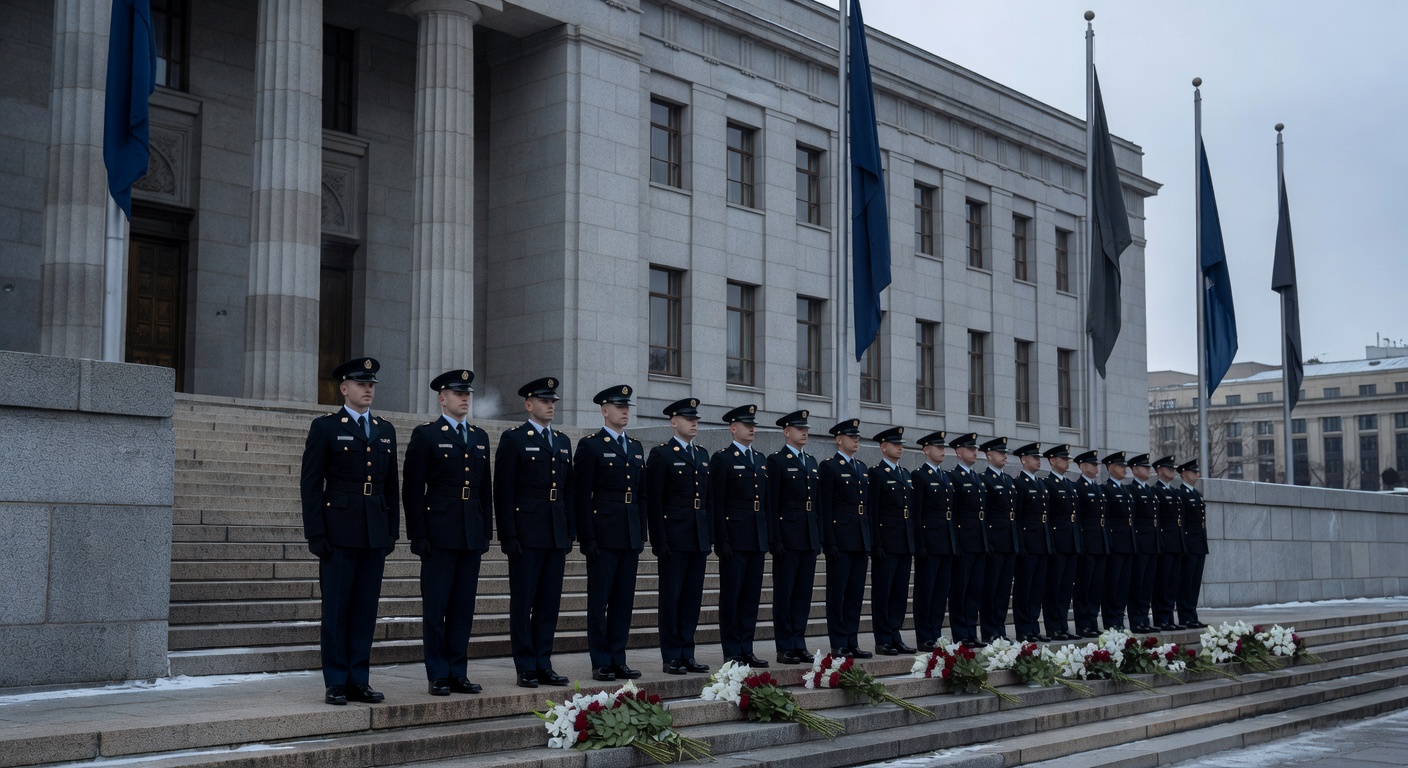
Kim Jong-un inaugurates a museum for North Korean soldiers killed in Ukraine
April 29, 2026·6 COUNTRIES
6countries·7sources·7articles
Russia & CIS (2)
Asia (2)
Europe (1)
Other (1)
Russia & CIS
Asia
Europe
Other
Corée du NordKim Jong-unUkraineRussiemuséeguerre sacréeDPRK-RussieKursk
EXPLORE THIS STORY
Context
The opening of a national museum dedicated to North Korean soldiers killed in Ukraine marks the first official and public acknowledgment, by the authorities in Pyongyang, of the military engagement and losses suffered by their troops in that conflict. Accompanied by state funerals, the move ends any possibility of denying an involvement that had never before been openly claimed.
The event seals the consolidation of ties between North Korea and Russia. Observers agree in describing this relationship not as a temporary arrangement born of the war, but as a structural, long-term alliance. For the first time since the Cold War, an Asian army is actively fighting in Europe alongside a nuclear power.
This rapprochement comes as international sanctions regimes have failed to prevent the military engagement. The open acknowledgment of its participation reflects Pyongyang's confidence in its ability to act without immediate consequences at the UN Security Council, where the Russian veto and Chinese reticence carry weight.
The consequences for the Korean peninsula are central to the debate. The return of soldiers who have gained modern conventional warfare experience is presented by some actors as a direct threat to regional security, while others treat the matter as secondary.
The strategic reading of the alignment remains disputed. Some see a global challenge to international law, others an evolution slipping beyond their control and complicating their own balances, and still others celebrate it as a partnership of resistance. The true scale of the losses and the nature of what was exchanged in return remain uncertain.