What the comparison reveals
Common ground and differences in coverage across the media analysed.
What the media report in common
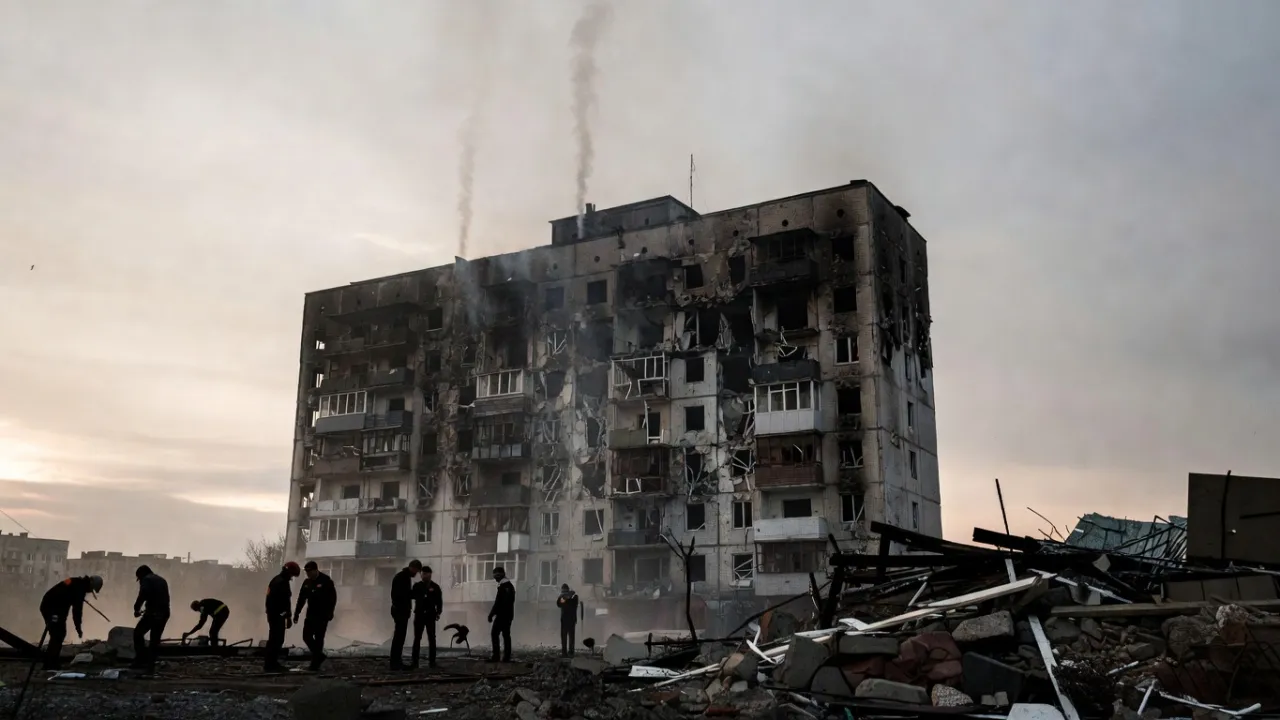
During the night of May 23-24, 2026, Russia launched a combined massive strike on Kyiv and its surrounding region, comprising approximately 600 drones and 90 missiles including one Oreshnik hypersonic ballistic missile.
The offensive caused civilian casualties and damaged residential, cultural, and educational infrastructure in Kyiv.
The Oreshnik is an intermediate-range ballistic missile equipped with hypersonic capabilities, and this strike represents one of its first uses against the Ukrainian capital.
Where media coverage diverges
Legitimacy of the strike
Russia presents the offensive as legitimate retaliation following a Ukrainian attack on a student dormitory in Starobielsk (21 deaths according to Moscow). Ukraine and the United Kingdom reject this justification or treat it with skepticism, with no independent investigation available.
How each country reads it
Preview: 3 of 7 media perspectives. Syntheses of the media analysed — not direct quotations.
Kyiv measures the unprecedented scale of devastation: the night of May 23-24, 2026 saw the most destructive combined attack in terms of sites hit since the beginning of the full-scale invasion, according to municipal authorities.
2 sources ·
Moscow frames the massive strike on Kyiv as a proportionate and announced response following the Ukrainian drone attack on Starobielsk's student dormitory, pointing to what it characterizes as double standards from European capitals.
4 sources ·
London reads the Oreshnik strike on Kyiv as reckless escalation that now transcends the conflict itself, posing an unprecedented threat to NATO airspace.
1 source ·






