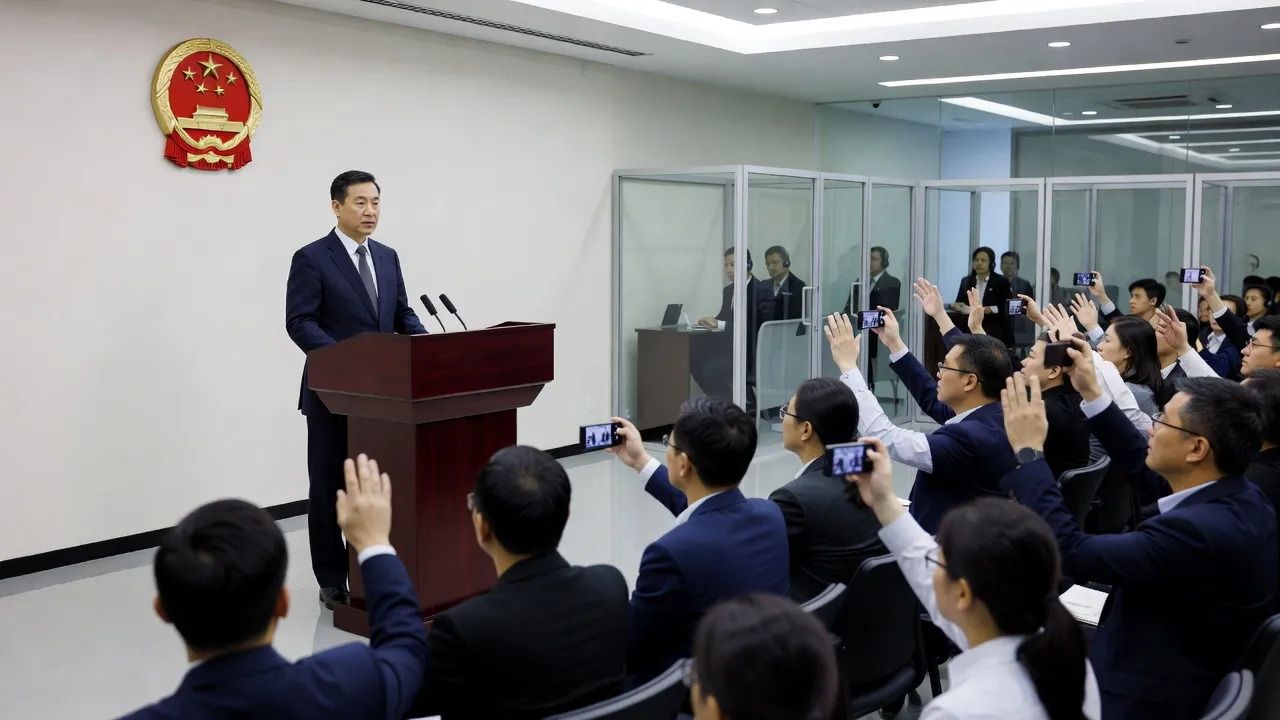
On 22 June 2026, new export restrictions and sanctions targeting US companies took effect, with immediate application including via third countries. The move responds directly to the Pentagon's addition of several Chinese groups — among them Alibaba, Baidu and BYD — to its list of firms considered linked to the military. In all, 56 US companies are targeted, including rare-earth producers such as MP Materials and USA Rare Earth, along with players in the defense and drone sectors.
This sequence comes one month after Donald Trump's visit to Beijing, meant to signal a thaw between the two powers. The dispute illustrates the persistence of technological and military friction beyond diplomatic gestures. It follows a logic of reciprocity: each US designation triggers a counter-measure aimed at strategic sectors — rare earths, drones, aerospace. The episode unfolds alongside talks between Washington and Tehran in Switzerland, leaving several geopolitical fronts active at once.
The real scope of these sanctions remains contested. Some actors judge them largely symbolic, given the limited direct commercial exposure of the targeted firms; others see a strategic signal weighing on critical-material supply chains. The nature of the measures is also debated: presented on one side as a calibrated response that preserves channels of dialogue, they are described on the other as a mechanism of symmetrical escalation liable to strain global industrial supply chains.
Third economies — India, South Korea, Singapore, Canada — seek to protect their own commercial interests between the two blocs, with some reading the event first through the lens of energy markets rather than technological rivalry.