
Common ground and differences in coverage across the media analysed.
The military escalation in Lebanon represents a significant deterioration in regional stability
Israeli strikes have caused civilian casualties and population displacement
The conflict has economic and security repercussions extending beyond Lebanese borders
Division between those who avoid the legitimacy question through technical neutrality and those who offer implicit criticism of Israeli action
Strategic omission of Hezbollah's terrorist designation and provocations versus exclusive focus on civilian casualties
Divergence between depoliticized technical approach, neutral economic perspective, and pro-Arab geopolitical interpretation
This grouping describes the publications analysed, not the position of these countries’ populations or of their governments.
What the coverage of each country leaves aside, while others put it forward.
Pakistan
Singapore
Qatar
Turkey
Preview: 3 of 4 media perspectives. Syntheses of the media analysed — not direct quotations. Method & limitations
Technical and human impact on civilian aviation, avoiding direct geopolitical analysis
1 source · View sources
Geopolitical neutrality with focus on humanitarian and regional economic impacts
1 source · View sources
Documentation of civilian casualties and implicit criticism of Israeli military action
1 source · View sources
DOMINANT ANGLE
Technical and human impact on civilian aviation, avoiding direct geopolitical analysis
ANALYSIS
Pakistani media coverage, represented by Dawn, reveals a distinctly technical and humanized approach to the Middle East conflict, contrasting with traditional geopolitical analysis.
DOMINANT ANGLE
Geopolitical neutrality with focus on humanitarian and regional economic impacts
ANALYSIS
Singapore media coverage, represented by the Straits Times, adopts a pragmatic geopolitical perspective characteristic of the city-state's balanced diplomacy.
DOMINANT ANGLE
Documentation of civilian casualties and implicit criticism of Israeli military action
ANALYSIS
Qatari media coverage, represented by Al Jazeera, adopts an approach particularly focused on civilian casualties and Israeli military escalation in Lebanon.
DOMINANT ANGLE
Concerning regional escalation with implicit criticism of Israeli action
ANALYSIS
Turkish media coverage, represented by the Daily Sabah, reveals a complex geopolitical perspective reflecting Turkey's ambivalent position in the Middle East.
Explore every perspective on this subject across 4 countries.
Compare viewpoints and see where they diverge.
published on
countries
sources
articles
gap
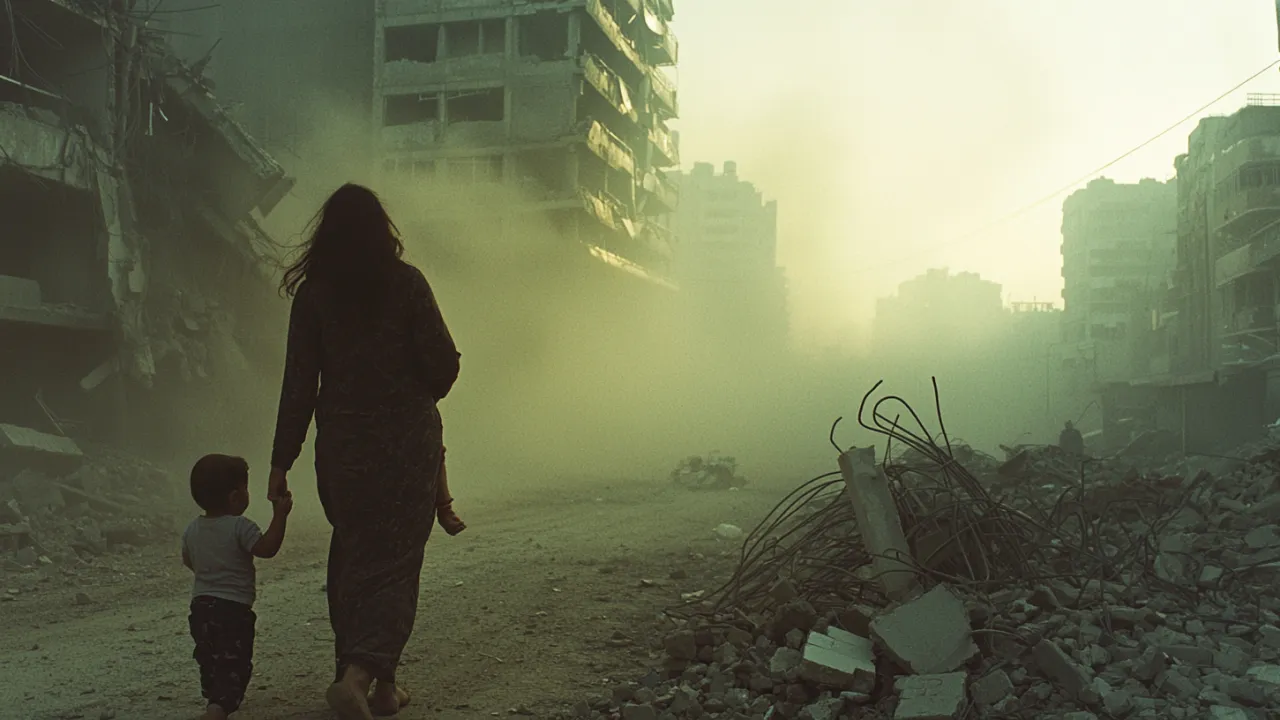
Fresh Israeli airstrikes hit Beirut, leaving several people dead and wounded. All sources agree on the essentials: the strikes caused civilian casualties and displaced part of the population, marking a clear deterioration in regional stability. The episode is described as an intensification rather than an isolated incident.
The consequences reach well beyond Lebanon itself. Observers converge in recognising that the escalation weighs on both the security and the economy of the region, affecting in particular air routes and regional movement. It is this prospect of the conflict widening across the Middle East that fuels the most widely shared concerns.
Context helps explain why readings of the event diverge. Each observing country navigates its own diplomatic constraints and alliances: some favour a strictly technical and economic approach to avoid taking sides, while others stress civilian casualties and are more critical of the military operations. These framings reflect distinct national interests and regional ties rather than a single reading of the facts.
Several points remain disputed. The security legitimacy of the strikes is contested: some actors challenge the military action by emphasising the human toll, while others decline to settle the question. Likewise, how much weight to give the role of armed groups present in Lebanon in the chain of escalation divides the analyses. Beyond the shared acknowledgement of human losses, it is the attribution of responsibility and the reading of the deeper causes that remain the most uncertain.
Measured with the previous method (distance between texts), on a different scale.