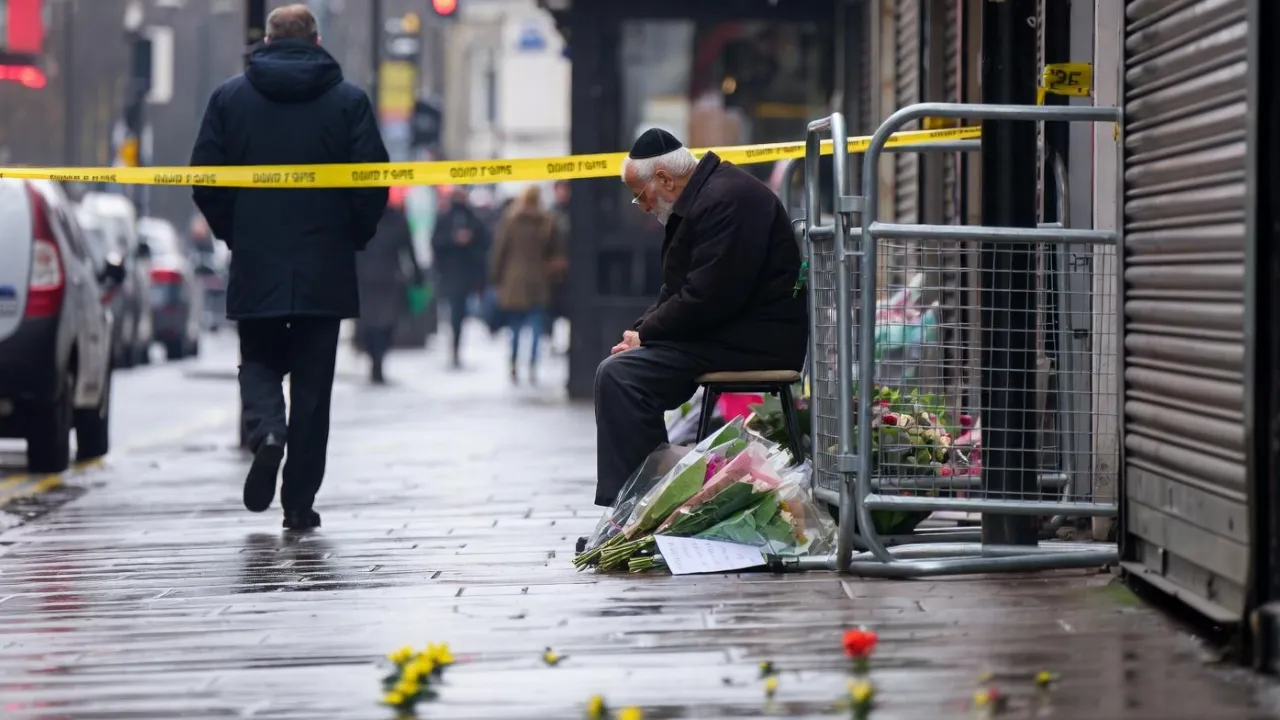
On 29 April, two Jewish men were stabbed in the Golders Green neighbourhood of London. Police described the assault as a terrorist act. The suspect, a 45-year-old British citizen born in Somalia, had been referred to a counter-radicalisation programme in 2020, a case that was later closed. The attack was condemned by British, Australian, Canadian and Israeli leaders as antisemitic.
The episode is not isolated. A wave of incidents targeting Britain's Jewish community began in March 2026, shortly after the war pitting the United States and Israel against Iran broke out in February. Fires set to community ambulances, attempted synagogue arsons and now a knife attack: the sequence led the United Kingdom to raise its terrorism alert level and to release funds to secure the Jewish community.
The British government says it faces an unprecedented challenge: a campaign of attacks attributed to a group linked to Iranian services, the HAYI group, which is said to have claimed the violence. A possible designation of Iran's Revolutionary Guards as a terrorist organisation, raised by British officials, would mark a major diplomatic escalation between London and Tehran.
Attribution, however, remains disputed. British and Israeli authorities point to Iran as an indirect sponsor, while other actors report the events without drawing that link, emphasising instead failures in the counter-radicalisation system. The connection between the regional war and the wave of attacks, as well as the scope of contemplated restrictions on protests, are likewise debated among the actors involved.