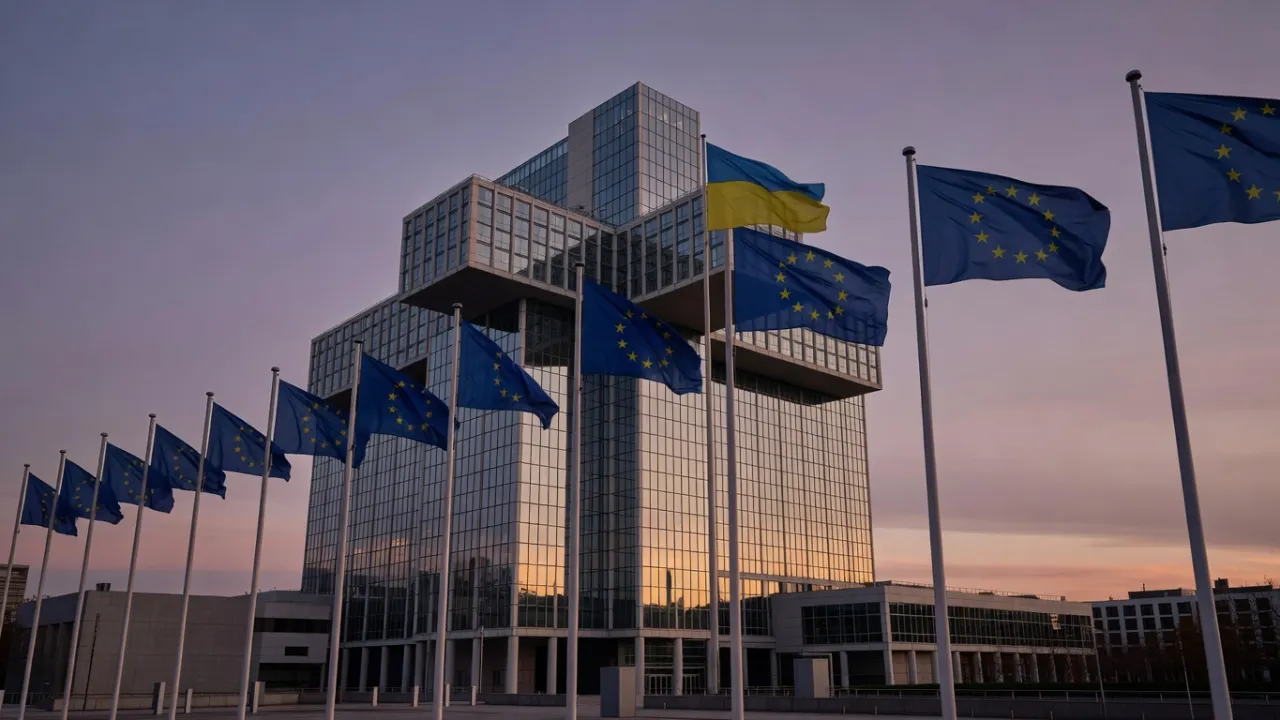
On 18 May 2026, German Chancellor Friedrich Merz sent a formal letter to the presidents of the European Commission and the European Council proposing an "associate member" status for Ukraine within the Union. Under this arrangement, Kyiv would take part in meetings of the European Council, the Commission and the European Parliament, but without voting rights or a portfolio. The proposal includes activating Article 42.7 of the Treaty on European Union, the mutual assistance clause, presented as a substantial security guarantee.
The initiative responds to a twofold deadlock. Full membership, formally launched when Ukraine was granted candidate status in June 2022, runs into the unanimity rule among the 27, into disagreements over agricultural, budgetary and rule-of-law questions, and into the precedent of integrating a country of more than 40 million people in wartime. Viktor Orban's electoral defeat in Hungary nonetheless removed one of the main institutional obstacles.
The security context also weighs heavily: absent a NATO prospect, the mutual assistance clause would be Kyiv's principal collective guarantee, at a moment when American mediation has partly shifted toward other crises.
Several points remain disputed. Some actors see the status as a stepping stone toward membership; others, including Ukraine, fear it would lock the country into an in-between with no guaranteed timeline. Some capitals worry about unequal treatment relative to the Western Balkans candidates, engaged in the process far longer. Merz's legal reading, that the status requires neither treaty revision nor ratification under Article 49, is itself contested.