The US Department of Justice has indicted Rubén Rocha, the sitting governor of the state of Sinaloa, over alleged ties to the cartel of the same name. Washington further claims that the cartel helped install Rocha in power, an accusation of unprecedented gravity targeting an elected governor. The indictment is framed as a new front in the American fight against drugs and fentanyl.
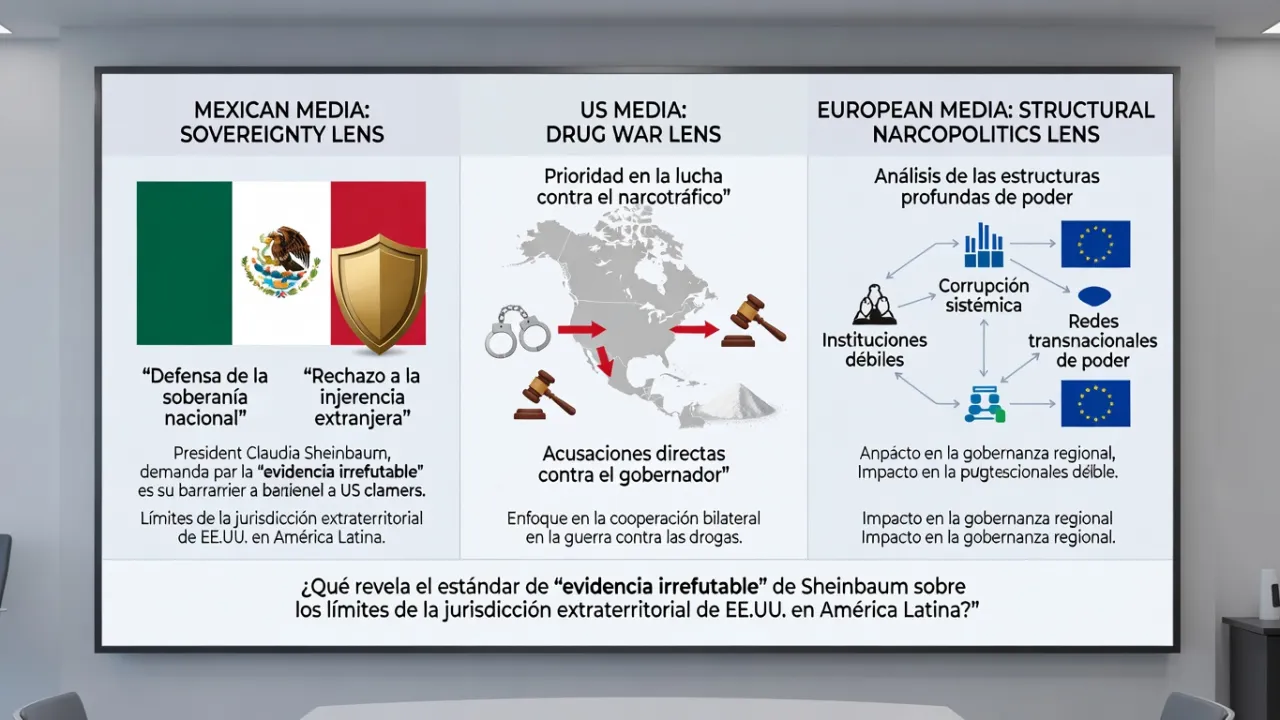
Mexican President Claudia Sheinbaum has refused extradition until what she describes as irrefutable evidence is produced, invoking the principle of national sovereignty. This standard of proof goes beyond the usual requirements of extradition treaties, whereas Washington holds that a grand jury indictment is sufficient to justify a handover.
The case fits into a sequence of tensions. It is the first time a sitting governor has been directly targeted, after Mexican cartels were designated foreign terrorist organizations in early 2025. The claim that a cartel influenced the rise to power of an elected official bears directly on the integrity of the Mexican electoral process, placing Sheinbaum in a delicate position between defending sovereignty and refusing to appear to shield corruption.
Several points remain disputed. Actors diverge over the very nature of drug trafficking, presented at times as a structural phenomenon and at times as an individual responsibility. The level of proof required and the legitimacy of the American move are also read in opposing ways, while the existence and weight of the elements cited by the prosecution have not, at this stage, been publicly established.