
Common ground and differences in coverage across the media analysed.
Major energy impact: all countries acknowledge dramatic consequences on oil and gas prices
Global economic concerns: inflation, supply chain disruption, and financial market instability
Regional escalation risk: all identify the potential for conflict to spread beyond initial combatants
Fundamental division over justification for U.S.-Israeli strikes against Iran
Coverage aligned with this reading
Coverage that diverges
Disagreement over primary responsibility for military escalation
Coverage aligned with this reading
Coverage that diverges
Divergence on preferred approach to resolving the crisis
Coverage that diverges
This grouping describes the publications analysed, not the position of these countries’ populations or of their governments.
What the coverage of each country leaves aside, while others put it forward.
United States
China
Iran
Preview: 3 of 28 media perspectives. Syntheses of the media analysed — not direct quotations. Method & limitations
Economic and energy impact on Europe, with France positioned as diplomatic mediator
6 sources · View sources
Critical distance from Washington, focus on economic impact and pursuit of diplomatic alternatives
4 sources · View sources
Economic critique of the global costs of military conflict pursued without German consultation
3 sources · View sources
DOMINANT ANGLE
Economic and energy impact on Europe, with France positioned as diplomatic mediator
ANALYSIS
French media coverage of the Middle East conflict reveals a distinctive approach that heavily prioritises the economic and energy dimensions of the dispute.
DOMINANT ANGLE
Critical distance from Washington, focus on economic impact and pursuit of diplomatic alternatives
ANALYSIS
British media coverage of the Middle East conflict reveals an approach characterised by critical distance from the Trump administration and central concern for global economic repercussions.
DOMINANT ANGLE
Economic critique of the global costs of military conflict pursued without German consultation
ANALYSIS
German media coverage of the Middle East conflict reveals an approach shaped distinctly by national economic interests and a geopolitical position differentiated from that of the United States.
DOMINANT ANGLE
European energy and security concerns amid Iranian escalation
ANALYSIS
Italian media coverage of the Middle Eastern conflict reveals a pragmatic European geopolitical perspective, characterised by acute concern for the direct economic and security implications for Italy and Europe.
DOMINANT ANGLE
Global energy war: Iran threatens worldwide economy
ANALYSIS
American media coverage reveals a complex geopolitical perspective where global energy interests and national security converge in a narrative of total conflict with Iran.
DOMINANT ANGLE
Economic and security impact of the conflict on Canadian and Western interests
ANALYSIS
Canadian media coverage of the Middle East conflict reveals a perspective deeply concerned with the economic and security repercussions for Canada, with a tone oscillating between factual reporting and alarmism.
DOMINANT ANGLE
Domestic economic impact and cautious geopolitical withdrawal
ANALYSIS
South Korean media coverage of the Middle East conflict reveals a deeply technocratic and economics-focused approach, where geopolitical stakes are systematically filtered through the lens of domestic financial impacts.
DOMINANT ANGLE
Geopolitical pragmatism with focus on energy security and economic implications
ANALYSIS
Indian media coverage reveals a pragmatic geopolitical approach centred on the economic and diplomatic implications of the Iran-Israel conflict.
DOMINANT ANGLE
Taiwan as priority yet vulnerable beneficiary of American military protection
ANALYSIS
Taiwanese media coverage reveals a geopolitical perspective centred on direct security implications for the island.
DOMINANT ANGLE
Technocratic approach focused on global energy and economic impacts
ANALYSIS
Singapore's media coverage reveals a deeply pragmatic and technocratic approach to Middle Eastern conflict, reflecting the strategic priorities of a highly trade-dependent city-state reliant on global energy flows.
DOMINANT ANGLE
Pragmatic neutrality focused on regional economic and commercial impacts
ANALYSIS
Malaysian media coverage of the Iran-US conflict reveals a pragmatic approach centred on regional economic and strategic implications rather than the conflict's ideological dimensions.
DOMINANT ANGLE
Regional stabilisation and protection of Egyptian energy interests
ANALYSIS
Egyptian media coverage reveals a complex geopolitical perspective that positions Egypt as a regional stabilising actor whilst firmly defending its energy and economic interests.
DOMINANT ANGLE
Regional stability and strategic neutrality amid energy tensions
ANALYSIS
Iraqi media coverage reveals a complex geopolitical perspective, characterized by a strategic positioning toward regional stability whilst maintaining a delicate balance between relations with Iran and the West.
DOMINANT ANGLE
Iranian existential threat justifying total and preventive military response
ANALYSIS
Israeli media coverage reveals a profoundly security-focused and militarised perspective on the conflict with Iran, structured around the concept of existential threat.
DOMINANT ANGLE
Systematic delegitimisation of the Iranian regime through documentation of state repression
ANALYSIS
Iran International's editorial approach reflects consistent opposition to the Iranian government, constructing a narrative of comprehensive delegitimisation of the current authorities.
DOMINANT ANGLE
Regional energy stability and balanced multilateral diplomacy
ANALYSIS
Turkish media coverage via Daily Sabah reveals a complex geopolitical approach that carefully balances Turkey's regional interests.
DOMINANT ANGLE
Measured support for Iran balanced with preservation of regional energy interests
ANALYSIS
Russian media coverage reveals a sophisticated approach to the Middle East crisis, characterised by a delicate balance between geopolitical support for Iran and protection of economic interests across the region.
DOMINANT ANGLE
Domestic economic impact and Australian energy vulnerability
ANALYSIS
Australian media coverage reveals a deeply domestic and defensive perspective on the Iran conflict, shaped by three core preoccupations: direct economic impact on Australian citizens, the country's strategic vulnerability, and political crisis management.
DOMINANT ANGLE
Critique of American unilateralism and promotion of multilateral resistance
ANALYSIS
South African media coverage at News24 reveals a distinctly critical perspective toward American unilateralism, reflecting the post-apartheid nation's historical geopolitical orientations.
DOMINANT ANGLE
Energy and economic impact on Nigeria's oil-dependent economy
ANALYSIS
Nigerian media coverage reveals a pragmatic approach centred on the economic fallout from the US/Israel-Iran tensions, with particular emphasis on energy implications.
DOMINANT ANGLE
Geostrategic analysis prioritising global economic impacts over military dimensions of conflict
ANALYSIS
Moroccan media coverage reveals a sophisticated geostrategic approach that prioritises analysis of global economic repercussions rather than the military dimensions of the conflict.
DOMINANT ANGLE
Framing the Iran-US conflict through Ukraine's strategic interests
ANALYSIS
Ukrainian media coverage reveals a perspective deeply centered on the US-Iran conflict, where each development is analysed through the lens of Ukraine's interests in its struggle with Russia.
DOMINANT ANGLE
Greek military capability framed as guarantor of European energy security
ANALYSIS
Greek media coverage of this Middle East crisis reveals a strategically framed narrative centred on showcasing Greek military power and its contribution to European energy security.
DOMINANT ANGLE
Mobilising the Middle Eastern conflict to legitimise Milei's geopolitical pivot
ANALYSIS
Argentine media coverage reveals a starkly polarised and ideologically charged perspective on the Middle Eastern conflict.
DOMINANT ANGLE
China as stabilising force amid Western military adventurism
ANALYSIS
Chinese state media coverage reveals a sophisticated narrative strategy positioning China as a responsible diplomatic actor facing a conflict perceived as destabilising the global order.
DOMINANT ANGLE
Regional mediator bearing economic costs of an external conflict
ANALYSIS
Pakistani media coverage reveals a strategically balanced approach yet deeply concerned about the regional fallout from the Iran-US-Israel conflict.
DOMINANT ANGLE
Global economic impact and pragmatic geopolitical non-alignment
ANALYSIS
Thai media coverage of the Middle East conflict, as exemplified by the Bangkok Post, reflects the pragmatic geopolitical approach characteristic of Thai diplomacy.
DOMINANT ANGLE
Strategic victimhood: Qatar as innocent victim of unwarranted Iranian aggression
ANALYSIS
Qatar's media coverage reveals a sophisticated narrative strategy centred on positioning Qatar as an innocent victim in a conflict imposed upon it.
Explore every perspective on this subject across 28 countries.
Compare viewpoints and see where they diverge.
published on
countries
sources
articles
gap
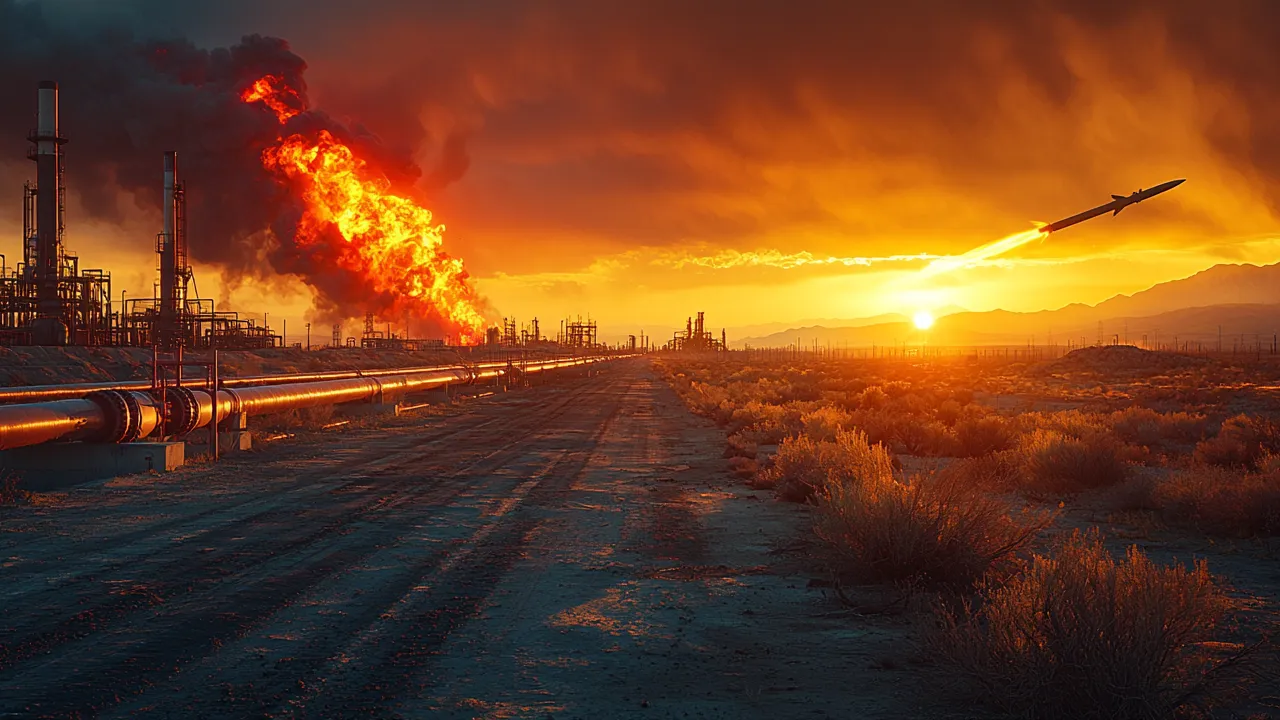
Strikes hit energy infrastructure in Iran and Qatar, two major players in global oil and gas markets. The event triggered a sharp rise in energy prices, the scale of which is acknowledged by all the actors involved, whatever their other positions may be.
Beyond the immediate energy shock, the economic fallout lies at the heart of shared concerns: inflationary pressures, disrupted supply chains and unstable financial markets. All parties also identify a risk of escalation that could move beyond the initial belligerents and spread across the region.
The crisis fits into long-standing geopolitical fault lines. One set of states puts forward a security narrative justifying the military intervention in the name of self-defense and the protection of regional allies. Another set criticizes what it describes as unilateralism and advocates a multipolar international order. Several European countries hold an intermediate position, balancing formal solidarity with their own energy interests, while Asian powers favor neutrality and limiting the domestic economic impact.
Several points remain openly disputed. Actors clash over the very legitimacy of the military intervention and over who bears responsibility for the escalation: some deem it justified, others contest it. They also differ on the preferred method, with some pressing for diplomacy first while others defend the military option.
Perspectives are finally set apart by what they leave unsaid: depending on the camp, what is downplayed is sometimes the opposition of allies and the human costs to civilians, and sometimes violations of international law and threats to commercial shipping.
Measured with the previous method (distance between texts), on a different scale.