
Common ground and differences in coverage across the media analysed.
Israel has initiated ground operations in southern Lebanon described as limited and targeted
Regional tensions are escalating with implications for broader Middle Eastern stability
Multiple international actors and institutions are monitoring the situation
What the coverage of each country leaves aside, while others put it forward.
Australia
Philippines
Nigeria
Colombia
Preview: 3 of 12 media perspectives. Syntheses of the media analysed — not direct quotations. Method & limitations
Technocratic neutrality privileging regional stability over civil voices
2 sources · View sources
Exclusive focus on internal dynastic rivalries to the detriment of international stakes
2 sources · View sources
Preoccupation with national sport to the detriment of international geopolitical coverage
1 source · View sources
DOMINANT ANGLE
Technocratic neutrality privileging regional stability over civil voices
ANALYSIS
Singapore's media coverage reveals a distinctly balanced and technocratic approach to Middle East conflict, characteristic of the city-state's pragmatic diplomacy.
DOMINANT ANGLE
Exclusive focus on internal dynastic rivalries to the detriment of international stakes
ANALYSIS
Philippine media coverage reveals exclusive focus on internal political dynamics, completely ignoring the Middle East military escalation mentioned in the assignment.
DOMINANT ANGLE
Preoccupation with national sport to the detriment of international geopolitical coverage
ANALYSIS
Analysis reveals a complete disconnect between the requested subject matter (military escalation in the Middle East with Israeli operations in Lebanon) and the provided article focusing exclusively on Australian women's football.
DOMINANT ANGLE
Domestic focus with complete avoidance of major international geopolitical stakes
ANALYSIS
Nigerian media coverage analysis reveals a particularly revealing approach: complete absence of direct coverage of Middle East military escalation, despite this development's major geopolitical importance.
DOMINANT ANGLE
Factual neutrality masking complex Iraqi geopolitical stakes
ANALYSIS
Iraqi media coverage of Israeli-Lebanese military escalation reveals a remarkably factual and distanced approach, contrasting with generally more partisan tone observed in other regional media.
DOMINANT ANGLE
Concern regarding foreign ideological influence on British society
ANALYSIS
Analysis of British media reveals growing preoccupation with external influence on British society, particularly from the United States.
DOMINANT ANGLE
Exclusive focus on internal political polarization to the detriment of international stakes
ANALYSIS
There is a fundamental disconnect between the requested subject (Middle East military escalation) and the provided article (Colombian legislative elections).
DOMINANT ANGLE
Exclusive domestic focus with complete avoidance of international geopolitical stakes
ANALYSIS
Pakistani media coverage analysis reveals complete silence on Israeli-Lebanese military escalation, replaced by exclusive focus on domestic political stakes.
DOMINANT ANGLE
Geopolitical avoidance through sports diversion and priority to neutral content
ANALYSIS
Analysis of Moroccan media coverage reveals complete disconnect between announced subject (Middle East military escalation) and Morocco World News content, concentrating exclusively on European football.
DOMINANT ANGLE
Religious contextualization and Muslim victimization framed against global Islamophobia
ANALYSIS
The provided article reveals a fundamental characteristic of Turkish media perspective: the tendency to contextualize regional crises within a broader framework of anti-Muslim discrimination and international justice.
DOMINANT ANGLE
Mobilization of escalation to critique Western division and decline
ANALYSIS
Russian media coverage analysis reveals a strategically diverted approach to Middle East military escalation.
DOMINANT ANGLE
Ukraine as indispensable rampart of European security against Russian threat
ANALYSIS
Ukrainian media coverage reveals a sophisticated narrative strategy centered on international legitimation and European security urgency.
Explore every perspective on this subject across 12 countries.
Compare viewpoints and see where they diverge.
published on
countries
sources
articles
gap
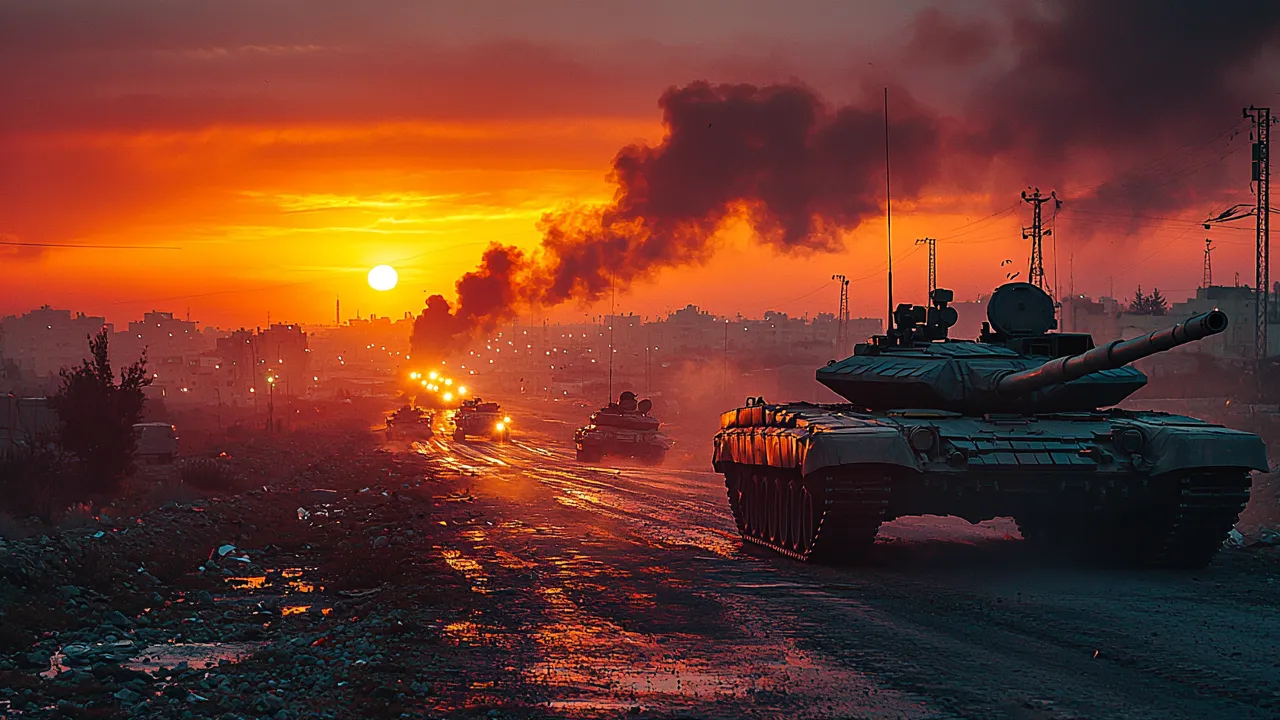
A major military escalation is taking shape in the Middle East. Limited ground military operations have been launched against Hezbollah in southern Lebanon, at a time when tensions are rising in parallel with Iran. On the ground, these actions mark a change in the nature of the conflict, shifting from long-range exchanges to a direct military presence in an already contested border area.
This development matters because the stability of an entire region is at stake. Southern Lebanon and the border it shares with Israel form a long-standing fault line, where local actors, armed movements and regional powers intersect. Iran's involvement, given its close ties to Hezbollah, adds a strategic dimension: a localized confrontation can quickly draw in outside actors and spread beyond the Lebanese theater alone.
The event is part of a long-running rivalry in which every military move is read through opposing frameworks. For some actors, it is a security operation in response to an armed threat; for others, it is an intervention that endangers the regional balance and international law. These contradictory readings fuel uncertainty about real intentions and about how far the escalation could go.
Several grey areas remain. The exact scope of the operations, their duration and the degree of involvement of the various parties remain disputed across sources, as does the likelihood of the conflict widening. What is agreed upon is how sensitive the moment is: an escalation whose human and geopolitical consequences will depend on the decisions taken in the days ahead.
Measured with the previous method (distance between texts), on a different scale.