Common ground and differences in coverage across the media analysed.
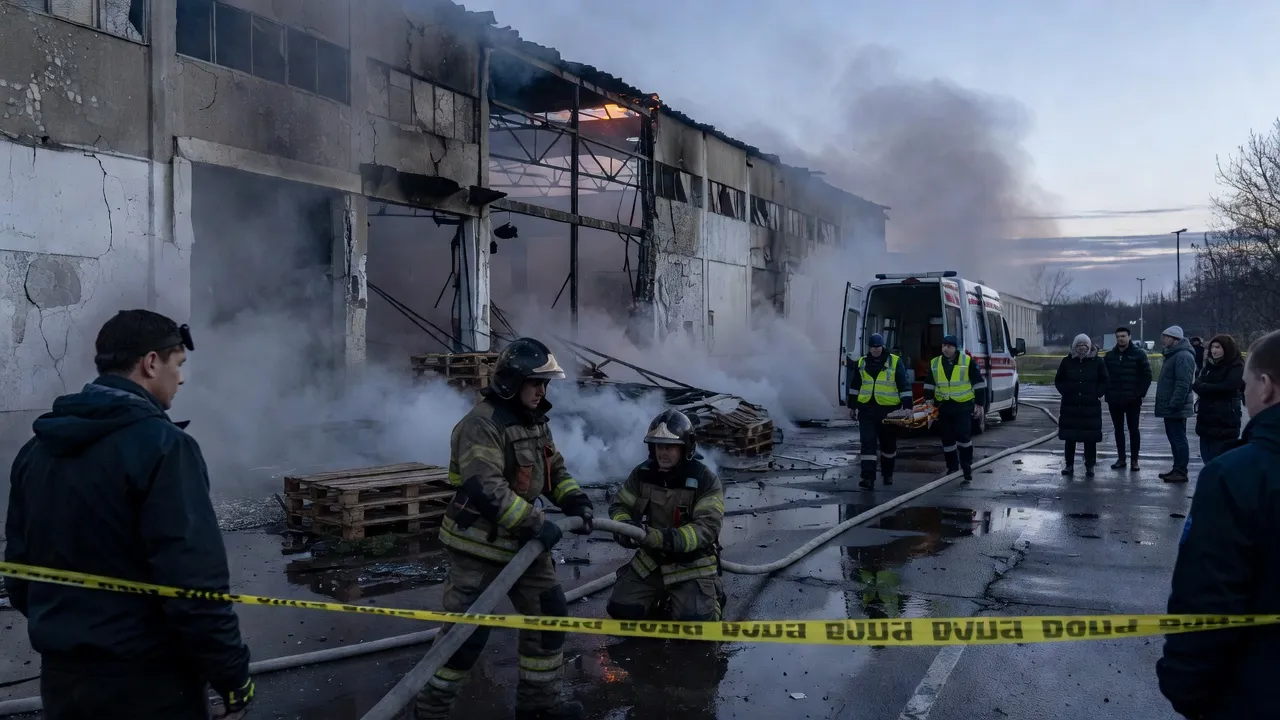
The Russian strike on Kyiv and its oblast on 4–5 August marks the third massive attack in a week, with casualties rising hourly to 15–17 dead and over 44 wounded.
None of the ballistic or hypersonic missiles deployed by Russia (Iskander-M, Zircon, North Korean KN-23) were intercepted by Ukrainian air defenses, in contrast to the high interception rate for drones.
A Ukrainian drone strike hit the crowded beach at Arkhipo-Ossipovka near Gelendzhik, killing seven people, including several children, according to Russian authorities.
Russia accuses Kyiv of seeking escalation to obtain more Western arms, while Italy and Brazil link the scale of Ukrainian casualties to Trump's reported refusal to deliver additional Patriot batteries, and Ukraine points to delays in Western arms deliveries.
Moscow characterizes its own strikes as precision targeting of military logistics infrastructure, citing roughly 300,000 m² of destroyed facilities, while Ukraine and several Western countries document residential damage (an apartment block in Obolon, warehouses) and numerous civilian casualties without confirming Moscow's military justification.
Coverage aligned with this reading
Coverage that diverges
Russia, the United States, the United Kingdom, and Egypt characterize the beach attack as deliberately targeting civilians, including children, while the Argentine press, citing Perfil, raises the possibility of a target linked to Russian military industry (a hotel favored by that sector), an explanation absent elsewhere in the coverage.
Coverage aligned with this reading
Coverage that diverges
This grouping describes the publications analysed, not the position of these countries’ populations or of their governments.
What the coverage of each country leaves aside, while others put it forward.
Sweden
France
Russia
Preview: 3 of 15 media perspectives. Syntheses of the media analysed — not direct quotations. Method & limitations
Kyiv documents hour by hour Russia's third major strike of the week on the capital and its region, centering a drone video of a vendor in Kherson as evidence of deliberate civilian targeting rather than a mere casualty count.
3 sources · View sources
Moscow disassociates its own strikes, presented as targeting Ukrainian military logistics, from the Gelendzhik attack, described as targeting civilians, including children.
2 sources · View sources
Washington holds both warring capitals equally to account: an equidistant reading that treats civilian losses in Kyiv and Gelendjik as symmetric dimensions of the same conflict, without assigning responsibility.
2 sources · View sources
DOMINANT ANGLE
Kyiv documents hour by hour Russia's third major strike of the week on the capital and its region, centering a drone video of a vendor in Kherson as evidence of deliberate civilian targeting rather than a mere casualty count.
ANALYSIS
Kyiv, August 6, 2026.
DOMINANT ANGLE
Moscow disassociates its own strikes, presented as targeting Ukrainian military logistics, from the Gelendzhik attack, described as targeting civilians, including children.
ANALYSIS
Moscow, August 6, 2026.
DOMINANT ANGLE
Washington holds both warring capitals equally to account: an equidistant reading that treats civilian losses in Kyiv and Gelendjik as symmetric dimensions of the same conflict, without assigning responsibility.
ANALYSIS
Washington, August 6, 2026.
DOMINANT ANGLE
London weighs the Gelendjik beach strike as a feared turning point for Kyiv's allies, even as Moscow and Kyiv exchange blame for civilian casualties.
ANALYSIS
London, August 6, 2026.
DOMINANT ANGLE
Paris chronicles the mounting civilian death toll in Kyiv hour by hour, yet offers scant coverage of the reciprocal Ukrainian strike on Gelendjik beach.
ANALYSIS
Paris, August 6, 2026.
DOMINANT ANGLE
Berlin tallies, hour by hour, the third night of Russian strikes on Kyiv in a week, while monitoring the deployment of a North Korean missile unit toward Russia.
ANALYSIS
Berlin, August 6, 2026.
DOMINANT ANGLE
Rome maps the strike through its technical arsenal: Iskander-M ballistic missiles, hypersonic Zircon cruise missiles, and North Korean KN-23 ballistic missiles all reached their targets—due to the absence of Patriot interceptors that Washington reportedly denied to Kyiv.
ANALYSIS
Rome, August 6, 2026.
DOMINANT ANGLE
Lisbon renders Kyiv's night through the figures supplied by wire reports—missiles, drones, dead and wounded—adding no independent diplomatic reading.
ANALYSIS
Lisbon, August 6, 2026.
DOMINANT ANGLE
Stockholm isolates coverage of the Kyiv strike from its Russian counterpart, omitting Gelendjik and repeating the same wire story three times about the Wildberries warehouse in Aleksine.
ANALYSIS
Stockholm, August 6, 2026.
DOMINANT ANGLE
Cairo places, in the same columns, deaths in Kyiv and deaths in Gelendjik side by side, without ranking the two tragedies or settling who launched the escalation.
ANALYSIS
Cairo, August 5, 2026.
DOMINANT ANGLE
Pretoria weighs both sides through the numbers, tallying Russian casualties in Kyiv against accusations of war crimes centered on a Ukrainian drone at Kherson.
ANALYSIS
Pretoria, August 6, 2026.
DOMINANT ANGLE
Brasília isolates the drone video pursuing a street vendor in Kherson as the night's central war crime, as the toll from strikes on Kyiv climbs hour by hour across its news pages.
ANALYSIS
Brasília, August 6, 2026.
DOMINANT ANGLE
Buenos Aires juxtaposes the night's two strikes without weighing responsibility, reporting each side's accusations with identified sources.
ANALYSIS
Buenos Aires, August 6, 2026.
DOMINANT ANGLE
Canberra treats the verified video of a 'human safari' primarily as evidence of a war crime, rather than as diplomatic symbolism.
ANALYSIS
Canberra, August 6, 2026.
DOMINANT ANGLE
Singapore isolates, amid the wave of cross-fire strikes, the sole episode it documents in detail: the video of a Russian drone chasing a vegetable vendor in Kherson, presented as the clearest evidence of deliberate targeting of civilians.
ANALYSIS
Singapore, August 6, 2026.
Explore every perspective on this subject across 15 countries.
Compare viewpoints and see where they diverge.
published on
countries
sources
articles
gap
On the night of August 4–5, 2026, Russia launched its third wave of ballistic missile and drone strikes in a week on Kyiv and its oblast; the toll, updated throughout the day, rose from 14 to 17 killed and reached 44 wounded according to Ukrainian authorities. That same day, a Ukrainian drone struck a crowded beach in Arkhipo-Ossipovka, near Gelendzhik, in Russia's Krasnodar region, killing seven people, including children, and wounding some forty, according to Russian authorities. A separate video, released by Ukrainian authorities, shows a Russian drone pursuing a street vendor in Kherson; Kyiv calls the strike a war crime.
Measured with the previous method (distance between texts), on a different scale.