
Common ground and differences in coverage across the media analysed.
Trump announced a three-week extension of the Israel-Lebanon ceasefire.
Hezbollah fired projectiles into Israeli territory, violating the truce according to the Israeli army.
Netanyahu ordered 'powerful' strikes on Hezbollah in retaliation, killing at least four people in southern Lebanon.
Israeli and Western media (il, uk, ca, au) portray Hezbollah as the initiator of violations, with video evidence of projectile fire. Qatar-aligned (qa) and Turkish (tr) media emphasize prior Israeli strikes in southern Lebanon as the original violations. Russian media (ru) present both sides as equally culpable while highlighting Israeli impunity.
Israel (il) and US media frame Hezbollah disarmament as a non-negotiable condition for any durable agreement. Hezbollah's allies (qa, tr) reject this framing and invoke Lebanese sovereignty. French (fr) media note that Lebanon cannot force disarmament without risking civil war.
Northern Israeli press (il) expresses anger at the extension, seeing it as rewarding Hezbollah. International media (fr, uk, in, sg) welcomes it as a diplomatic window. RT (ru) and Al Jazeera (qa) see Israeli skepticism as proof Tel Aviv does not want peace.
Preview: 3 of 11 media perspectives. Syntheses of the media analysed — not direct quotations. Method & limitations
Hezbollah 'sabotage': Netanyahu orders forceful strikes as anger builds in northern Israel
1 source · View sources
Israel keeps striking Lebanon despite ceasefire — Hezbollah in a state of resistance
1 source · View sources
Lebanon torn between Hezbollah disarmament and humanitarian survival
3 sources · View sources
DOMINANT ANGLE
Hezbollah 'sabotage': Netanyahu orders forceful strikes as anger builds in northern Israel
ANALYSIS
The Jerusalem Post reported that after Hezbollah projectiles hit Israeli territory — including shooting down an Israeli drone over Deir Ammar — Netanyahu authorized 'powerful' strikes against the group.
DOMINANT ANGLE
Israel keeps striking Lebanon despite ceasefire — Hezbollah in a state of resistance
ANALYSIS
Al Jazeera reported at least 12 Palestinians killed by Israeli fire in Gaza 'amid the ceasefire,' and documented ongoing Israeli explosions in southern Lebanon despite the announced truce.
DOMINANT ANGLE
Lebanon torn between Hezbollah disarmament and humanitarian survival
ANALYSIS
French media centered on the humanitarian dimension and Lebanon's impossible situation: a state that can neither force Hezbollah's disarmament nor stand up to Israel, while its population suffers.
DOMINANT ANGLE
Washington between ceasefire extension and defiant Hezbollah: the diplomatic window narrows
ANALYSIS
The Washington Post headlined 'Hezbollah defiant in face of ceasefire extension,' noting the group's refusal to disarm changes nothing fundamental.
DOMINANT ANGLE
London watches the truce with caution and condemns the killing of journalists
ANALYSIS
The Independent tracked developments closely.
DOMINANT ANGLE
Moscow condemns Israeli impunity and highlights the Venice Biennale double exclusion
ANALYSIS
RT and TASS covered Israeli strikes on Lebanon despite the ceasefire extensively, framing them as proof of Washington-granted impunity.
DOMINANT ANGLE
New Delhi closely watches the Lebanon conflict — an Indonesian peacekeeper killed, UNIFIL under threat
ANALYSIS
NDTV reported the Lebanese journalist's death with a powerful headline.
DOMINANT ANGLE
Southeast Asia between fragile truce and maritime route threats: regional instability from the Far East
ANALYSIS
The Straits Times reported Netanyahu ordering 'powerful' strikes after Hezbollah violations, and four killed in southern Lebanon.
DOMINANT ANGLE
Ottawa caught between ceasefire support and press freedom concerns — Canada aligns with European allies
ANALYSIS
CBC News reported the ceasefire extension in measured terms.
DOMINANT ANGLE
Ankara condemns Israeli strikes as violations of international law
ANALYSIS
Daily Sabah reported four killed in Israeli strikes in southern Lebanon despite the ceasefire, framing it as a violation of international humanitarian law.
DOMINANT ANGLE
Sydney tracks the full arc of the conflict: from extended truce to collapsed talks in one day
ANALYSIS
The Sydney Morning Herald published two landmark articles: the first announcing the ceasefire extension and US envoys heading to Pakistan, the second — published the following day — headlining the collapse of Islamabad talks and a Lebanon ceasefire 'shaky amid strikes.
Explore every perspective on this subject across 11 countries.
Compare viewpoints and see where they diverge.
published on
countries
sources
articles
gap
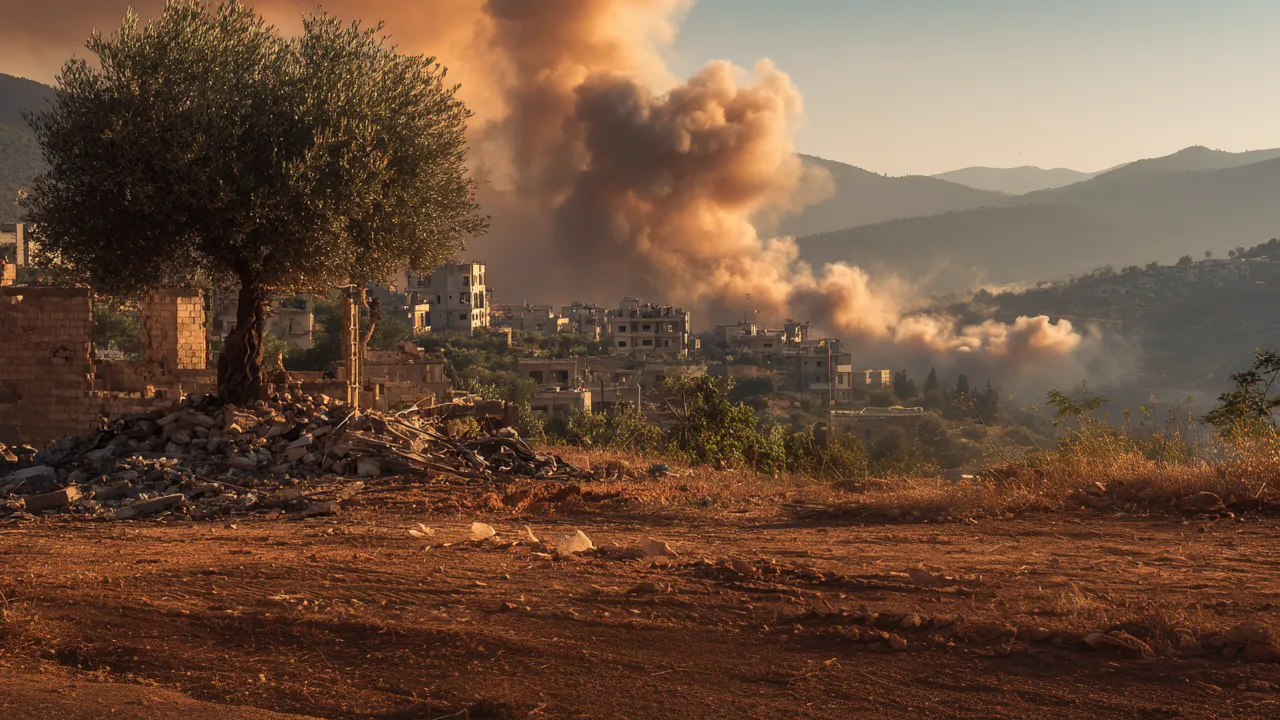
A three-week extension of the Israeli-Lebanese ceasefire was announced by Donald Trump. A few hours later, projectiles were fired from Lebanon toward Israeli territory, which the Israeli military described as a breach of the truce. In response, Benjamin Netanyahu ordered strikes on southern Lebanon that killed at least four people. The Hezbollah, for its part, rejects any direct negotiation with Israel and refuses to disarm.
The truce's fragility stems from a deep ambiguity: Israel views it as a prelude to Hezbollah's disarmament, while the organization treats it as a mere tactical pause. The three-week extension does not resolve this misunderstanding. Caught in between, Lebanon, whose state struggles to control Hezbollah militarily, finds itself under pressure from both sides.
The actors disagree on who bears responsibility. Israel and several Western capitals portray Hezbollah as the initiator of the violations; other voices point to continued Israeli strikes in the south as a prior breach, with some assigning blame to both sides.
The disagreement also concerns the country's future: disarming Hezbollah is framed as a non-negotiable condition by some and contested in the name of Lebanese sovereignty by others, with several warning that forced disarmament could reignite internal conflict.
Several angles remain lightly covered: the humanitarian situation in the south, with displaced people returning to destroyed villages amid shortages of water and electricity, as well as internal tensions within Hezbollah between a hardline stance and a more pragmatic current.
Measured with the previous method (distance between texts), on a different scale.