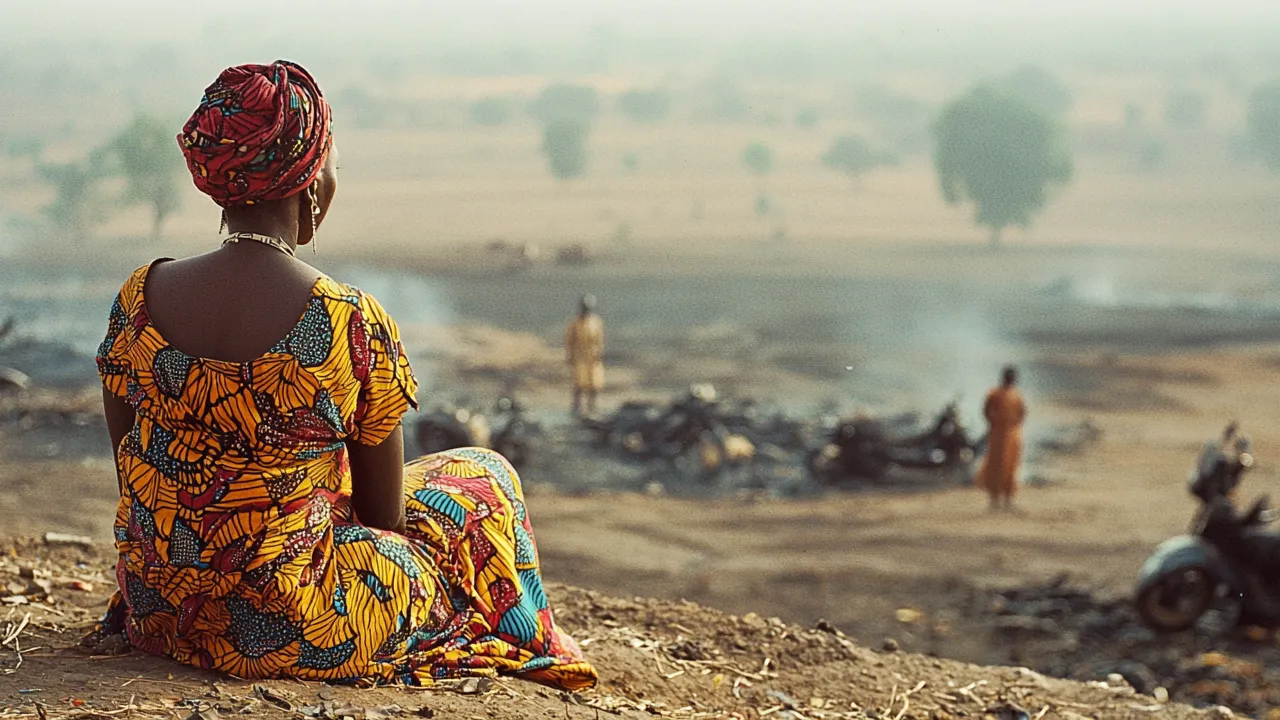
In less than 48 hours in late April 2026, Nigeria was hit by several simultaneous violent incidents. Twenty-nine civilians were killed on a football pitch in Guyaku, an attack officially claimed by the Islamic State in West Africa Province (ISWAP), confirming the jihadist dimension of the security crisis in the north-east. At the same time, twenty-three children were abducted from an orphanage. Three incidents in three distinct regions — Adamawa, Kogi and Ekiti — point to violence reaching beyond the historic north-eastern stronghold.
These events fit into a security situation that has deteriorated over several years. ISWAP, which absorbed most of Boko Haram in 2021, has strengthened its ability to strike civilian targets while expanding its operations. The simultaneity of the attacks suggests either coordination between armed groups or the spread of a broader climate of violence.
Mass abductions have become a recurring funding method for armed groups, a pattern seen since the Chibok kidnappings of 2014. Their normalization, despite the national trauma they once provoked, fuels debate over the effectiveness of security reforms carried out over the past twelve years.
The context is also electoral: less than a year before the general elections, security has become a central political issue. Actors differ in how they read the events. Some stress the state's responsibility and its capacity to protect citizens, others point to structural vulnerabilities such as unregistered orphanages, while still others highlight the limited international attention given to these crises.