
DOMINANT ANGLE
The United States retains from the Nobel a tool to pierce the brain: optogenetics, driven by a Stanford researcher and years of American public funding.
Dominant angle identified — does not reflect unanimity of this country’s media
KEY POINTS
- 01
Karl Deisseroth, 54, from Stanford, shares the Nobel with Peter Hegemann (71) and Georg Nagel (73)
- 02
The NIH awarded Deisseroth significant funding in the early 2000s, according to Jeremy Berg
- 03
The prize is 12 million Swedish crowns, approximately $1.2 million (NPR, Time)
ANALYSIS
Washington, October 6, 2026. The Nobel Prize in medicine, announced on Monday, October 5, is presented by the American press as that of a tool: the Associated Press speaks of "a tool that uses light to help unravel how the brain works." Karl Deisseroth, 54, a researcher at the Howard Hughes Medical Institute and professor at Stanford (California), shares the award with Germans Peter Hegemann, 71, from Humboldt University in Berlin, and Georg Nagel, 73, who last worked at the University of Würzburg.
ABC News, HuffPost, and NPR detail the scientific journey. Everything starts with Hegemann, who studies how a single-celled green alga swims towards light. With Nagel, he isolates a protein that, when illuminated in blue, opens a channel and creates an electrical impulse; introducing it into other cells makes them sensitive to light. Deisseroth then works on the gene of this protein to manufacture a light switch for neurons, in the brains of living mice. The Nobel Assembly sees "a new era in neuroscience": the tool begins to unravel the pathways that lead to behavior and disease.
The American narrative gives a place to public funding. Jeremy Berg, from the University of Pittsburgh, recalls that he was at the National Institutes of Health in the early 2000s, when the agency awarded Deisseroth significant funding for "this vision of optogenetics," which unfolded almost exactly as planned. He judges the tool "very precise" for experiments on brain function "pretty hard to do any other way." Deisseroth, who claims to be a night owl, was up late for the announcement, according to HuffPost, and summarizes: "People usually think about light as a way of collecting information to observe things," whereas this method does the opposite.
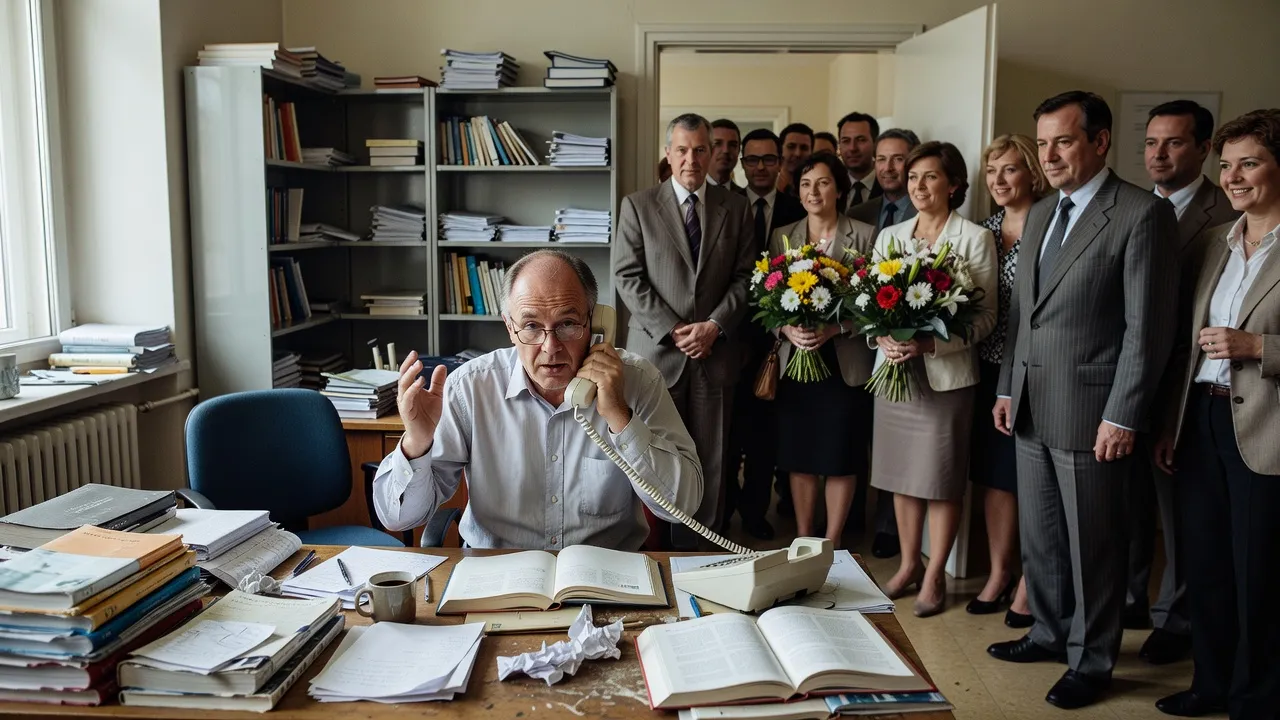
NPR indicates that Thomas Perlmann, secretary of the medicine committee, was able to reach the three laureates by phone. The award is 12 million Swedish crowns, approximately $1.2 million. Time places the prize in Nobel week: physics on Tuesday, chemistry on Wednesday, literature on Thursday, peace on Friday, and economics on Monday, October 12. For peace, there are 287 candidates, and it recalls that Donald Trump is nominated again. The selected texts remain focused on brain research and do not detail clinical applications.
SOURCES (4)
- NPRMEDIUM
- TimeMEDIUM
- HuffPost WorldMEDIUM
- ABC News WorldMEDIUM