What the comparison reveals
Common ground and differences in coverage across the media analysed.
What the media report in common
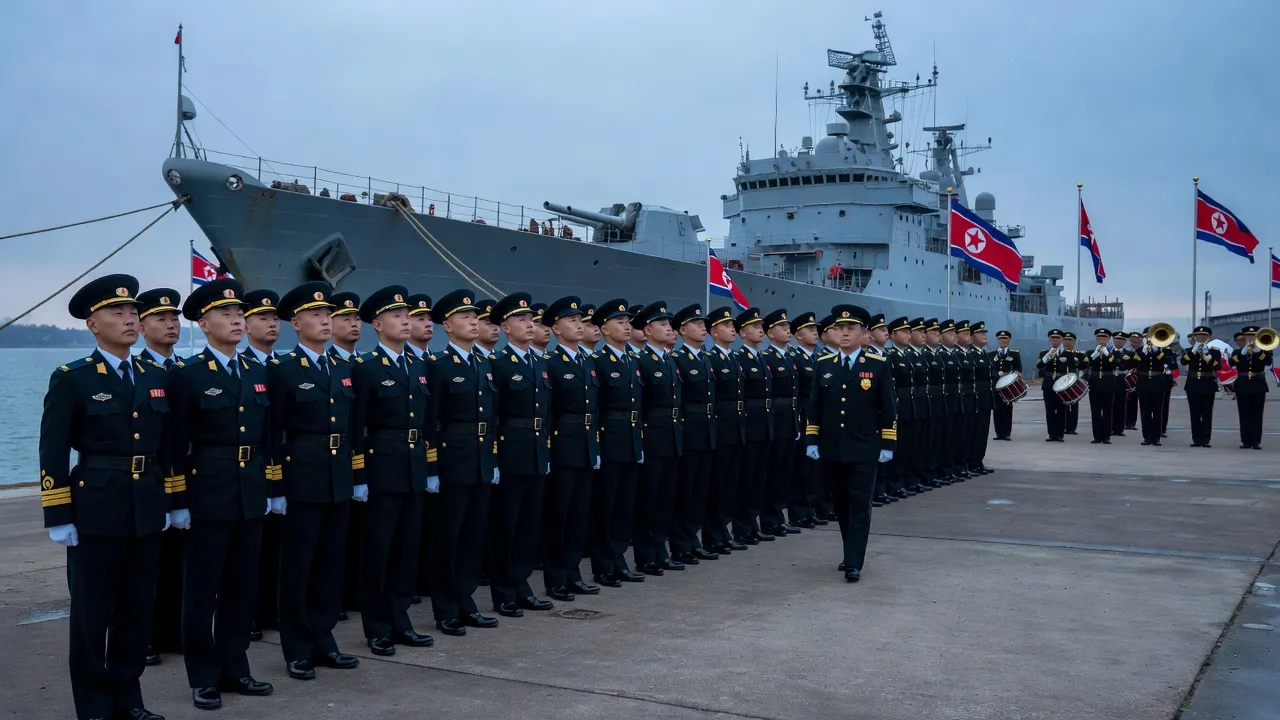
The destroyer Choe Hyon, a 5,000-ton vessel, was officially commissioned in the port of Nampho during a ceremony presided over by Kim Jong-un on June 24, 2026.
Kim Jong-un stated that the nuclearization of North Korea's navy is advancing according to the planned schedule, without deviating from its trajectory.
Pyongyang announced the forthcoming construction of a second 5,000-ton destroyer (Kang Kon) and strategic vessels of 10,000 tons at a rate of two units per year.
Where media coverage diverges
Responsibility for regional destabilization
Allied countries (South Korea, Japan, United States, France) attribute the escalation of tensions to North Korea's nuclear ambitions, while China points to United States-Japan military exercises as the primary source of instability.
How each country reads it
Preview: 3 of 6 media perspectives. Syntheses of the media analysed — not direct quotations.
Seoul closely watches North Korea's growing naval ambitions with concern: the deployment of the Choe Hyon destroyer, coupled with Kim Jong-un's maritime nuclear aspirations, is seen as a direct threat justifying expanded deterrence cooperation with Washington.
4 sources ·
Washington closely scrutinizes the commissioning of the Choe Hyon destroyer: Pyongyang displays naval nuclear ambitions that American experts assess as both substantive and partially inflated, within the context of deepening Russian-North Korean military coordination.
2 sources ·
Paris assesses with concern the strategic significance of North Korea's new Choe Hyon destroyer, interpreting the event not as a singular military fact but as a milestone in a long-term, systematically planned nuclear naval expansion program.
6 sources ·





