Common ground and differences in coverage across the media analysed.
What the media report in common
1
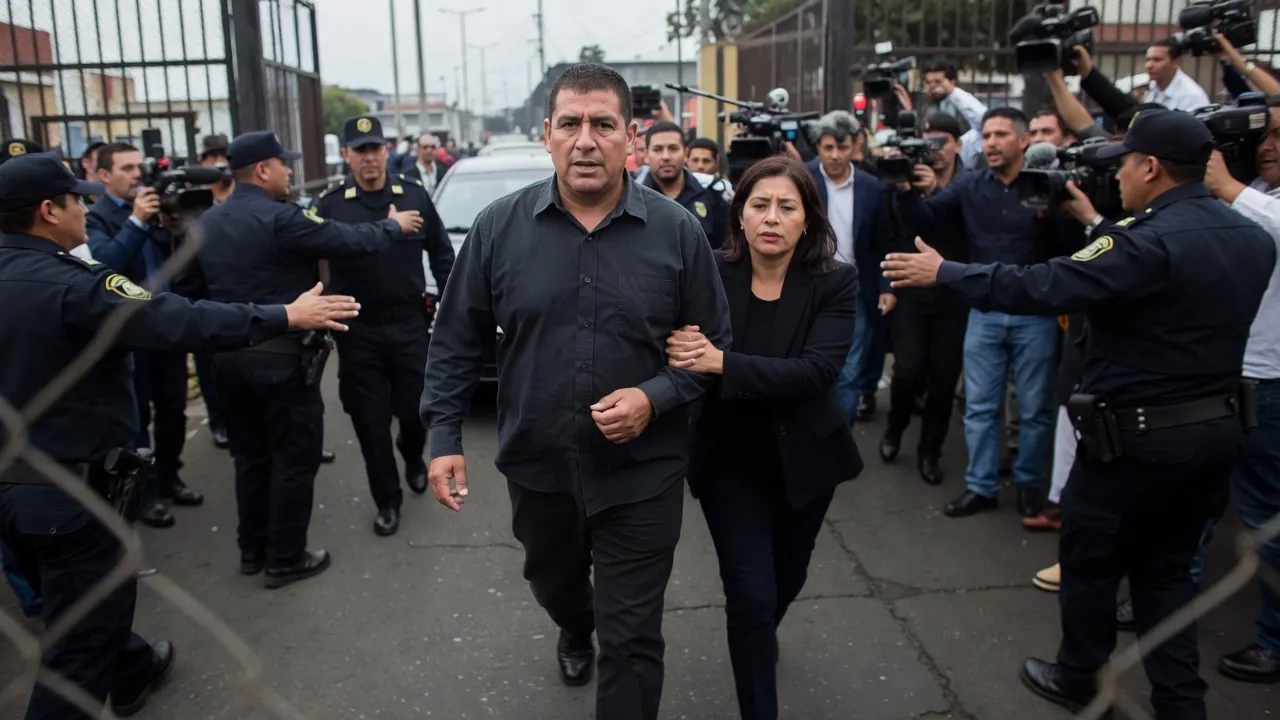
Peru's Constitutional Court declared the entire criminal proceedings against Ollanta Humala null, leading to his immediate release from Barbadillo prison, with no perspective presenting the ruling as an acquittal on the merits.
2
Every perspective reports the same statement by Ollanta Humala on leaving prison: that he had been "kidnapped" by the State or by the judiciary.
3
The case goes back to the funding of his 2006 and 2011 presidential campaigns with money linked to the Odebrecht scandal, for which he had been sentenced in April 2025 to fifteen years in prison for money laundering.
Where media coverage diverges
Scope of the ruling
Peru, Brazil and France frame the annulment as a narrow procedural decision with no bearing on the merits, whereas Chile gives extensive play to Humala's reading of judicial persecution and Ecuador sees a political precedent liable to reopen other Odebrecht files in the region.
How each country reads it
Preview: 3 of 5 media perspectives. Syntheses of the media analysed — not direct quotations.
Lima carefully distinguishes the procedural annulment obtained by Ollanta Humala from an acquittal on the merits, while other criminal cases remain open against the former president.
3 sources ·
Brasília weighs the significance of a Peruvian court ruling that points straight back to the Odebrecht scandal, born on Brazilian soil and turned into the catalyst of an entire regional anti-corruption wave.
3 sources ·
Santiago scrutinises the phrase Ollanta Humala hammered home on leaving prison — "Fui secuestrado por el Poder Judicial" — and reads it as a test of the legitimacy of Andean anti-corruption trials.
Ecuador and Chile stress that the Constitutional Court's reasoning, already applied when closing Keiko Fujimori's file, could inspire other Odebrecht proceedings across the Andean region — a case-law reading absent from the Peruvian, Brazilian and French perspectives, which centre on Humala's individual case.
Brazil pulls the narrative back towards its own borders, stressing the Brazilian origin of the Odebrecht scandal and the political asylum granted to Nadine Heredia in Brasília, while Peru details the national proceedings still pending against Humala (corruption, the Southern Peruvian Gas Pipeline, enforced disappearance).
Ollanta Humala freed after his conviction is annulled
published on
August 2, 2026
5
countries
12
sources
16
articles
4/100
gap
Peru's Constitutional Court announced on Thursday 31 July 2026 that the entire criminal case against former president Ollanta Humala, sentenced in April 2025 to fifteen years in prison for money laundering in the Odebrecht affair, was void. The ruling, adopted by five votes to two (judgment no. 169/2026), holds that the irregular financing of his 2006 and 2011 campaigns was not classified as money laundering at the time of the events. Humala left Barbadillo prison after roughly fifteen months in detention. Other proceedings against him, notably those linked to the Southern Peruvian Gas Pipeline, remain pending.
Key figures
15 years
Prison sentence handed down in April 2025 for money laundering, now annulled
Lima carefully distinguishes the procedural annulment obtained by Ollanta Humala from an acquittal on the merits, while other criminal cases remain open against the former president.
Brasília weighs the significance of a Peruvian court ruling that points straight back to the Odebrecht scandal, born on Brazilian soil and turned into the catalyst of an entire regional anti-corruption wave.
Santiago scrutinises the phrase Ollanta Humala hammered home on leaving prison — "Fui secuestrado por el Poder Judicial" — and reads it as a test of the legitimacy of Andean anti-corruption trials.
ANALYSIS
Santiago, 2 August 2026.
Ecuador
DOMINANT ANGLE
Quito reads Ollanta Humala's release as a potentially contagious judicial precedent: by erasing his conviction with the same reasoning already used for Keiko Fujimori, Peru's Constitutional Court opens a breach that other Odebrecht cases in the region could invoke.
ANALYSIS
Quito, 2 August 2026.
France
DOMINANT ANGLE
Paris reads an ambiguous procedural decision: neither an acquittal nor a return to power, but the end of a contested imprisonment in the Odebrecht file.
ANALYSIS
Paris, 2 August 2026.
Explore every perspective on this subject across 5 countries.