
Common ground and differences in coverage across the media analysed.
The first anniversary of Operation Sindoor falls on May 7, 2026
The two countries commemorate the event in diametrically opposite ways: a victory for India, a national humiliation for Pakistan
The US closed its consulate in Peshawar, signalling a deterioration in the Pakistan-USA relationship
Preview: 3 of 6 media perspectives. Syntheses of the media analysed — not direct quotations.
New Delhi flexes its long memory: 'India does not forgive, India does not apologise'
2 sources · View sources
Islamabad commemorates 'Marka-e-Haq' and warns: next time will be different
2 sources · View sources
Paris asks the question both capitals avoid: who is funding terrorism in Kashmir?
1 source · View sources
DOMINANT ANGLE
New Delhi flexes its long memory: 'India does not forgive, India does not apologise'
ANALYSIS
New Delhi marked the first anniversary of Operation Sindoor with an Indian Air Force video with an unambiguous tagline: 'India Forgives Nothing.
DOMINANT ANGLE
Islamabad commemorates 'Marka-e-Haq' and warns: next time will be different
ANALYSIS
Islamabad organised an official commemoration of Marka-e-Haq — the Pakistani name for the response to Operation Sindoor — with a special tribute to the Pakistan Air Force (PAF).
DOMINANT ANGLE
Paris asks the question both capitals avoid: who is funding terrorism in Kashmir?
ANALYSIS
France 24 dedicated a full interview to Bilawal Bhutto Zardari, former Pakistani Foreign Minister, who directly accused India of funding organisations behind terrorist acts in Pakistan.
DOMINANT ANGLE
Doha measures Pakistan's exposure in two simultaneous crises: Kashmir and Hormuz
ANALYSIS
Doha reads Pakistan's position through the lens of a state that has itself practiced mediation diplomacy as an influence vector.
DOMINANT ANGLE
Singapore worries: the Hormuz crisis has left India without a strategic compass in the region
ANALYSIS
Singapore's Channel News Asia published an analytical commentary with a direct thesis: the Hormuz crisis has marginalised India on the regional chessboard.
DOMINANT ANGLE
Berlin maps India's rise in the Indo-Pacific, with Kashmir in the background
ANALYSIS
Berlin's Deutsche Welle published an analysis of how India uses its southernmost island to project power against China — an angle that relocates the India-Pakistan context within the broader frame of Indo-Pacific strategic competition.
Explore every perspective on this subject across 6 countries.
Compare viewpoints and see where they diverge.
published on
countries
sources
articles
gap
May 7, 2026 marks the first anniversary of Operation Sindoor, the Indian military strike carried out on Pakistani territory a year earlier. The date is commemorated in diametrically opposed ways on either side of the border: framed as a victory and a show of resolve on one side, experienced as a national humiliation on the other. No middle reading has taken hold.
Diplomatically, the United States closed its consulate in Peshawar, a move read as a sign of deteriorating relations between Washington and Islamabad. Beyond the symbolism, analysts agree on one point: a future confrontation between the two powers, both nuclear-armed, would be more dangerous than the last.
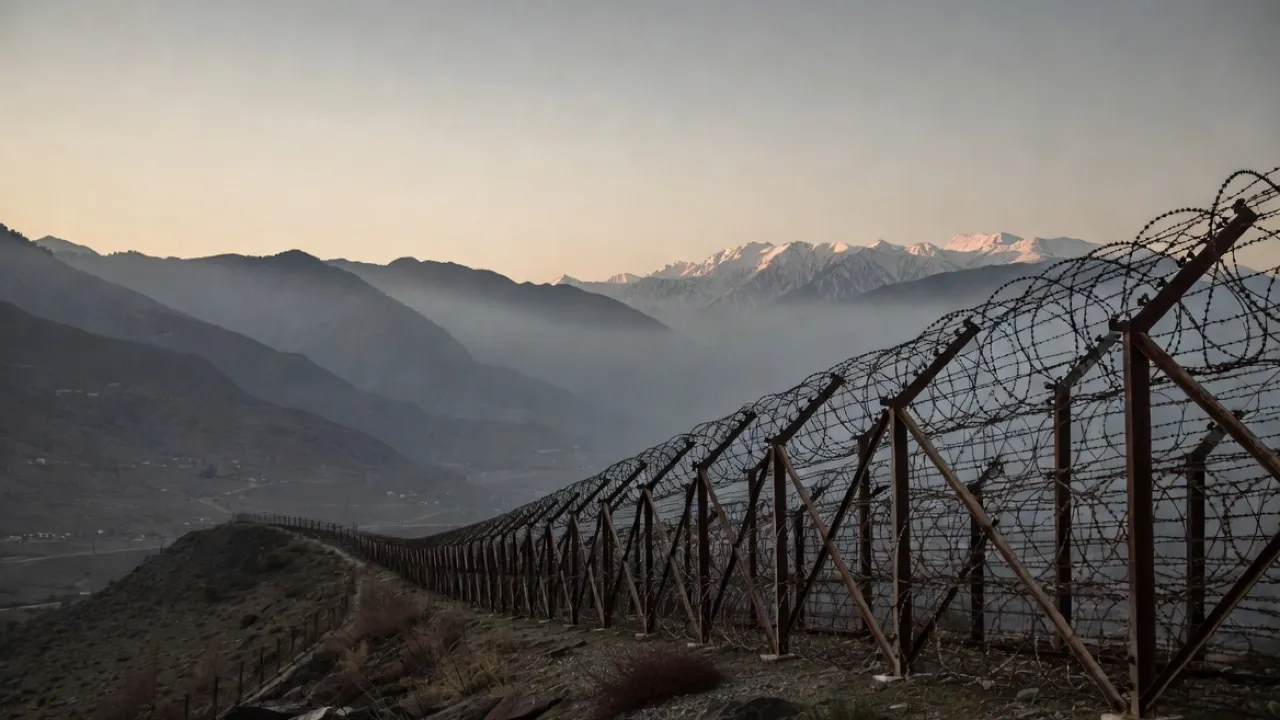
The dispute is rooted in a long-standing rivalry over Kashmir. Each capital blames the other for regional instability: one accuses its neighbor of sheltering armed groups, the other denounces support for terrorism on its soil. Neither set of accusations has been jointly resolved.
Several areas of uncertainty remain. The real significance of the consulate closure — a mere strategic withdrawal or a political message — is still debated. Islamabad's role as a regional diplomatic actor is weighed against its internal security weaknesses. Finally, the nuclear dimension, rarely raised in official communications, and the daily situation of Kashmiri populations remain largely on the margins of both dominant narratives.
Measured with the previous method (distance between texts), on a different scale.