What the comparison reveals
Common ground and differences in coverage across the media analysed.
What the media report in common
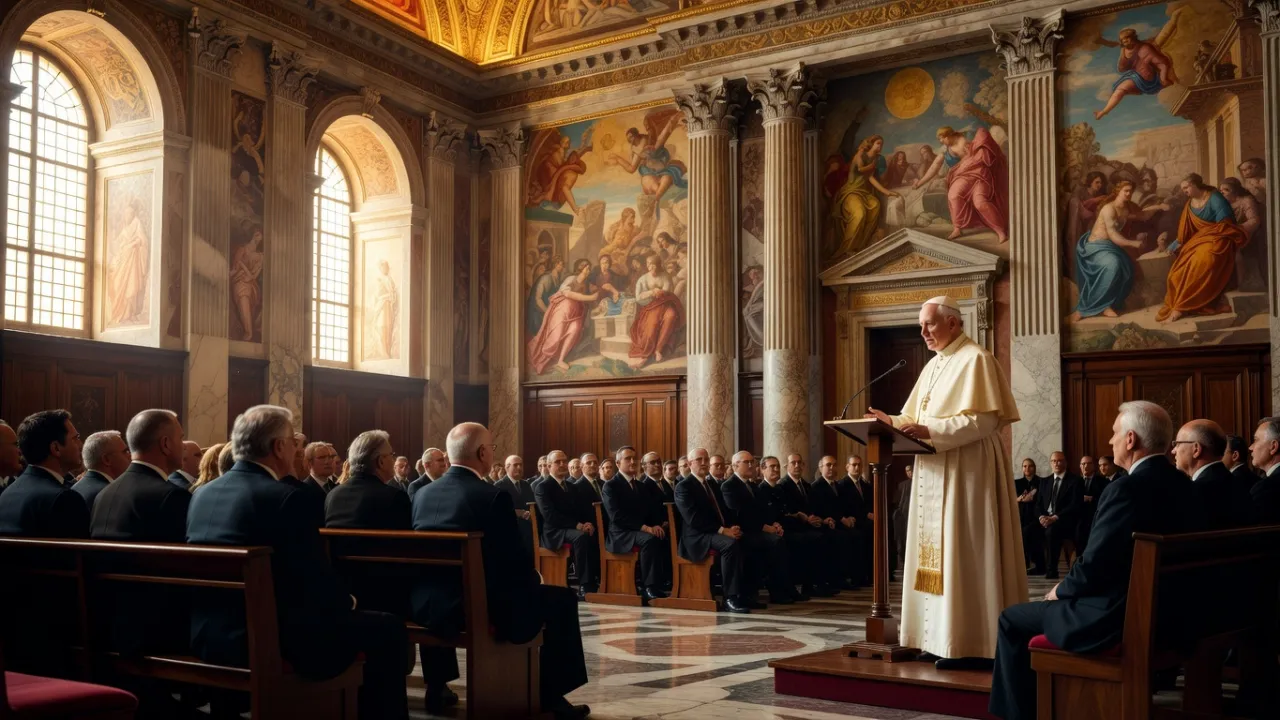
The encyclical 'Magnifica Humanitas' explicitly calls on governments to slow AI development and establish robust legal frameworks with independent oversight.
The document covers four common themes across all coverage: worker rights in the face of automation, child safety online, ownership of AI data, and the need to reduce competition between technology companies.
All perspectives note that the Pope judges it impermissible to delegate lethal and irreversible decisions to AI systems, positioning the Vatican in opposition to autonomous weapons.
Where media coverage diverges
Geopolitical reading versus moral authority
Some countries analyze the encyclical primarily as a geopolitical signal against American deregulation, while others see it first and foremost as legitimate religious moral authority.
How each country reads it
Preview: 3 of 6 media perspectives. Syntheses of the media analysed — not direct quotations.
Beijing extracts from the papal message what resonates with its own strategic concerns: the warning against uncontrolled technological competition and the call to subordinate AI to collective human interests, read as an involuntary convergence with Chinese governance rhetoric.
1 source ·
Paris watches with keen interest as Pope Leo XIV enters the AI regulation debate, viewing his moral authority as potentially influential in shaping ongoing European policy frameworks.
1 source ·
Seoul carefully weighs Pope Leo's call to slow AI development: a papal signal that resonates in one of the world's most technologically advanced economies, torn between digital ambitions and social anxieties.
1 source ·





