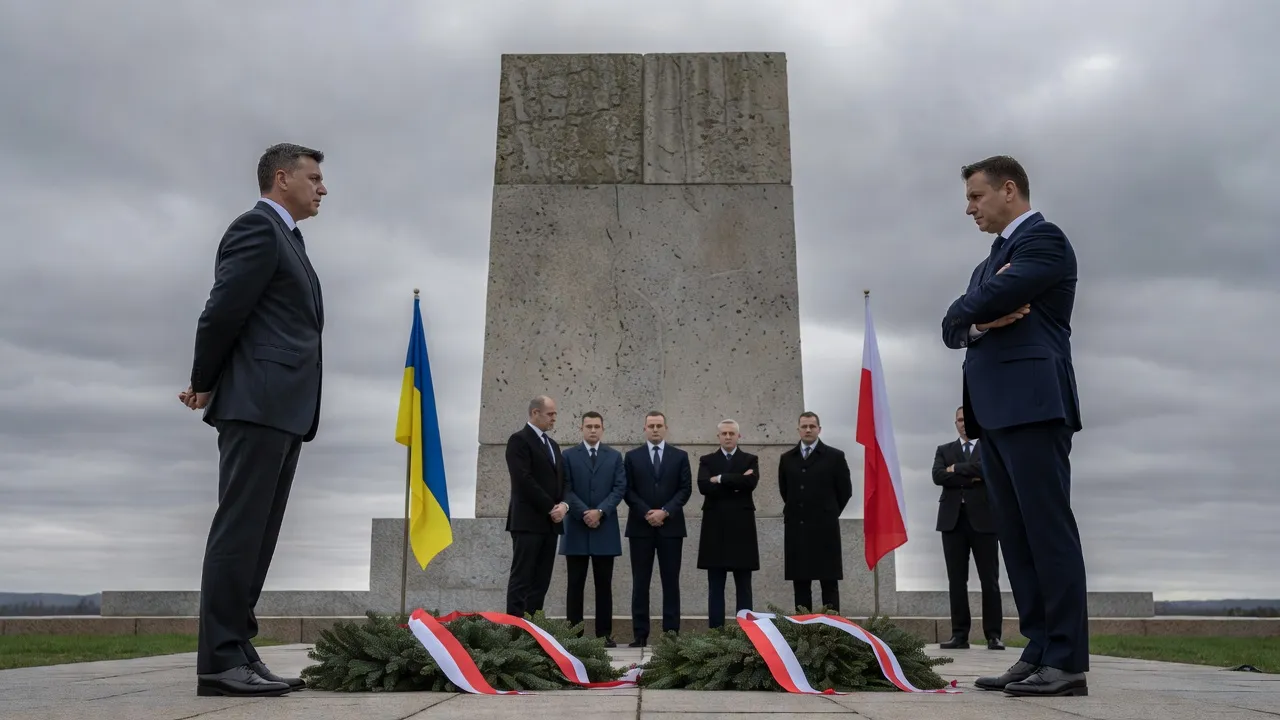
On 19 June 2026, Polish President Karol Nawrocki stripped Ukrainian President Volodymyr Zelensky of the Order of the White Eagle, the country's highest distinction. The move followed a late-May Ukrainian decree granting the name "Hero of the UPA" to a special-forces unit. Zelensky returned the decoration to Warsaw by mail, and several senior Ukrainian officials handed back their own Polish distinctions in turn. Former president Viktor Yushchenko also relinquished his, signalling disagreement.
The episode extends a long-running memory dispute over the Volhynia massacres (1943-1945), attributed to the Ukrainian Insurgent Army (UPA). Warsaw recognises these events as a genocide, while Kyiv also emphasises the UPA's role as resistance against Soviet occupation. The rise to power of Nawrocki, a historian of crimes committed against Poles, lowered tolerance for Ukrainian symbolic gestures.
Since 2022, Poland has been one of Kyiv's main logistical backers. Nawrocki stated that the withdrawal did not alter Polish military aid, and Prime Minister Donald Tusk publicly judged that the rift mainly benefited Moscow. The incident occurred on the eve of an international conference on Ukraine's reconstruction in Gdansk.
The actors differ on the gesture's meaning. Warsaw presents it as a legitimate response to a decision seen as unacceptable; Kyiv views it as an impulsive strategic mistake; others stress Poland's internal divide between the president and the prime minister. Still disputed are the exact role assigned to the UPA and the relative weight of memory, grain trade and domestic politics in the crisis.