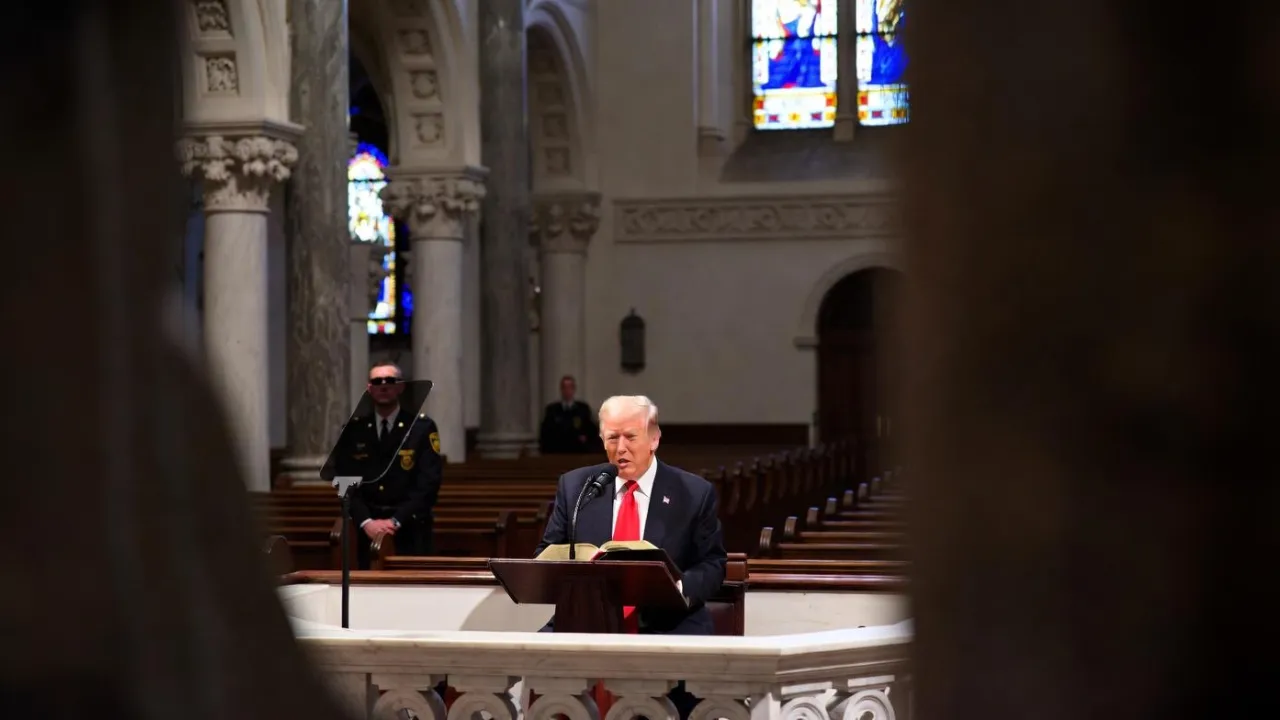
Pope Leo XIV publicly chose not to prolong the dispute that had set him against Donald Trump. Judging that it was "not in his interest" to continue the debate, he declined direct confrontation while maintaining his core positions on peace. For his part, Trump took part in a marathon reading of the Bible, a gesture widely interpreted as a response to the exchange. In the background, an announced meeting with King Charles III looms under heavy diplomatic tension, adding a fresh front to an already crowded sequence.
The episode reaches beyond strictly religious ground. By refusing confrontation without yielding on its convictions, the Vatican is deploying a cautious diplomacy: not confronting, yet not retreating either. The sequence highlights the fault lines of Western soft power, where the moral authority of the Church and political power intersect on increasingly sensitive terrain.
Readings of the event nonetheless diverge. Some actors see a strategic de-escalation by the Vatican, others a form of validation for anti-war positions, with Iran seizing on it to support its own analyses. The marathon Bible reading is likewise contested: a sincere act of faith to some, a political calculation to others, with the irony of its timing noted elsewhere.
The sequence also places certain governments in an awkward position. Italy, for instance, finds itself torn between alignment with and distance from Washington, on this matter and on Iran alike, a reflection of a wider fracture within the Western camp.
Several angles remain little covered: the exact content of the remarks that triggered the dispute, rarely quoted in full, the effect on Catholic faithful in Latin America, who make up a large share of the world's Catholics, and the pope's trip to Africa, largely overshadowed by the controversy.