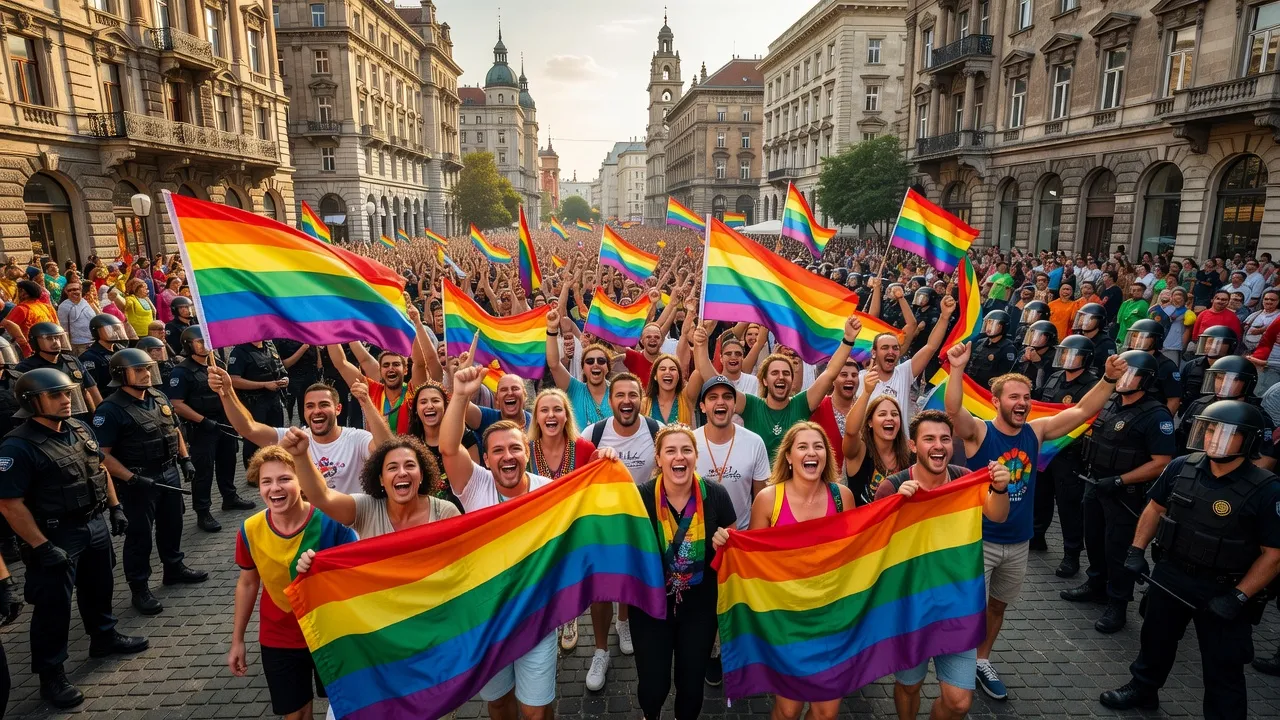
The weekend of 28 and 29 June 2026 saw two pride marches unfold simultaneously along opposite trajectories. In Budapest, tens of thousands marched in the first freely organised edition after years of restrictions. The event took place shortly after the April 2026 electoral defeat of Viktor Orbán, which ended sixteen years of nationalist-populist governance. In Istanbul, the march was banned by local authorities and then dispersed by police, with at least fifty arrests, including those of accredited journalists.
The crackdown in Istanbul fits a recurring pattern in place since 2015, even though homosexuality is not legally prohibited in Turkey, a NATO member. In the background, Russia handed down its first verdicts after designating the LGBT movement an extremist organisation in 2023: the manager of a club in Orenburg was sentenced to seven years in prison.
These events take on meaning within a shifting European legal framework. In April 2026, the Court of Justice of the European Union had ruled Hungary's anti-LGBT laws incompatible with the EU's fundamental freedoms. The Budapest march is thus read as a sign of realignment with European law, across a landscape where fragile democratisation in Central Europe coexists with persistent restrictions and criminalisation.
Several points remain disputed. The central meaning to assign to the weekend is debated: some actors emphasise Budapest as a turning point, others the repression in Istanbul. The durability of the Hungarian shift also divides opinion: some note that the contested legislation has not been repealed and that social tensions persist, while others present the change of power as settled.