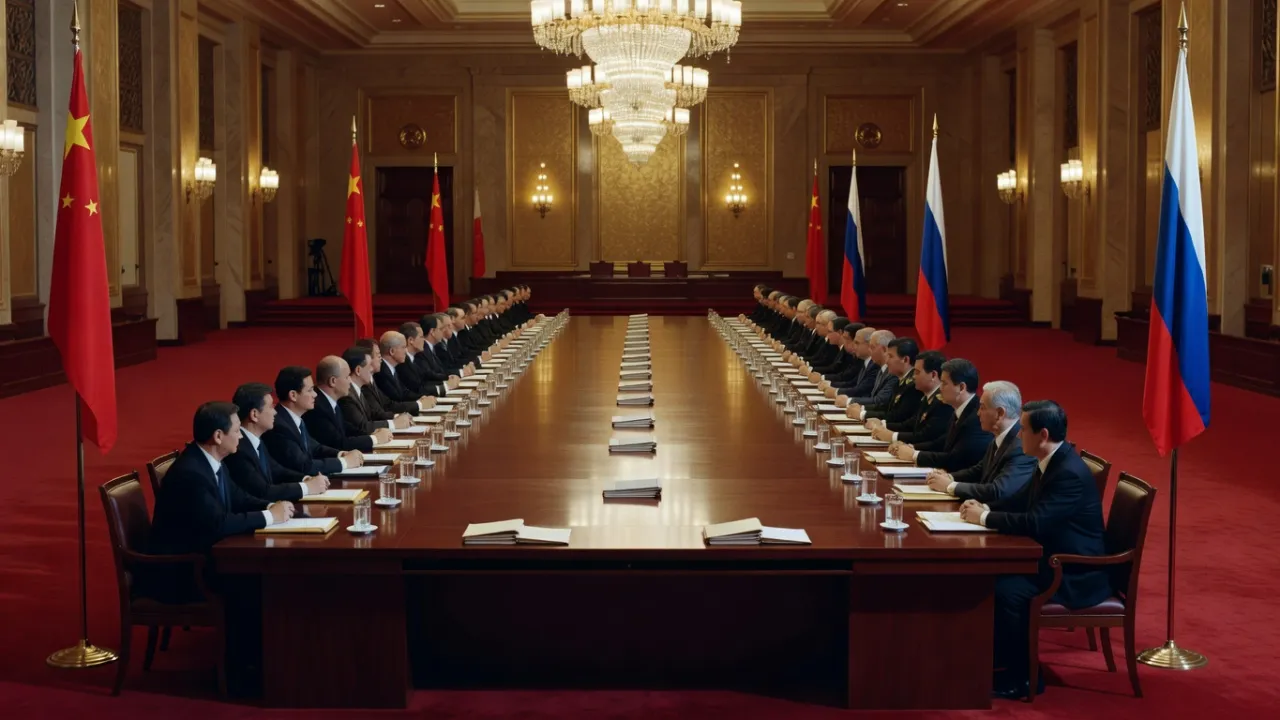
On 19 and 20 May 2026, Vladimir Putin travels to Beijing, just four days after Donald Trump left the Chinese capital. The visit marks the 25th anniversary of the Sino-Russian Treaty of Good-Neighborliness and Friendly Cooperation signed in 2001. The two trips occurring within less than a week is considered unprecedented in contemporary diplomacy outside a multilateral framework.
The sequence places China at the center of dealings with both powers. Beijing is Russia's leading trade partner, supplying more than a third of its imports and absorbing more than a quarter of its exports; bilateral trade exceeded 227 billion dollars in 2025. Moscow seeks assurances that the trade rapprochement emerging from the Trump-Xi summit will not come at its expense, while Washington looks to Beijing for leverage on other issues. Some forty bilateral agreements and the Power of Siberia 2 pipeline project are on the agenda.
Several readings clash over the actual significance of these summits. Some actors present the US-China agricultural deal as a tangible outcome, while others note that Beijing called the announcements preliminary and did not confirm the figures. Washington describes the Trump-Xi summit as a strategic victory, whereas other capitals consider that China secured the main gains.
Several points remain disputed or unconfirmed: the possible discussion of arms sales to Taiwan, the military dimension of the Sino-Russian partnership, and the place of Ukraine, largely absent from official communiqués. The net result is a China managing both of its major strategic relationships in parallel without breaking with either.