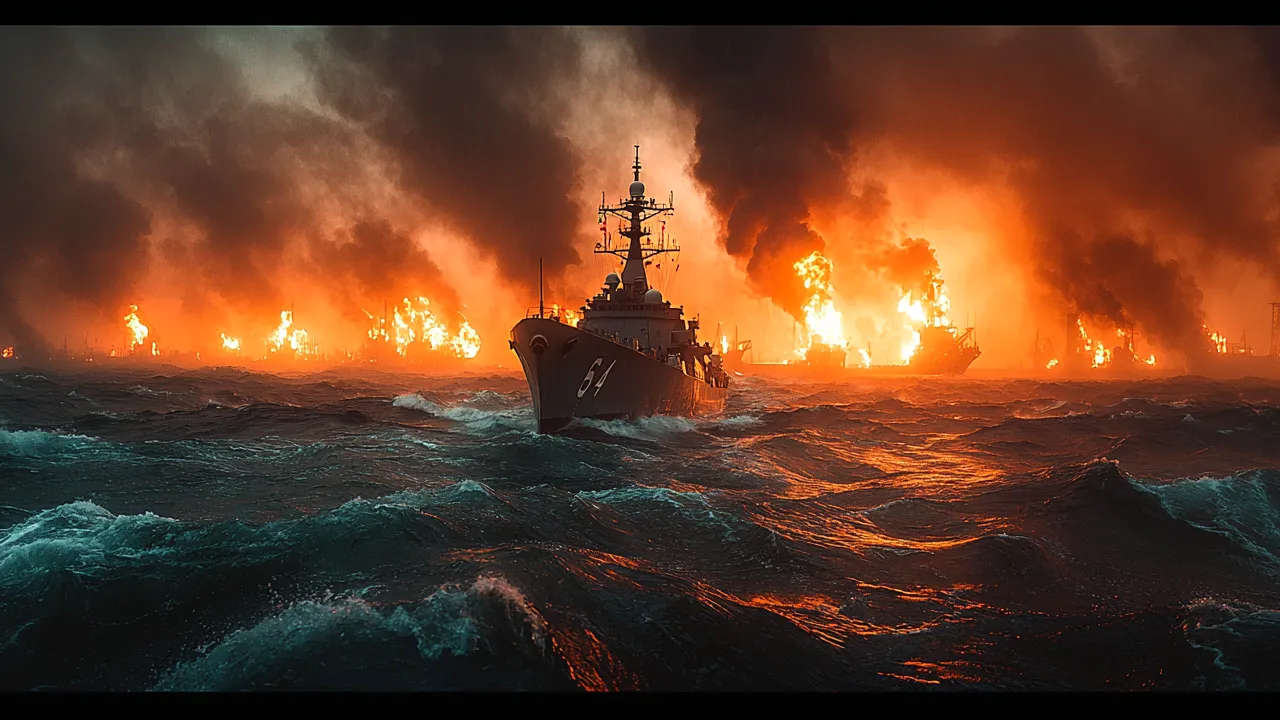
Military tensions have escalated between Iran and the United States, with the threat of a closure of the Strait of Hormuz looming in the background. This maritime chokepoint is among the most strategic on the planet: a major share of global energy trade passes through it, which places any regional escalation at the heart of international economic concerns.
The various actors agree on one point: the confrontation between Washington and Tehran poses major risks to energy security and oil prices, with effects that extend well beyond the Middle East alone. It is on this economic terrain, and on the centrality of the strait, that consensus is clearest.
Beyond that shared ground, the readings diverge sharply. Responsibility for the escalation is contested: some actors see Iranian aggression, others a provocation from the American-Israeli side. The legitimacy of the strikes is equally disputed, presented on one side as preventive defense and on the other as a violation of international law.
The choice of means also sets capitals apart: several powers favor a diplomatic, multilateral outcome, while others emphasize military deterrence. The weight given to civilian and humanitarian consequences varies as well, with some actors stressing these impacts and others focusing on security and energy stakes.
These fractures reflect structural constraints: alliances, energy dependencies and deeper rivalries. They sketch a fragmented landscape in which each actor reads the crisis through the lens of its own interests, and where uncertainty bears as much on the origin of the conflict as on its outcome.