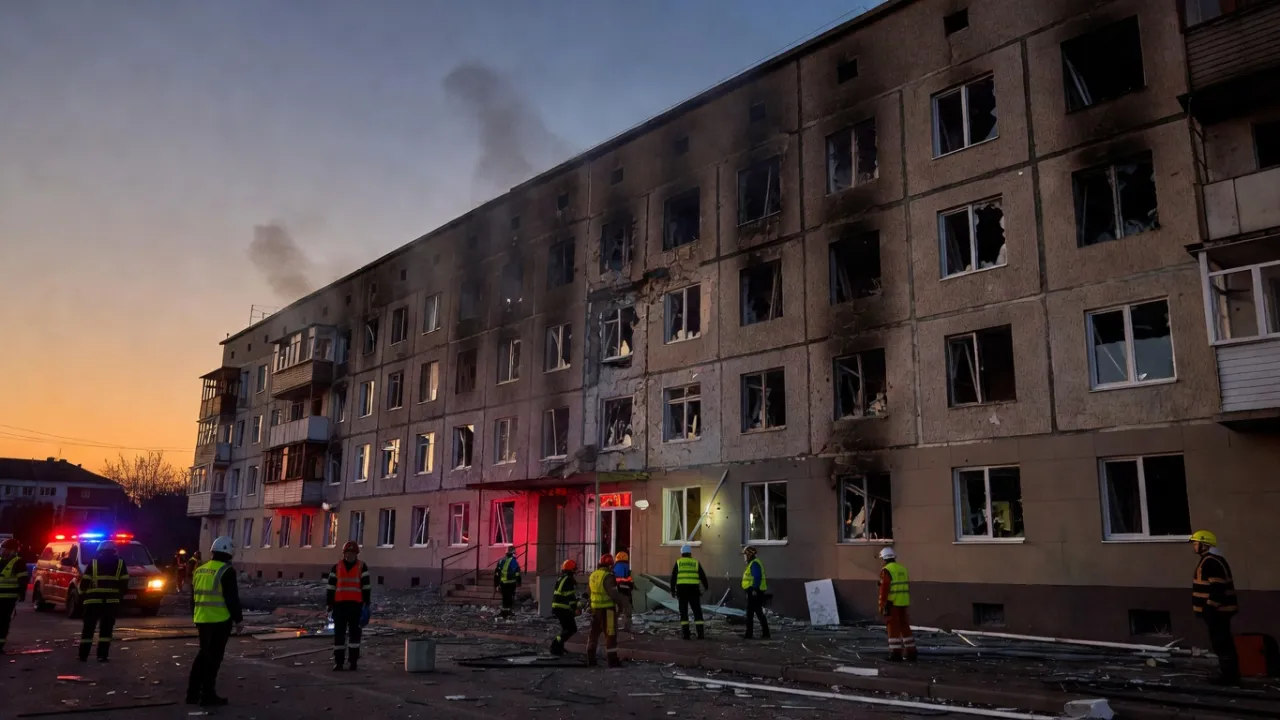
On 19 May 2026, two waves of Russian drones struck the Kholodnohirskyi and Novobavarskyi districts of Kharkiv, wounding three people and damaging more than 25 residential buildings. Located less than 40 km from the Russian border, the city has absorbed a significant share of the impacts sustained since the start of the invasion in 2022.
The strike is part of a mutual aerial escalation. That same week, Ukraine carried out one of its largest drone offensives against the Moscow region, breaching several defensive rings and forcing airports to suspend operations. Both sides have made drones their primary means of attack, shifting the conflict beyond the front line toward a deep war that can reach up to 300 km.
The stakes go beyond the purely military. Repeated Ukrainian strikes on Russian oil infrastructure have contributed to a downward revision of Moscow's 2026 growth forecast, lowered from 1.3% to 0.4%. On the human side, the UN documents a cumulative toll of at least 15,850 civilians killed since February 2022, with April 2026 the deadliest month in ten months.
Several readings of the event coexist. Some actors focus attention on civilian casualties and destruction in Kharkiv, while others treat the strikes on Kharkiv and on Moscow as two equivalent facets of the same escalation. The weight given to UN statistics and to economic effects likewise varies from one actor to another.
Diplomatic negotiations remain stalled, with the conditions set by Moscow still incompatible with the Ukrainian position. The role of potential mediators and the outcome of these talks remain uncertain.