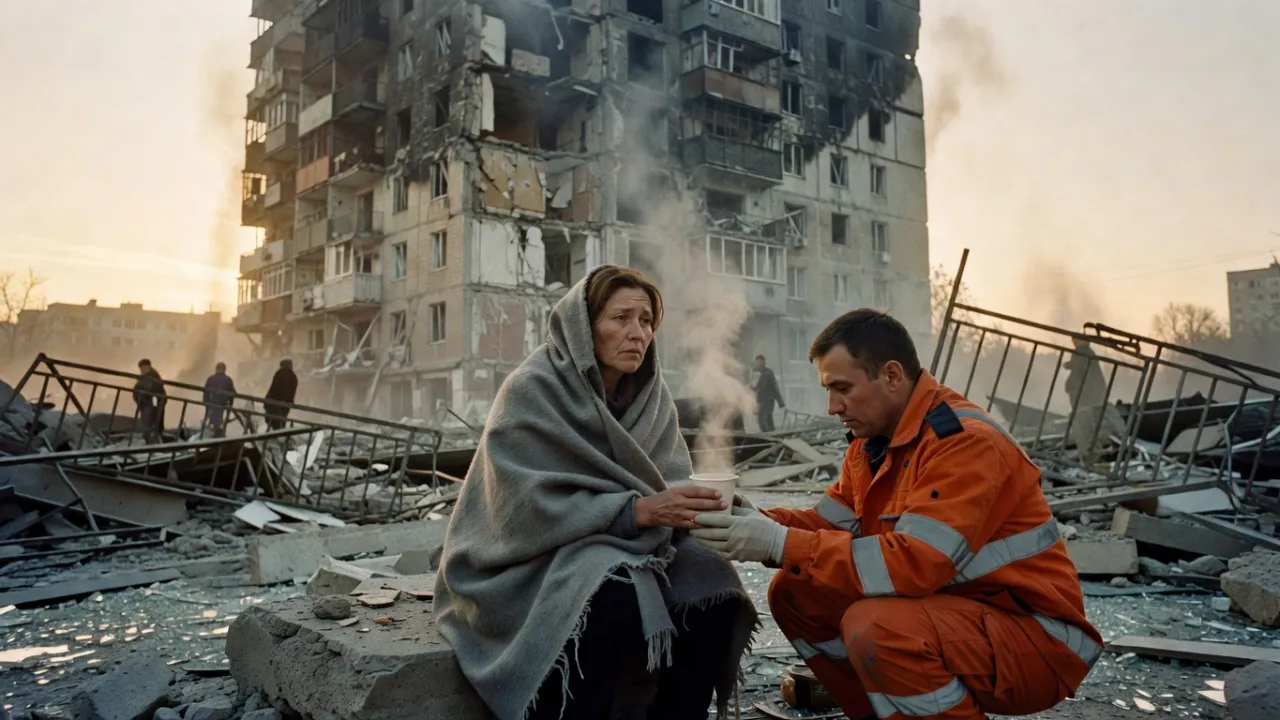
On the night of 1 to 2 June 2026, Ukraine endured an aerial assault of a scale unseen since the war began: 73 missiles (ballistic, cruise and anti-ship) and 656 drones launched within a few hours. Kyiv was the stated target, but the strikes also hit Dnipro, Kharkiv, Odessa, Mykolaiv, Zaporizhzhia, Poltava, Sumy, Chernihiv and Khmelnytskyi. At least 22 people were killed, including two children in Dnipro, where a four-storey building was destroyed. In Kyiv, a 24-storey residential tower partially collapsed.
Ukraine's air defence says it neutralised 40 missiles and 602 drones, a high interception rate but one insufficient against the sheer volume. In the aftermath, President Zelensky called for stepped-up deliveries of Patriot missiles and pressed for an independent European anti-ballistic shield, while warning that another massive attack could come the following night.
The episode unfolds within a long war: in May, Ukraine carried out its own strikes against Russian bombers deep inside Russian territory, and a Russian official has announced a new mobilisation for the autumn. The day before, a Russian drone had struck a building in Galati, Romania, prompting Warsaw to request the activation of NATO's Article 4.
The actors diverge less over the facts than over the response. Kyiv and several Eastern European capitals are demanding autonomous missile defence; Washington has not responded publicly and remains measured on new deliveries; Moscow, which does not deny the scale, speaks of retaliation against the military industry and steers its coverage toward other topics. The extent of collective commitment from NATO's eastern flank, meanwhile, remains under discussion.