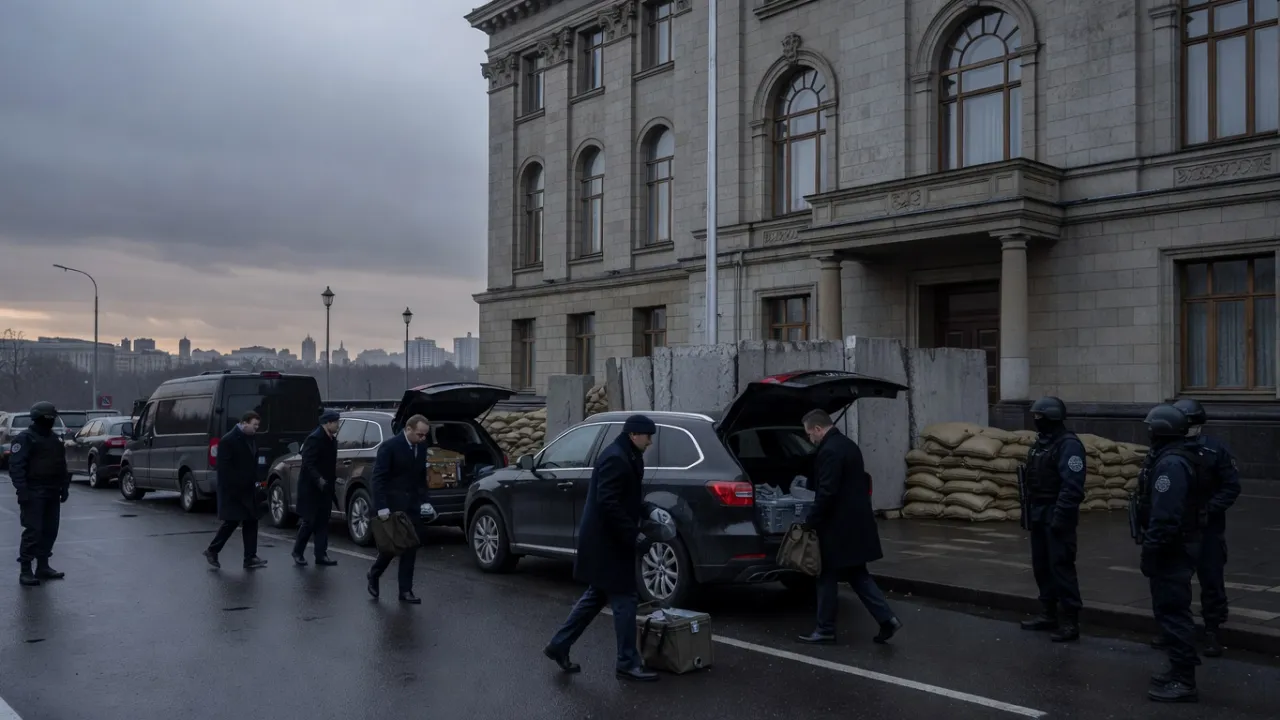
A few days before the 9 May parade, Russia issued a formal warning to foreign diplomatic missions in Kyiv, urging them to evacuate their staff ahead of an announced retaliatory strike should Ukraine disrupt the Victory Day commemoration. This direct warning, aimed at embassies in the heart of a sovereign state's capital, marks an unprecedented use of diplomatic pressure in the conflict.
The events are part of a sequence of dual escalation. Both sides had declared unilateral truces — a Ukrainian ceasefire on 6 May and a Russian ceasefire on 8 and 9 May — each of which was ignored or breached according to the other party. At the same time, Ukrainian drones crashed in Latvia, a NATO member, raising the question of allied territorial integrity without, at this stage, triggering the Alliance's collective defence mechanism.
The strategic backdrop is one of stalled peace talks. The two truces reflect logics that are hard to reconcile: one side seeks a permanent, verified ceasefire, the other a symbolic truce aligned with a commemorative calendar. In parallel, a cautious diplomatic resumption is taking shape, with Ukrainian negotiator Umerov travelling to Florida to meet U.S. envoys.
What remains disputed is the attribution of responsibility. Each belligerent blames the other for breaching the truces and presents its own strikes as a response, while the opposing side describes them as deliberate escalation. These mutually exclusive accounts converge neither on the causes nor on the legitimacy of the actions taken.