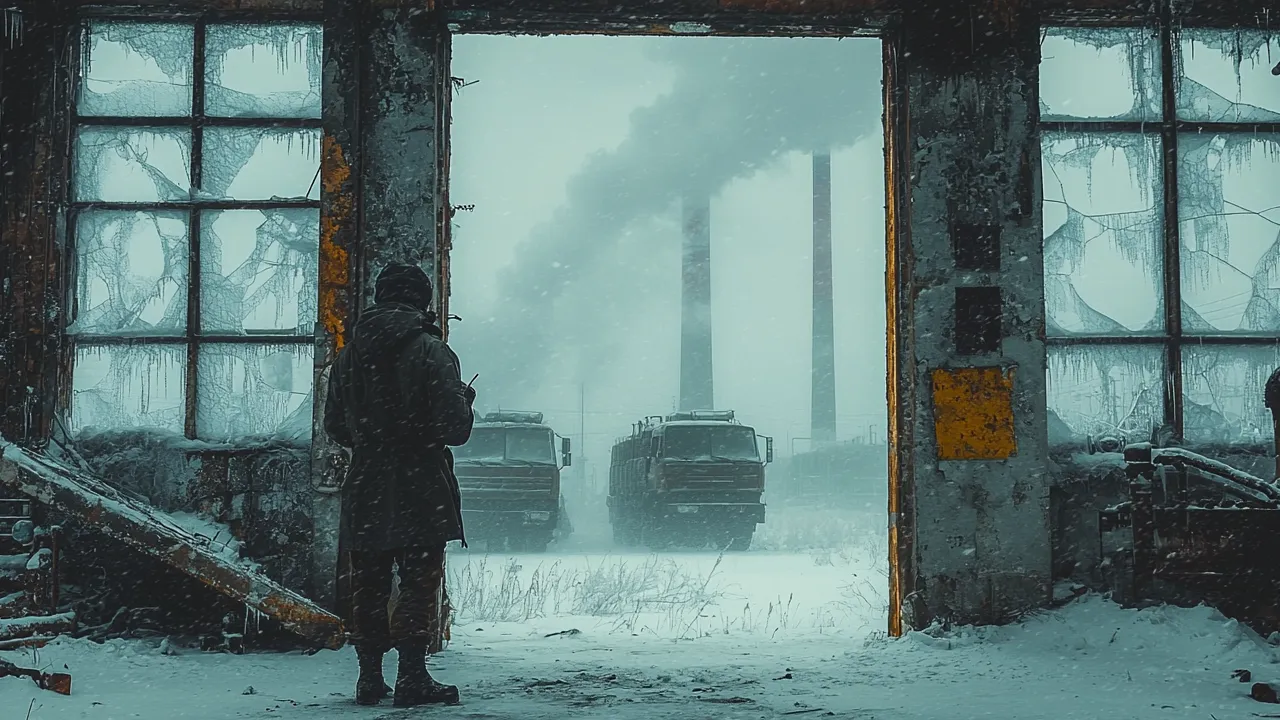
After two years of growth above 4%, Russia's economy is sliding toward stagnation, with expansion projected at around 1% in 2026. The central bank has lowered its key rate to 15%, yet inflation remains stubborn, around 6.5 to 7%. At the same time, roughly 38% of the federal budget is devoted to defense and security, while oil revenues have fallen by half.
This slowdown matches neither the collapse forecast in 2022 nor the triumphant resilience promoted by Moscow. It stems from a combination of factors: Western sanctions, falling energy receipts, the militarization of the budget, and an acute labor shortage, seen as a structural problem with no quick fix.
The underlying context is one of possible lasting decline: a brain drain, the depletion of regional fiscal reserves, and growing dependence on China, which is shifting the balance of power. For several non-aligned countries, cheap Russian energy is both an economic opportunity and a diplomatic dilemma.
Interpretations diverge sharply. Some actors hold that the stagnation proves sanctions are working and argue for tightening them, while others judge that sanctions mainly penalize poorer economies. On the trajectory itself, some voices speak of adaptation and managed stability, where others see an irreversible weakening. What remains uncertain is the true extent of the decline and whether or not it can be reversed.