
Common ground and differences in coverage across the media analysed.
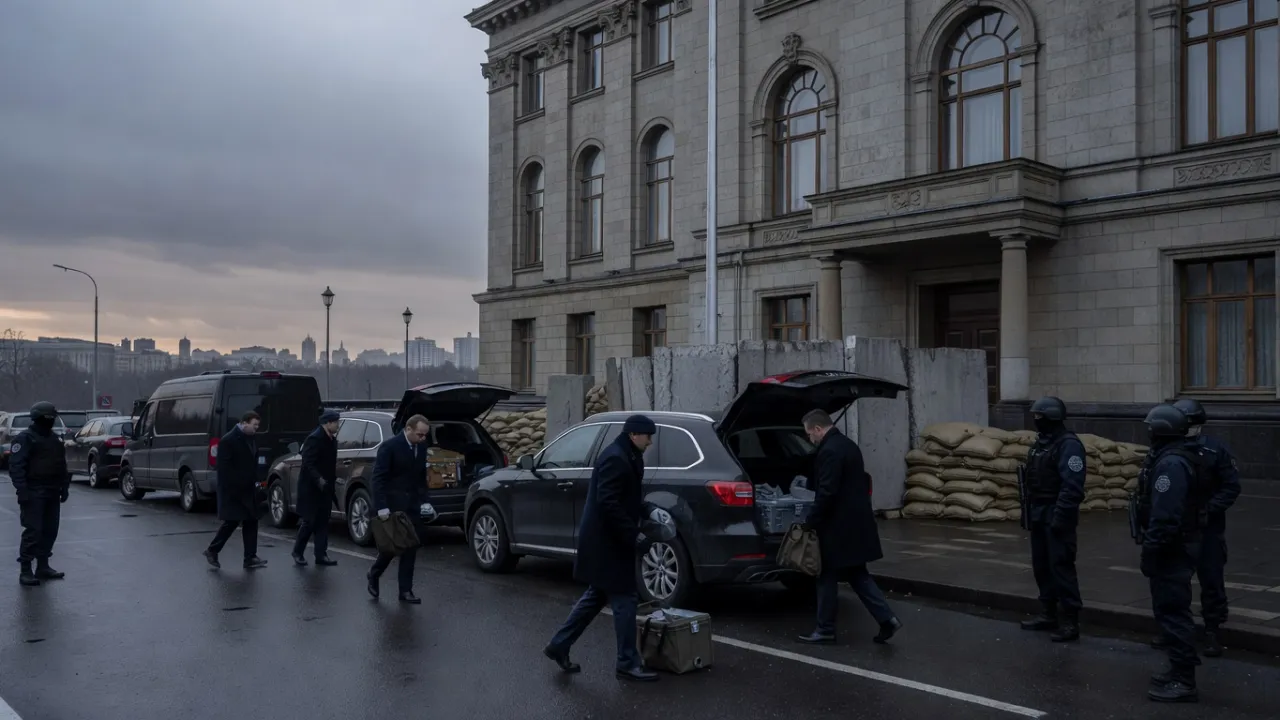
Russia formally warned foreign diplomatic missions in Kyiv to evacuate ahead of threatened retaliatory strikes if Ukraine disrupts the May 9 parade.
Both ceasefires — Ukraine's on May 6 and Russia's on May 8-9 — were each ignored or violated by the other side.
Ukrainian drones crashed in Latvia, an NATO member, raising questions about allied territorial integrity.
Preview: 3 of 7 media perspectives. Syntheses of the media analysed — not direct quotations. Method & limitations
Moscow enforces its truce through intimidation to shield the Victory Day parade
2 sources · View sources
Kyiv tallies 1,820 Russian violations and vows mirror response
3 sources · View sources
Paris refuses to be intimidated: Moscow's memorial truce masks a new escalation
2 sources · View sources
DOMINANT ANGLE
Moscow enforces its truce through intimidation to shield the Victory Day parade
ANALYSIS
Moscow fully embraces coercive diplomacy as a political instrument.
DOMINANT ANGLE
Kyiv tallies 1,820 Russian violations and vows mirror response
ANALYSIS
Kyiv is keeping score.
DOMINANT ANGLE
Paris refuses to be intimidated: Moscow's memorial truce masks a new escalation
ANALYSIS
France has already decided.
DOMINANT ANGLE
London sees Russia's ultimatum as deliberate escalation that cannot go unanswered
ANALYSIS
London reads the embassy warning as a breach of threshold.
DOMINANT ANGLE
Beijing calls for restraint on both sides without taking a position on the embassy warning
ANALYSIS
Beijing adopts its habitual reading of perfect symmetry.
DOMINANT ANGLE
Singapore scrutinizes the Latvia drone incident and NATO facing a dangerous territorial precedent
ANALYSIS
Singapore reads Ukraine's war through the prism of a small island state deeply committed to international law and territorial sovereignty.
DOMINANT ANGLE
Taipei sees Ukraine's drone warfare as a testing ground for its own defense against Beijing
ANALYSIS
Taipei Times reads Ukraine's war through the lens of its own security.
Explore every perspective on this subject across 7 countries.
Compare viewpoints and see where they diverge.
published on
countries
sources
articles
gap
A few days before the 9 May parade, Russia issued a formal warning to foreign diplomatic missions in Kyiv, urging them to evacuate their staff ahead of an announced retaliatory strike should Ukraine disrupt the Victory Day commemoration. This direct warning, aimed at embassies in the heart of a sovereign state's capital, marks an unprecedented use of diplomatic pressure in the conflict.
The events are part of a sequence of dual escalation. Both sides had declared unilateral truces — a Ukrainian ceasefire on 6 May and a Russian ceasefire on 8 and 9 May — each of which was ignored or breached according to the other party. At the same time, Ukrainian drones crashed in Latvia, a NATO member, raising the question of allied territorial integrity without, at this stage, triggering the Alliance's collective defence mechanism.
The strategic backdrop is one of stalled peace talks. The two truces reflect logics that are hard to reconcile: one side seeks a permanent, verified ceasefire, the other a symbolic truce aligned with a commemorative calendar. In parallel, a cautious diplomatic resumption is taking shape, with Ukrainian negotiator Umerov travelling to Florida to meet U.S. envoys.
What remains disputed is the attribution of responsibility. Each belligerent blames the other for breaching the truces and presents its own strikes as a response, while the opposing side describes them as deliberate escalation. These mutually exclusive accounts converge neither on the causes nor on the legitimacy of the actions taken.
Measured with the previous method (distance between texts), on a different scale.